Teeth Wear Patterns: Signs You Need a Night Guard

Flattened biting edges, matching polished facets, small chips and gradual changes in tooth shape may indicate repeated grinding contact and provide useful signs that you could benefit from a night guard. A custom night guard creates a protective surface between the upper and lower teeth, helping reduce additional tooth-to-tooth wear while you sleep. Teeth wear can also develop through acidic erosion, external abrasion, natural aging or a combination of factors. A dentist can identify the likely cause and determine whether a custom night guard, restorative care or another supportive approach matches your needs.
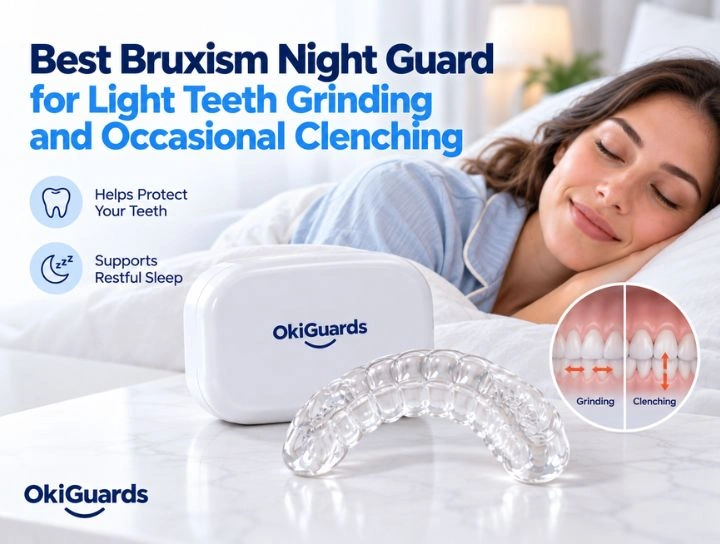
OkiGuards offers custom Soft, Hybrid and Hard Night Guards for different grinding intensities. Every current package includes two personalized guards, an at-home impression kit, free two-way shipping and a 60-night replacement or refund guarantee. Compare OkiGuards custom night guards and choose personalized protection for your smile.
What Are Teeth Wear Patterns?
Teeth wear patterns are visible changes that develop on the edges, chewing surfaces or sides of teeth. Their shape, location and progression can help a dentist understand how the tooth surfaces interact.
Tooth wear generally appears in three main forms:
- Attrition: Tooth-to-tooth contact creates flattened or polished surfaces.
- Erosion: Acid exposure creates smooth, rounded or scooped areas.
- Abrasion: External friction creates localized grooves or worn surfaces.
Many people have combined wear involving more than one contributor. A professional examination supports an accurate diagnosis and helps each protective step match the wear pattern.
What Does Teeth Grinding Wear Look Like?
Teeth grinding wear commonly appears as smooth, flat or polished areas where opposing teeth repeatedly meet. Grinding combines pressure with sliding movement, while clenching involves sustained contact and jaw-muscle activity.
Possible grinding-related patterns include:
- Flattened front-tooth edges
- Shorter-looking incisors
- Polished contact areas
- Worn canine tips
- Matching wear on opposing teeth
- Flattened molar surfaces
- Small chips along biting edges
- Wear on fillings, crowns or veneers
Matching polished facets may suggest repeated tooth contact or a history of grinding. A dentist can combine the appearance with current symptoms, restoration wear, muscle tenderness and dental records to evaluate whether bruxism contributes to the pattern.
Bruxism Tooth Wear by Tooth Location
Bruxism tooth wear can appear differently across the dental arch.
Front Teeth
Front-tooth edges may gradually become flatter, smoother or more level. Small chips can develop where repeated contact concentrates along thinner enamel edges.
Canine Teeth
Canines help guide side-to-side jaw movement. Grinding may create polished facets or gradually reduce the definition of their pointed tips.
Premolars and Molars
Back teeth may show flattened chewing surfaces or matching polished contact marks. A dentist can compare opposing areas and determine whether the changes reflect tooth contact, erosion or a combined pattern.
Cupping and Acid-Related Wear
Cupping appears as a small scooped area on a chewing surface. Acid exposure can soften enamel, while mechanical contact may influence the appearance and progression of the worn area. Possible acid sources include carbonated drinks, citrus foods and gastric reflux. A dentist can assess the pattern and recommend supportive dietary, medical or oral-care steps. A night guard can provide protection when grinding contact accompanies erosion. Managing the source of acid offers additional support for the long-term condition of the teeth.
Do I Need a Night Guard?
People often ask, “Do I need a night guard?” when they notice visible changes or morning symptoms. Several signs together can provide a useful reason to arrange a professional assessment.
You may benefit from a night guard evaluation when you notice:
- Matching wear facets
- Gradually flattening tooth edges
- New chips or rough areas
- Morning jaw-muscle tightness
- Increased tooth sensitivity
- Worn dental restorations
- Grinding sounds noticed by a sleep partner
- Rapid wear on a previous guard
- Grinding signs identified by a dentist
These signs support an informed conversation with your dentist. A dental examination can determine whether grinding contributes to the wear and whether an appliance suits your protection needs.
How a Night Guard Protects Teeth
A night guard creates a dedicated surface between the upper and lower dental arches. This replaceable surface reduces direct enamel-to-enamel contact during the hours in which the appliance is worn.
A custom night guard can support:
- Protection from additional grinding contact
- Preservation of natural tooth surfaces
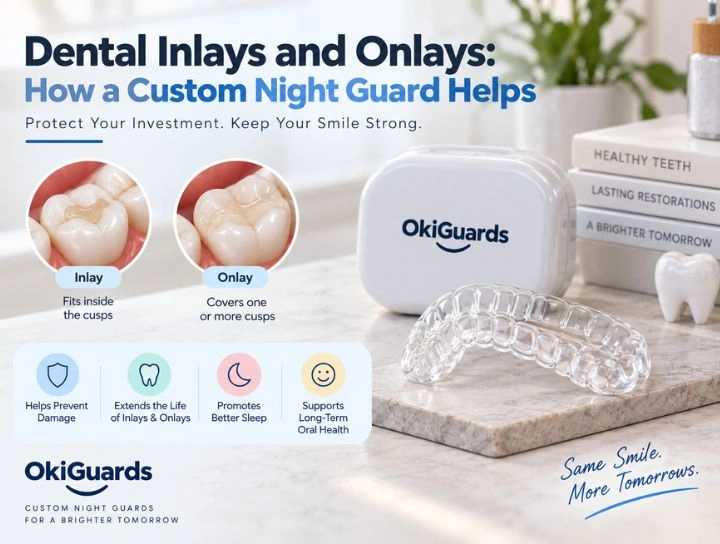
- Protection for compatible dental restorations
- Secure and consistent nighttime wear
- A personalized tooth-protection routine
A dentist can assess treatment options for existing surface loss, while a night guard provides protection against additional contact-related wear. This combination supports both present dental care and continued protection.
Choosing an OkiGuards
The best option matches your grinding intensity, preferred firmness and history of appliance wear.
| OkiGuards option | Thickness | Commonly suited for | Current price |
| Custom Soft Night Guard | 2.0 mm | Mild grinding and first-time wear | $149 for two |
| Custom Hybrid Night Guard | 1.0, 2.0 or 3.0 mm | Mild to heavier grinding | $149 for two |
| Custom Hard Night Guard | 1.5 or 3.0 mm | Heavy to severe grinding or clenching | $169 for two |
The Custom Soft Night Guard provides flexible cushioning for mild grinding and first-time users.
The Custom Hybrid Night Guard combines a soft inner layer with a firm external grinding surface. Its three thicknesses provide options for mild, moderate and heavier grinding patterns.
The Custom Hard Night Guard offers rigid wear resistance for heavy to severe grinding or clenching. Its 1.5 and 3.0 mm choices provide two firm protection profiles.
Why Custom Fit Matters
A custom night guard is created from an impression of your selected dental arch. The impression records the shape, alignment and contours of the teeth so the laboratory can produce a closely fitted appliance. A personalized fit supports secure retention, even seating, smooth edges and controlled removal. Customers can choose two upper guards, two lower guards, or one upper and one lower guard. Each OkiGuards kit includes three tray sizes, two sets of impression material, instructions, an instructional video and a prepaid return mailer. The U.S. laboratory uses the completed impression to fabricate two custom guards from FDA-cleared and BPA-free materials.
Caring for Your Night Guard
Rinse the guard with cool or lukewarm water after each use and clean it gently with a soft toothbrush. Allow it to dry completely before placing it in a ventilated case. Store the appliance in a cool location to help preserve its shape. Regular inspection helps you notice thinning, cracks, bite-through areas or changes in fit, allowing a fresh replacement to continue your protection routine.
Frequently Asked Questions
What are the clearest grinding-related wear patterns?
Matching flattened areas, polished facets, worn canine tips and gradual changes along biting edges can suggest repeated tooth contact.
Does every worn tooth indicate bruxism?
Tooth wear can reflect grinding, erosion, abrasion, aging or several contributors together. A dentist can identify the likely cause.
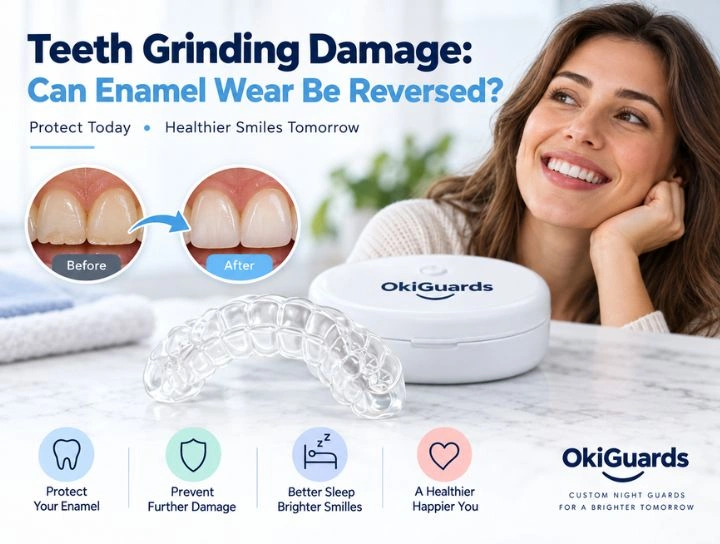
Can a night guard repair worn enamel?
A night guard provides a protective surface for continued wear management. A dentist can evaluate existing surface loss and recommend suitable restorative care.
Which OkiGuards option suits moderate grinding?
Which OkiGuards option suits moderate grinding?

Final note
Teeth wear patterns provide valuable information about how your tooth surfaces interact. When grinding contributes to the pattern, an OkiGuards custom night guard can reduce additional direct contact and support consistent nighttime protection. Shop OkiGuards custom night guards and select the material, thickness and placement that match your grinding intensity and comfort preferences.