Bruxism and TMJ: How Teeth Grinding Triggers Jaw Tightness

Teeth Grinding affects many adults and teens, and it often shows up quietly through jaw tightness, morning stiffness, and changes in daily comfort. This guide explains how Bruxism and TMJ connect through muscle activity, bite forces, and sleep patterns, and it shares practical, research-informed steps that support calm mornings and confident routines. You will also learn how a night guard for bruxism helps protect teeth and promote smoother jaw movement, especially for people who notice jaw clenching at night or nighttime teeth grinding.
Understanding Bruxism and TMJ
What is Teeth Grinding?
Teeth Grinding is a pattern of repeated tooth-to-tooth contact driven by jaw-muscle activity. Many people experience it during sleep, and the term nighttime teeth grinding describes grinding that occurs during sleep cycles.
What is Bruxism?
Bruxism is the clinical term for tooth-grinding and jaw-clenching patterns involving the chewing muscles and the bite. Many people recognize Bruxism symptoms through jaw fatigue, tooth wear, and morning tightness.
What is TMJ and TMJ Pain?
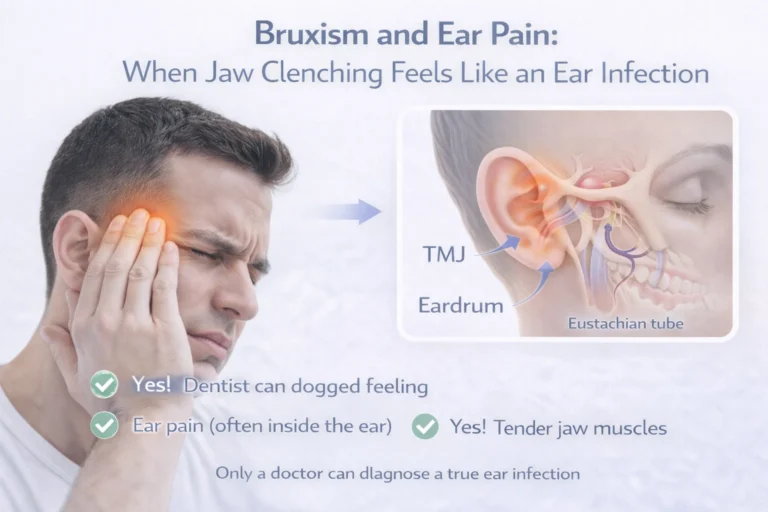
The temporomandibular joint (TMJ) is the hinge-and-slide joint that guides jaw movement for speaking, chewing, and yawning. People often use “TMJ” to describe jaw-joint and jaw-muscle conditions, and TMJ pain often reflects muscle tension, joint irritation, or both. A supportive approach focuses on soothing muscle load, improving bite protection, and building sleep-friendly habits.
Why Nighttime Teeth Grinding and Jaw Clenching at Night Feel So Powerful
Sleep creates a unique environment for the jaw. The protective reflexes that guide daytime chewing soften, and jaw muscles can generate strong, sustained force during brief episodes. Jaw clenching at night often feels intense because the jaw can remain in a high-effort position for several seconds, and repeated episodes accumulate throughout the night.
Many people also notice jaw stiffness in the morning because jaw muscles spend hours in repeated contraction-relaxation cycles. This pattern supports a simple idea: muscles love recovery time, and a smoother nighttime setup supports better morning comfort.
How Teeth Grinding Triggers Jaw Tightness
Teeth grinding and TMJ connect through three highly practical pathways: muscle overwork, joint loading, and bite-surface friction.
1) Muscle Overwork in the Jaw
The masseter and temporalis muscles generate the force that closes the jaw. During nighttime teeth grinding, these muscles often remain highly active and tend to feel full, tight, and “worked” the next morning. This muscle-driven pathway often explains why jaw tightness feels like a workout effect.
2) Joint Loading and TMJ Mechanics
The TMJ guides jaw movement with a balance of bone surfaces, cartilage, and a small disc that supports smooth motion. Strong clenching can increase joint loading, and a calmer bite surface helps the joint track more comfortably. Many people feel jaw ease when night forces shift toward smoother contact.
3) Friction, Micro-Sliding, and Bite Surface Stress
Grinding involves tiny slides across tooth enamel. Those micro-slides increase friction and stimulate muscles to “hold on” and stabilize the bite. A protective surface supports smoother gliding, which in turn supports a relaxed jaw position over time.
Bruxism Symptoms That Commonly Pair With TMJ Pain
Many people describe a cluster of Bruxism symptoms that align with jaw mechanics and muscle load. These signs often guide a clear next step toward protection and recovery.
Common, helpful signals
- Morning jaw tightness and a feeling of “fullness” in the cheeks
- Jaw stiffness in the morning that eases as the day warms up
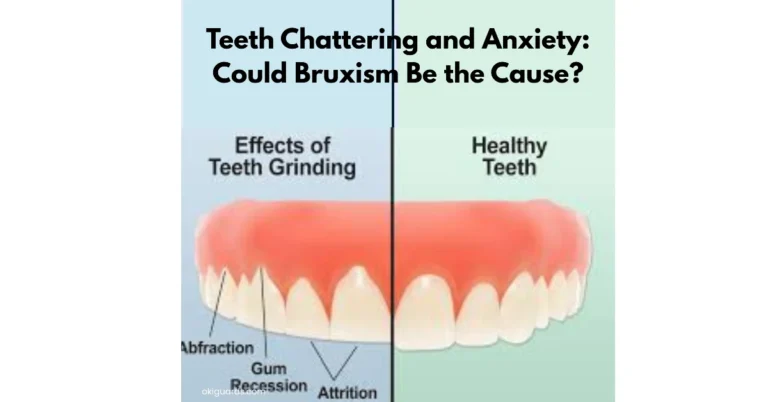
- Tooth-edge flattening and subtle enamel wear
- A sense of “tired chewing” by late afternoon
- Headache from teeth grinding, often felt around the temples
- Sensitive teeth that feel better with gentler bite forces
These signals support a positive and practical plan: protect the teeth, support muscle recovery, and keep the jaw moving smoothly.
The Bruxism–TMJ Cycle: A Clear, Research-Informed Model
A simple cycle explains why Teeth Grinding and TMJ issues often go hand in hand.
- A trigger increases jaw-muscle activation during sleep.
- Jaw clenching at night increases bite force and muscle load.
- Muscles feel tight, and the joint experiences extra loading.
- The body seeks stability through more clenching.
- Morning tightness manifests as jaw stiffness.
This model feels empowering because each step has a supportive strategy that improves comfort and performance.
What an Effective Night Guard for Bruxism Does
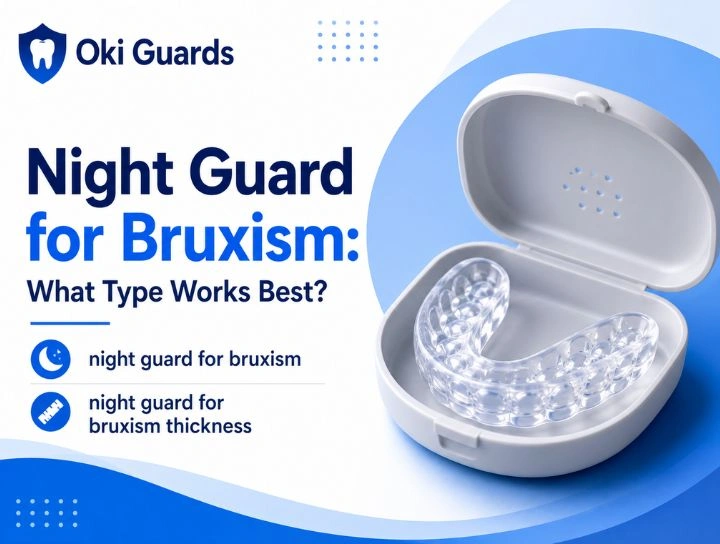
A night guard for bruxism supports the bite by creating a stable, protective surface between the upper and lower teeth. This approach supports teeth protection and helps the jaw muscles work more efficiently.
Key benefits of a TMJ-focused routine
- Optimized tooth protection: the guard absorbs and distributes contact forces
- Smoother jaw gliding: the surface supports controlled movement patterns
- Better muscle efficiency: the jaw closes on a stable platform that supports balanced muscle work
- Improved recovery: many people experience a calmer morning feel as nightly forces become more organized
A custom-fit guard also supports comfort, which supports consistent wear, and consistent wear supports stronger long-term results.
Why Low-Friction Bite Surfaces Support Enhanced Jaw Comfort
The jaw loves predictable contact. A smooth, stable bite surface reduces the “search for a stable spot” that often fuels clenching. When the bite feels stable, muscles often adopt a calmer, more efficient pattern. This idea aligns well with TMJ comfort because the joint tracks smoothly when muscles act smoothly.
How to Choose the Right Night Guard Style for Your Bruxism Pattern
Different guard styles support different needs, and the best choice matches grinding intensity, comfort preferences, and jaw sensitivity.
Soft guards
Soft guards feel cushiony and often suit light grinding and comfort-first sleepers. They support gentle protection and easy adaptation
Hard guards
Hard guards provide strong durability and often suit moderate-to-heavy grinding. They support efficient force distribution and long-lasting wear.
Hybrid guards
Hybrid guards combine a soft inner layer with a firm outer layer, and many people enjoy the blend of comfort and strength. Hybrid designs support stable contact and a comfortable feel for long wear.
A well-matched guard supports both Teeth Grinding control and TMJ comfort.
Applications in Life, Work, and Daily Performance
Teeth grinding often affects more than the mouth. Better jaw comfort supports easier mornings, more enjoyable meals, and clearer focus. Many people notice improved confidence when their jaw feels smooth, their bite feels stable, and their sleep routine feels optimized.
For researchers, clinicians, and busy professionals, a simple protection routine supports reliable day-to-day function and a steady wellness baseline.
Impact on Symptom Clusters: Headache From Teeth Grinding and TMJ Pain
Many people associate headaches from teeth grinding with temporalis muscle activity and sustained clenching patterns. A stable bite surface supports smoother muscle work, and smoother muscle work often supports fewer tension-driven headaches.Similarly, TMJ pain often improves when muscle load becomes more efficient and joint motion becomes smoother. A practical plan combines protection, morning mobility, and daytime posture training for a comprehensive, positive outcome.
Frequently Asked Questions
What are the most common Bruxism symptoms?
Common Bruxism symptoms include jaw stiffness in the morning, cheek tightness, tooth wear, and headache from teeth grinding around the temples. These signals support an organized plan focused on protection and recovery.
Why does jaw clenching at night create jaw stiffness in the morning?
Jaw clenching at night increases muscle activation and sustained bite force. Muscles respond as they do after exercise, and that often shows up as jaw stiffness in the morning.
How does a night guard for bruxism support TMJ comfort?
A night guard for bruxism provides a stable bite surface that distributes contact forces and supports smoother jaw movement. This setup supports better muscle efficiency and steadier joint tracking.
What is the difference between nighttime teeth grinding and daytime clenching?
Nighttime teeth grinding often involves micro-sliding movements during sleep, while daytime clenching often occurs during focus, stress, or posture strain. Both patterns respond well to posture training and consistent protection.
Can teeth grinding be linked with TMJ pain?
Teeth grinding can align with TMJ pain through muscle overwork and joint loading. A structured plan with protection and mobility supports improved comfort and reliable function.
How long does it take to feel improvement with a night guard for bruxism?
Many people notice comfort gains within days to weeks as sleep protection becomes consistent and morning mobility becomes routine. A custom-fit guard supports comfort, and comfort supports consistent wear.
What daily habits support enhanced recovery of the jaw?
Hydration, posture checks, gentle morning mobility, and a consistent night protection routine support enhanced recovery. These steps support reliable comfort and a confident daily rhythm.

Final note
Bruxism and TMJ often connect through muscle activity, joint loading, and the mechanics of teeth grinding. A clear, science-informed plan supports improved jaw comfort, better mornings, and steadier daily performance. When you pair posture training and gentle mobility with a well-matched night guard for bruxism, you create a reliable system that supports tooth protection, smoother jaw movement, and positive long-term consistency. With the right routine, nighttime teeth grinding and jaw clenching at night become easier to manage, and jaw stiffness in the morning often shifts toward a calmer, more comfortable start to the day.