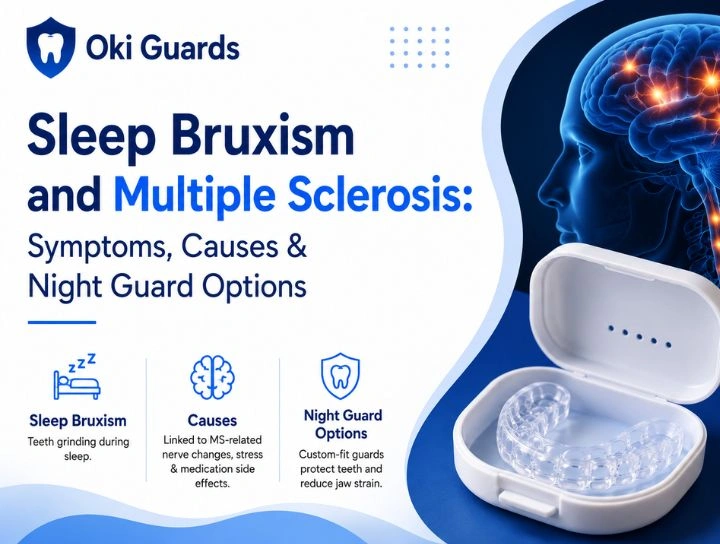
Sleep Bruxism and Multiple Sclerosis: Symptoms, Causes & Night Guard Options
A comfortable night routine can support your jaw, teeth, and overall wellness. Sleep bruxism is a nighttime grinding or clenching pattern that can happen while the body rests. People living with multiple sclerosis may also pay closer attention to jaw comfort, sleep quality, muscle activity, and daily oral care. Understanding sleep bruxism and MS together can help you build a supportive routine that feels calm, simple, and practical.Sleep-related bruxism can involve jaw muscle activity during sleep. Paying attention to signs such as morning jaw tightness, tooth sensitivity, facial tension, or tiredness around the cheeks can help you support your oral health and comfort.
These sleep bruxism symptoms can guide you toward helpful care steps, such as relaxed bedtime habits, dental guidance, and a custom bruxism night guard. MS and teeth grinding can be discussed together because multiple sclerosis can influence muscle comfort, sleep patterns, stress levels, medication routines, and daily body awareness. A supportive care plan can help the jaw feel more relaxed and the teeth feel more protected during sleep.
What Is Sleep Bruxism?
Sleep bruxism means grinding or clenching the teeth during sleep. It can happen quietly and naturally, and many people notice it through morning signs. The jaw may feel active after waking. Some people may notice temporary tooth sensitivity. You may notice awareness of tension around the cheeks or temples. Sleep-related bruxism is connected with jaw muscle movement during rest. The body may use the jaw muscles while sleeping, and a night guard can help create a smoother surface between the upper and lower teeth. This support can help protect the teeth and make the morning routine feel more comfortable. A custom night guard can become a simple part of bedtime. It fits over the teeth and creates a protective layer for sleep-time grinding and clenching.
How Multiple Sclerosis and Jaw Comfort Can Connect
Multiple sclerosis can influence the nervous system, muscle activity, and body comfort. Many people with MS pay attention to muscle tone, fatigue patterns, sleep quality, and tension in different areas of the body. Jaw comfort can become part of that larger wellness picture.
People searching for multiple sclerosis jaw pain often want supportive ways to care for the jaw and mouth. A gentle care routine can include jaw relaxation, soft stretching, hydration, a calm sleep schedule, and dental guidance. These steps can help the jaw feel supported during the day and night. MS and teeth grinding may also be connected through sleep quality and daily stress patterns. A steady routine can help the body settle into rest and support a calmer jaw position. The right dental appliance can also help protect the teeth during sleep.
Sleep Bruxism Symptoms
Sleep bruxism symptoms can offer helpful clues about your nighttime routine. Morning jaw tightness can show that the jaw muscles stayed active while you slept. Tooth sensitivity can show that the teeth may require extra protection. Facial tension can show that the cheeks, temples, and jaw muscles can benefit from relaxation. Some people may notice a strong bite sensation after waking. Some people notice smoother biting edges over time. Some people notice that chewing feels more comfortable with soft foods in the morning. These signs can help guide your next care step. A dental professional can review your bite, teeth, jaw movement, and appliance needs. This guidance can help you choose the best bruxism treatment option for your smile.
Sleep Bruxism Causes
Sleep bruxism can include several supportive factors. Jaw muscle activity, sleep patterns, stress response, bite alignment, medication routines, and daily tension can all influence nighttime clenching or grinding. Each person has a unique pattern, and a personalized plan can offer the best support. For people with MS, body awareness can be especially helpful. Sleep quality, muscle comfort, and bedtime routines can all play a role in how the jaw feels. A calm evening routine can help the body move into rest with more ease. A helpful goal is to reduce extra jaw pressure and support tooth protection. A custom bruxism night guard can be part of that plan, especially when grinding or clenching appears during sleep.
Bruxism Night Guard Options
A bruxism night guard creates a smooth barrier between the upper and lower teeth. This barrier helps protect the tooth surfaces and supports a more comfortable bite feeling during sleep. A custom guard is made from an impression of your teeth, so it can feel stable, smooth, and easy to wear. OkiGuards offers custom night guards for different grinding levels. A soft guard can support lighter grinding and comfort-focused wear. A hybrid guard can offer a balance of softness and strength. A hard guard can support stronger clenching patterns with a firmer surface. Choosing the right guard depends on comfort, grinding level, and dental guidance. A well-fitted guard can help make sleep bruxism treatment feel easier and more consistent.
Soft Night Guard for Gentle Support
A soft night guard can be a comfortable option for lighter sleep bruxism. It has a flexible feel and creates a gentle cushion between the teeth. Many first-time users appreciate the soft texture because it feels easy to adjust to.This type can support people who want a smooth and gentle mouthfeel. It can help make night guard use feel simple and familiar.
Hybrid Night Guard for Balanced Support
A hybrid night guard combines a softer inner layer with a firmer outer layer. The soft inside supports comfort against the teeth. The firmer outside supports durability on the grinding surface. This option can work well for moderate bruxism. It gives the mouth both cushioning and strength in one appliance. The balanced design can help support nightly comfort and tooth protection.
Hard Night Guard for Stronger Support
A hard night guard offers a firm surface for stronger clenching or grinding patterns. It can help guide bite pressure and support long-term appliance strength. A custom fit helps the guard feel stable and smooth during sleep. This option can suit people who want a durable feel and steady protection. The firm surface can support a controlled bite experience through the night.
Sleep Bruxism Treatment Routine
Sleep bruxism treatment works best with a complete routine. A night guard can protect the teeth during sleep. Relaxed jaw habits can support comfort during the day. A calming bedtime routine can help the body feel ready for rest. Keep your lips gently together, teeth slightly apart, and tongue resting softly on the roof of your mouth during the day. This relaxed jaw posture can help reduce daytime clenching patterns and support jaw comfort. Before bed, use quiet habits that feel calming. Try gentle stretching, slow breathing, soft lighting, and a consistent sleep schedule. These steps can support a peaceful transition into sleep.
Helpful Care Tips for MS and Teeth Grinding
People managing MS and teeth grinding can benefit from a routine that feels easy to follow. Hydration can support a fresh mouth. Soft foods can support jaw comfort when the jaw feels active. Gentle jaw stretches can help the muscles feel relaxed. Dental visits can help track tooth surfaces, bite comfort, and night guard fit. Medical guidance can also help connect jaw comfort with overall MS care. A team-based approach can support confidence and clarity. A custom night guard from OkiGuards can become part of a practical nighttime care routine. Daily cleaning and proper storage can keep the guard fresh and ready every night.
Frequently Asked Questions
What is sleep bruxism?
Sleep bruxism is grinding or clenching during sleep, and it can guide people toward helpful tooth protection and jaw comfort habits.
What are common sleep bruxism symptoms?
Common sleep bruxism symptoms include morning jaw tightness, tooth sensitivity, facial tension, and an active bite feeling after sleep.
How are MS and teeth grinding connected?
MS and teeth grinding can connect through muscle activity, sleep quality, stress patterns, medication routines, and overall body comfort.
What helps with multiple sclerosis jaw pain searches?
People searching for multiple sclerosis jaw pain often benefit from dental guidance, gentle jaw care, hydration, soft stretching, and a supportive night routine.
What bruxism night guard works best?
The best bruxism night guard depends on the grinding level and comfort preference. Soft, hybrid, and hard guards each support different needs.

Final note
Sleep bruxism and multiple sclerosis can be understood with a calm and supportive care approach. Sleep-related bruxism involves nighttime grinding or clenching, and MS can make jaw comfort an important part of overall wellness. Sleep bruxism symptoms, sleep bruxism causes, and bruxism treatment options can guide you toward better daily support. A custom bruxism night guard, relaxed jaw posture, steady bedtime habits, and professional guidance can help protect your teeth and support a more comfortable night routine. With the right care plan, your jaw can feel supported, your teeth can feel protected, and your sleep routine can feel calmer and more confident.