Alcohol vs Bruxism: Why Grinding Gets Worse and How a Night Guard Helps
Alcohol and Bruxism often appear together because alcohol can influence sleep depth, airway comfort, muscle tone, and the brain’s arousal signals that shape jaw activity. Some people notice that their jaw and teeth are more active on nights with drinks, which can be a helpful signal to support relaxation and self-care, so they wake up feeling more comfortable.. A calm, practical plan can support better nights, smoother mornings, and stronger tooth protection.
This guide explains the science clearly and shares real steps you can use immediately, including how to fit and use a custom OkiGuards night guard so your routine feels consistent and comfortable.
What Alcohol and Bruxism Mean
Alcohol and Bruxism describes a pattern where drinking alcohol is followed by increased teeth grinding or jaw clenching during sleep. Bruxism includes grinding and clenching patterns that involve the chewing muscles and bite surfaces. Sleep bruxism can appear in brief episodes, offering a helpful signal to focus on restful sleep and gentle nighttime relaxation.
Why Alcohol Can Make Teeth Grinding Feel Stronger
Alcohol affects several systems that shape sleep and jaw activity, and these effects can stack together predictably.
Alcohol Changes Sleep Architecture in a Noticeable Way
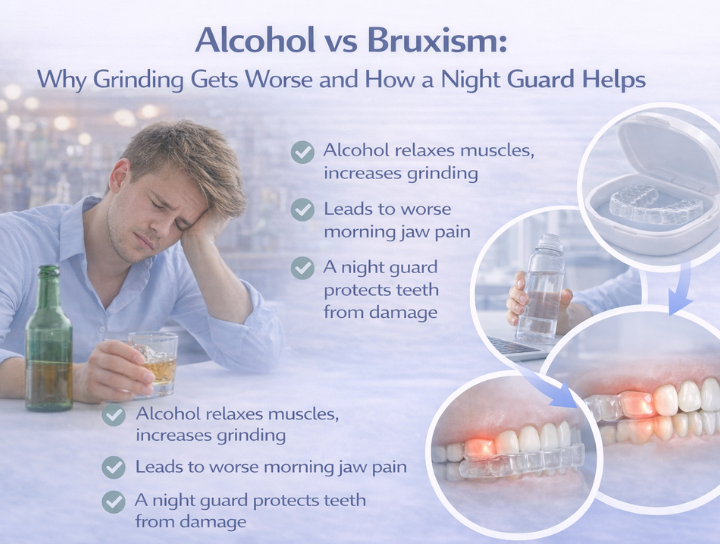
Alcohol can make it easier to fall asleep at first, and it often increases sleep disruption later in the night. Those later-night awakenings and micro-arousals can increase jaw muscle activity because the brain shifts between sleep stages more often. A smoother sleep pattern often supports calmer jaw muscles, so a more interrupted sleep pattern can make alcohol- and teeth-grinding-related symptoms feel more noticeable.
Alcohol Influences Breathing Comfort and Airway Stability
Alcohol can relax throat muscles and increase snoring in some people. When breathing becomes less steady, the body often creates brief arousals to restore airflow. These arousals can activate jaw muscles, and that activation can raise grinding or clenching. Better nasal breathing habits and steadier sleep routines often support better outcomes.
Alcohol Affects Pain Sensitivity and Muscle Recovery
Muscles recover well when sleep stays steady, and hydration stays strong. Alcohol can reduce hydration and alter recovery signals, so morning jaw tightness can feel more noticeable for some people. A hydration-first plan supports muscle comfort and makes mornings easier.
Alcohol Can Amplify Stress-Loop Clenching
Some people drink during social or high-effort weeks, and the nervous system often carries that workload into sleep. Stress-aware routines promote calmer sleep patterns and reduce jaw bracing.
Alcohol and TMJ Pain: Why the Jaw May Feel More Sensitive
Alcohol and TMJ pain can feel linked when jaw muscles do extra work at night. The TMJ is the jaw joint that guides opening, closing, and side-to-side movement. These sensations are helpful reminders to support your jaw with rest and mindful relaxation. A supportive plan focuses on muscle efficiency, stable bite contact, and gentle recovery habits.
A simple, helpful concept is “stable contact supports stable movement.” When the bite has a protective surface, and the jaw is not forced to stabilize tooth-to-tooth friction, the jaw often feels more organised and comfortable.
Teeth Chattering After Drinking Alcohol: What It Can Mean
Teeth chattering after drinking alcohol can happen for a few reasons, and many of them have practical solutions.
- Some people experience temperature sensitivity, and cold air or cold drinks can trigger a brief shiver-like jaw response.
- Some people experience nervous system stimulation from social energy, late nights, or caffeine mixed into alcoholic drinks.
- Some people notice jaw tremor or chattering when muscles are fatigued after long clenching periods.
A calm reset supports improvement: warm water, nasal breathing, a relaxed jaw posture, and gentle cheek-muscle massage often feel supportive. When chattering repeats across multiple nights, a dentist or physician can provide personalised guidance, and that step often feels reassuring.
What a Night Guard Helps With on Alcohol Nights
A well-made night guard supports tooth protection and a stable bite surface during increased jaw activity. This benefit feels especially useful for people who notice alcohol and bruxism patterns because protection stays reliable even when sleep quality shifts.
How a Night Guard Supports Bruxism Comfort
- It places a protective layer between the upper and lower teeth.
- It reduces enamel-to-enamel wear from sliding and clenching.
- It supports a stable surface that often feels smoother for the jaw to close against.
- It supports more consistent recovery because the teeth stay protected each night.
A custom-fit option often feels better because comfort supports consistent wear, and consistent wear supports better results.
Choosing the Right OkiGuards Night Guard for Bruxism
OkiGuards offers custom-fit options that match different grinding intensities and comfort preferences.
Soft Night Guard
A soft guard often feels comfortable for light clenching and for people who want a gentler feel at night. This option can feel very natural for newer guard users.
Hard Night Guard
A hard guard often feels durable for moderate-to-heavy grinding. This style supports strong protection and steady wear over time.
Hybrid Night Guard
A hybrid guard blends a soft inner layer with a firm outer layer. This balance often feels comfortable and also strong, which many moderate grinders prefer.
A good match supports better comfort, and better comfort supports consistent use.
How to Fit and Use Your OkiGuards Night Guard (Real Step-by-Step)
This routine stays practical and aligns with the OkiGuards at-home process.
Step 1: Prepare for the At-Home Impression
- Choose a calm time when you can focus for a few minutes.
- Wash and dry your hands.
- Lay out the kit items on a clean surface.
- Do one quick practice of placing the tray so it feels familiar.
Step 2: Make the Impression With Steady, Gentle Pressure
- Mix the putty as instructed until the texture looks consistent.
- Fill the tray evenly.
- Place the tray and bite down with gentle, even pressure.
- Keep the tongue relaxed and breathe through the nose while you hold the impression.
Step 3: Send the Impression Back and Let the Lab Craft Your Guard
A lab-made guard is shaped to your bite, which supports secure seating and a smoother feel.
Step 4: First Night Wear That Feels Easy
- Rinse the guard with cool water to keep it fresh.
- Seat it with your fingers evenly on both sides.
- Apply gentle pressure until it feels secure.
- Take a few slow breaths and let the jaw feel heavy and relaxed.
Step 5: Morning Care That Protects Fit and Freshness
- Remove it gently using even pressure.
- Rinse with cool water.
- Brush lightly with a soft brush and mild soap.
- Let it fully air-dry in a ventilated case.
How to Deal With Bruxism When You Drink Alcohol (Practical Plan)
This plan supports better comfort without feeling restrictive.
1) Time Your Last Drink Earlier
An earlier cutoff supports a calmer second half of the night because the body has more time to settle. Many people notice better sleep flow when the last drink is not close to bedtime.
2) Hydrate in a Simple, Consistent Way
Hydration supports muscle comfort and recovery. A glass of water between drinks helps steady balance, and a final glass of water helps support a better morning feel.
3) Keep Late-Night Snacks Light and Jaw-Friendly
Soft foods support the jaw because the chewing load stays lighter. A calm jaw before sleep supports a calm jaw during sleep.
4) Build a 2-Minute “Jaw Downshift” Routine
- One slow nasal inhale
- One longer nasal exhale
- Gentle cheek muscle circles for 15 seconds per side
- Relaxed jaw posture with teeth slightly apart for one soft breath
5) Wear Your OkiGuards Night Guard Consistently
Consistency protects your teeth every night, and it supports a reliable recovery pattern, especially on nights when jaw activity feels higher.
Workday Clues That Your Alcohol Nights Affect Bruxism
These signals can help you connect patterns in a positive, helpful way:
- A heavier jaw feel after late nights
- A more noticeable TMJ pain feeling in the morning that improves by midday
- A stronger headache from teeth grinding around the temples
- More tooth sensitivity after weekends or celebrations
This awareness supports better planning and better outcomes.
Frequently Asked Questions
Can alcohol increase teeth grinding?
Alcohol can increase sleep disruption and arousal transitions, and those shifts can increase jaw-muscle activity. A stable routine and a night guard often support better results.
What is teeth chattering after drinking alcohol?
Teeth chattering can reflect a brief nervous system response, temperature sensitivity, or muscle fatigue. Warm hydration and a calm jaw routine often feel supportive.
How does a night guard help with alcohol and Bruxism?
A night guard protects teeth from contact and sliding, and it supports a stable bite surface. This protection stays useful even when sleep becomes more fragmented.
What is the best way to deal with Bruxism if I drink socially?
An earlier last drink, steady hydration, a short jaw downshift routine, and consistent night guard wear create a practical, effective plan.
Can alcohol be linked with TMJ pain?
Alcohol-related sleep disruption can increase clenching for some people, and that can raise muscle load around the TMJ. Protection and recovery habits support better comfort.
Final note
Alcohol and Bruxism often connect through sleep disruption, airway changes, hydration shifts, and muscle recovery patterns. A clear, positive plan supports better nights and smoother mornings: hydrate consistently, time drinks earlier, use a short jaw relaxation routine, and protect your teeth reliably. A custom-fit OkiGuards night guard provides strong tooth protection and a stable bite surface, which in turn supports more comfortable jaw mechanics over time. With consistent habits and consistent protection, alcohol and teeth grinding become easier to manage, alcohol and TMJ pain often feel more controlled, and your daily comfort feels steadier and more confident.