Dry Mouth at Night: How to Keep Teeth Grinding Calmer and More Comfortable
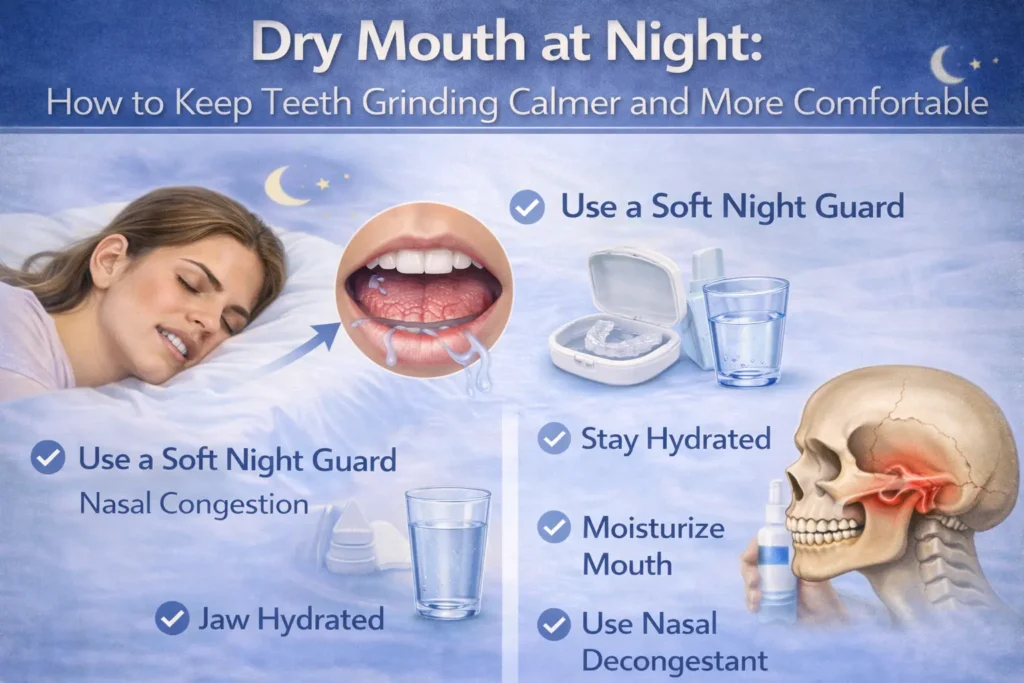
Dry mouth at night is uncomfortable, but it can also be a useful signal, often indicating what your sleep routine needs. Teeth grinding at night often feels stronger when your mouth feels dry, because a dry oral environment can make the jaw muscles feel more active, and the teeth feel more sensitive to pressure. A supportive plan combines hydration habits, calmer breathing, and a well-fitting night guard for teeth grinding so your sleep feels smoother and your mornings feel lighter.
Dry mouth at night and sleep comfort
Dry mouth at night happens when saliva flow feels lower during sleep, and that shift often feels more noticeable when the room air feels dry or when breathing happens through the mouth. Dry mouth while sleeping can also feel more intense after a day with less water, more caffeine, or long hours of talking. Waking up with dry mouth feels common, and it’s manageable when you follow a simple routine that supports moisture and relaxed sleep.
Teeth grinding at night and the “dry mouth effect”
Teeth grinding at night, also called sleep bruxism, can feel more intense when the mouth feels dry because the teeth and soft tissues feel less cushioned. Sleep bruxism often happens during light sleep, and keeping your mouth comfortable can help those moments feel more settled. Jaw clenching at night can also feel stronger when your lips part during sleep, because the jaw muscles can stay engaged longer. Dryness can also make the mouth feel more “awake,” making sleep feel lighter and more active. A more comfortable mouth often supports deeper rest, and deeper rest often supports calmer jaw muscles.
Why waking up with dry mouth and clenching can happen together
Mouth breathing supports dryness.
Mouth breathing during sleep often creates a dry airflow across the tongue and gums, which can make dryness feel worse by morning. Nasal breathing often feels calmer and more stable, and it supports a smoother moisture balance in the mouth.
Hydration supports a healthy, comfortable mouth.
Dehydration and dry mouth often occur together because maintaining steady hydration supports saliva production. A well-hydrated body usually supports a more comfortable mouth at night, and that comfort often supports a calmer jaw.
The sleep environment supports moisture.
A warm room, strong air conditioning, or heater airflow can make the air feel drier, and that dryness can transfer to the mouth. A more balanced room environment often supports a fresher mouth feel and a calmer sleep experience.
Signs that dry mouth while sleeping is influencing grinding.
These patterns often feel clear and helpful:
- You wake up with a sticky or dry tongue and a tight jaw feeling
- Your teeth may feel more responsive in the morning as they recover overnight.
- Your lips may feel dry when you wake up, a sign your body is ready to re-hydrate.
- Your mouth may feel dry after a full night’s sleep, showing your system is resetting.
- Your jaw may feel tired after dry-throat nights, reminding you to relax and care for it.
These signs feel useful because they guide you toward habits that support moisture and jaw comfort.
Night guard for teeth grinding: why it helps when your mouth feels dry.
A night guard for teeth grinding feels valuable because it adds a protective layer between your upper and lower teeth. That protection supports enamel comfort and helps reduce the impact of grinding pressure. A well-fitting custom night guard also feels smoother in the mouth, which supports better sleep consistency. OkiGuards custom night guards support comfort because they are designed around your impressions, providing a secure fit that feels natural night after night. A comfortable fit supports steady wear, and steady wear supports better protection.
Which OkiGuards style feels best for dry-mouth nights
- A Soft Night Guard feels cushioned and comfortable, ideal for clenching-focused sleepers who want a gentle feel.
- A Hybrid Night Guard feels balanced and great for moderate grinders who want comfort and durability.
- A Hard Night Guard feels strong and stable, and it feels supportive for heavy grinding patterns.
This choice feels easy when you match the guard to your clenching or grinding intensity.
A simple bedtime routine that supports moisture and calmer jaw muscles
1) Hydration timing that feels sleep-friendly
You can sip water steadily throughout the afternoon and early evening, which supports comfortable hydration by bedtime. You can enjoy a small glass of water about an hour before sleep, and this timing often feels comfortable.
2) A nasal breathing reset that feels relaxing
You can practice gentle nasal breathing for 1 minute before bed, which supports calmer jaw muscles. You can keep your lips softly closed and your teeth slightly apart, which supports a relaxed jaw.
3) A quick “jaw release” routine that feels soothing
You can place a warm compress on your jaw for 3 minutes, and the warmth helps soften the muscles. You can add a light massage to the cheeks and temples; that touch supports relaxation.
4) A mouth-friendly sleep setup that feels fresh
You can keep the room comfortably cool, and balanced air often supports better moisture. You can place a glass of water by the bed, and that choice feels reassuring.
Practical tips that support dry mouth at night
Choose gentle evening drinks.
Water feels supportive, and soothing caffeine-free drinks often feel comfortable too. A consistent evening drink routine supports steady hydration and a calmer mouth feel.
Keep evening habits smooth.
A light dinner often feels comfortable, and a calm wind-down supports deeper sleep. Deeper sleep often supports steadier breathing and calmer jaw activity.
Support saliva comfort in a tooth-friendly way.
Many people enjoy sugar-free options that feel gentle on teeth, as they support saliva flow and mouth comfort. A dentist-approved dry mouth product can also feel helpful for consistent comfort.
How to use your night guard on dry-mouth nights
You can follow a simple routine that feels easy:
- You brush and floss as usual.
- You rinse your night guard with cool or lukewarm water.
- You insert your night guard gently with your fingertips.
- Relax your jaw with slow breathing for 1 minute.
- You sleep with steady protection that feels comfortable.
This routine supports a clean guard and a comfortable mouth feel.
Cleaning tips that keep your guard fresh and comfortable
A clean guard feels better and helps keep your mouth fresher in the morning. You can rinse your guard every morning and night, and gently brush it with a soft toothbrush. You can let it air-dry fully, and full drying helps it retain a fresh feel. You can use a gentle cleaning tablet weekly to support clarity and comfort.
When your routine feels consistent, your results feel better.
Dry mouth at night is easier to manage when you treat it as a routine signal rather than a mystery. Teeth grinding at night often feels more comfortable when your mouth feels hydrated, your breathing feels steady, and your guard fits well. Sleep bruxism support feels strongest when you combine moisture habits with a custom night guard, which together help protect your smile and calm your mornings.
Frequently Asked Questions
Can dry mouth at night make teeth grinding worse?
Dry mouth at night can make grinding feel more noticeable, and better moisture habits often support calmer nights.
What helps wake up with a dry mouth?
Steady hydration, nasal breathing habits, and a balanced sleep environment often support a fresher mouth feel in the morning.
Which night guard feels best if I clench more than I grind?
A soft guard often feels very comfortable for clenchers, and a custom fit makes it easy to wear nightly.
Final note
Dry mouth at night feels easier to handle when you follow a simple routine that supports moisture and relaxed breathing. Teeth grinding at night often feels more manageable when your mouth is comfortably hydrated, and your jaw is calm before sleep. A custom OkiGuards night guard for teeth grinding supports your smile by adding a protective layer that feels secure and comfortable through the night. Consistent hydration habits, a clean guard routine, and steady nasal breathing support fresher mornings and a more relaxed jaw feel.