Jaw Clenching During Anxiety Attacks: Quick Grounding Techniques
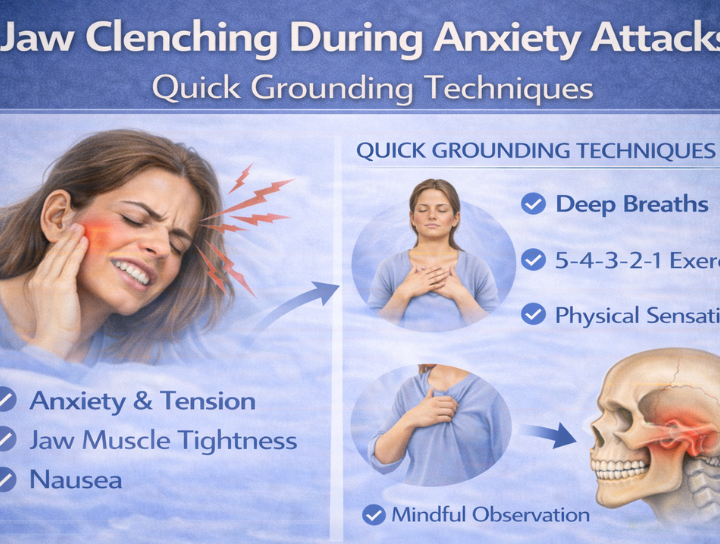
Anxiety attacks can flip your body into high alert in seconds, and jaw clenching is one of the most common “bracing” signals. Your teeth may gently come together, your cheeks may feel full, and your jaw can feel firm—signals that your body is holding tension and ready to relax.The helpful part is that anxiety jaw clenching responds quickly to short grounding tools that calm the nervous system and soften the jaw at the same time.This guide offers practical grounding techniques for anxiety you can use anywhere, plus an easy habit system to stop clenching your teeth during the day. When clenching continues during sleep, you’ll also see how an OkiGuard’s night guard for clenching fits naturally to support overnight protection and better morning recovery.
Why does anxiety make the jaw clamp down
During an anxiety attack, your nervous system activates a “ready for action” state. The body quickly seeks stability and often recruits strong muscles to do so. The jaw is powerful and highly responsive, so it becomes part of the bracing pattern—this is why clenching teeth anxiety can happen even when you are sitting still.
A simple model:
- Anxiety rises → body braces
- Breathing tightens → muscles engage
- Jaw joins the brace → teeth touch
- Teeth touch → clenching holds longer than needed
This loop is the core pathway behind jaw tightness anxiety.
The early warning sign you can use
Clenching is not just a problem—it can be a useful signal. These early signs often show up before anxiety peaks:
- Teeth touching when you are not eating
- Tongue pressing hard into the palate
- Pressure building in the cheeks or temples
- Breathing is getting “stuck” or shallow
Catching this early is a win, because a 10–20-second reset works best before the jaw fully locks.
Quick grounding techniques for anxiety that relax the jaw fast
1) The 10-Second “Unclench Switch”
This is the fastest, most discreet jaw reset.
- Lips gently closed
- Teeth slightly apart
- Tongue soft on the palate
- Slow exhale for 6 seconds
Repeat twice. Long exhales send a calming signal, and the jaw follows.
2) “Hands + Breath” Grounding (20 seconds)
This feels stabilising during a strong wave of anxiety.
- One hand on chest, one on belly
- Take 3 slow breaths
- At the end of each exhale, let the jaw feel “heavy” (teeth apart)
This is excellent for anxiety-related jaw clenching, which is often linked to faster breathing.
3) 5-4-3-2-1 Grounding (Jaw Cue Edition)
Use the classic grounding method, and add one jaw cue after each step:
- 5 things you see → teeth apart
- 4 things you feel → tongue soft
- 3 things you hear → slow exhale
- 2 things you smell → shoulders drop
- 1 thing you taste → jaw heavy
This is one of the most effective grounding techniques for anxiety because it resets attention and muscle tone together.
4) The “Tongue Anchor” (meeting-friendly)
Perfect for public places or meetings.
- Touch the tongue tip gently to the ridge behind your top front teeth
- Keep teeth slightly apart
- Take 3 nasal breaths
This gives the jaw a neutral “home position” and reduces jaw clenching quietly.
5) 30-Second Cheek Release (masseter reset)
If cheeks feel sore or tired from clenching teeth, anxiety:
- Place fingertips on the thick cheek muscle near your back teeth
- Gentle circles for 15 seconds each side
- End with one slow exhale and teeth apart
How to stop clenching teeth during an anxiety spike (IF–THEN plan)
Anxiety makes decision-making harder, so use this simple plan:
- IF you notice teeth touching → THEN do the Unclench Switch
- IF your breath speeds up → THEN do Hands + Breath Grounding
- IF your thoughts race → THEN do 5-4-3-2-1 with jaw cues
- IF cheeks feel heavy → THEN do the Cheek Release
Daytime prevention: micro-habits that stop clenching from building
The “Transition Reset”
Do a 5-second jaw reset at moments that already happen:
- opening a new tab
- sending a message
- joining a call
- standing up
Cue: lips together, teeth apart, slow exhale.
The “Soft Bite” visual cue
Use a tiny reminder:
- a dot sticker on your monitor
- a sticky note that says “Teeth Apart”
Every time you see it, take a slow exhale and relax your jaw.
These micro-habits reduce jaw tightness and anxiety throughout the day.
Where the OkiGuards night guard for clenching fits (real-life, natural use)
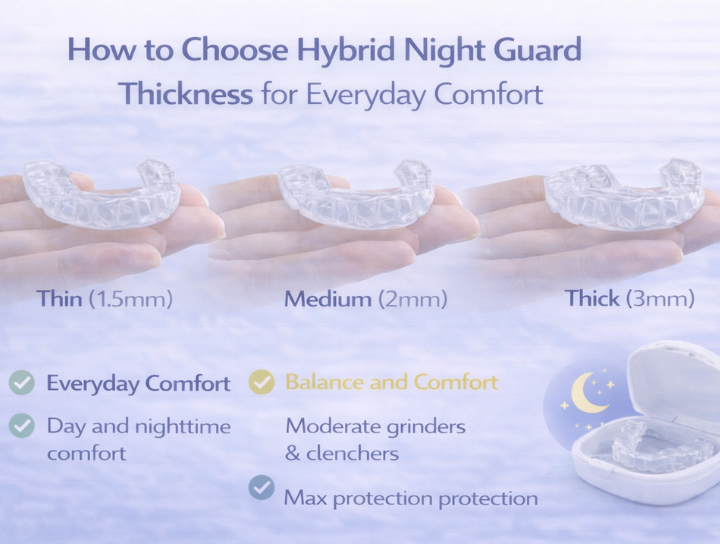
If clenching continues during sleep, the jaw muscles can remain active for hours, making mornings feel heavy. This is where an OkiGuard’s night guard for clenching fits naturally: it creates a stable protective surface between the teeth, reduces tooth-to-tooth pressure, and supports smoother overnight recovery—especially on anxiety-heavy days.
Simple bedtime routine with OkiGuards (step-by-step)
- Brush and floss as usual
- Rinse your OkiGuards night guard with cool or lukewarm water
- Seat it gently with your fingertips (no force)
- Do 60 seconds of Tongue Anchor + slow exhale
- Sleep with steady protection and a calmer jaw baseline
Morning care (keeps comfort consistent)
- Remove gently with even pressure
- Rinse + soft brush with mild soap
- Air-dry fully in a ventilated case
A clean, dry guard feels better and supports consistent nightly use.
Final note
Jaw clenching during anxiety attacks is a common bracing response, and it becomes easier to manage when you pair body-calming tools with jaw-specific cues. The most effective approach is simple: slow the exhale, slightly separate the teeth, and set the tongue into a relaxed anchor position. With consistent grounding techniques for anxiety, clenching-teeth anxiety feels less automatic, and jaw-tightness anxiety often shifts toward a calmer baseline. When clenching also happens during sleep, an OkiGuard’s night guard for clenching provides overnight protection and recovery, so mornings feel lighter and jaw comfort feels steadier day after day.