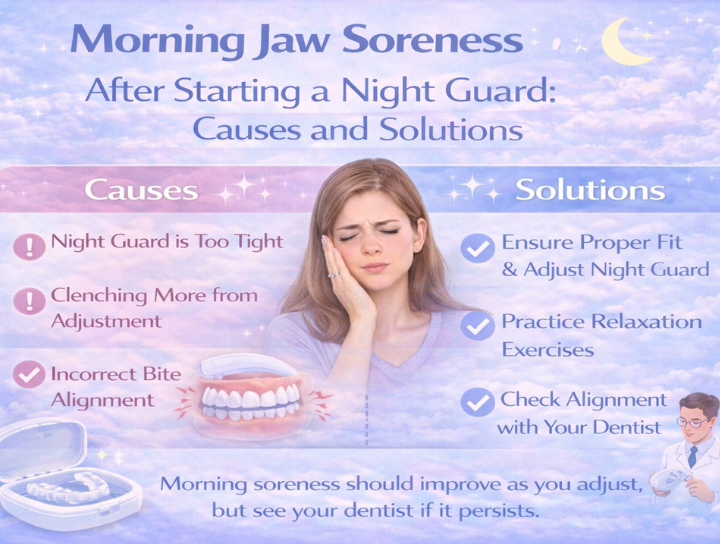
Morning Jaw Soreness After Starting a Night Guard: Causes and Solutions
Starting a night guard is a very positive step for your smile, your comfort, and your long-term nighttime routine. When you first begin wearing one, your mouth and jaw may go through a short adjustment phase as they get used to the new fit and feel. That early awareness can be very useful because it helps you understand how your bite is responding and what small changes can make your routine even smoother.For many people, mild jaw soreness, jaw stiffness, or a little extra morning jaw awareness means the muscles are adapting to something new. This adjustment period often becomes much easier as the guard becomes more familiar. The key is knowing which sensations are part of a normal transition and which signs suggest that a little extra support, like a night guard adjustment, could make the fit even better.
At OkiGuards, custom night guards are designed to provide a comfortable, protective nighttime experience. A custom fit gives you a strong starting point, and a few smart habits can help your routine feel even more relaxed.
Why jaw soreness can happen at first
A night guard changes the way your teeth come together at night, and that can feel very new in the beginning. Your jaw muscles are used to a familiar pattern, so when a custom guard is introduced, they may need a little time to adapt. This can show up as mild jaw soreness or a feeling of jaw stiffness in the morning.This is often part of a very normal getting-used-to-it phase. The jaw is learning a new resting pattern, and that process can feel more noticeable for the first few nights. Many people find that once the guard becomes part of their regular bedtime routine, their comfort improves nicely.A custom-fit guard from OkiGuards helps with this transition because it is made from your impressions, which provides a more natural, stable fit.
Teeth clenching can still play a role
If teeth clenching is part of your nighttime pattern, your jaw muscles may still stay active while you sleep. The upside is that the guard helps protect your teeth from direct contact, even as the jaw muscles continue learning a more supported routine.This is why a little early jaw pain or soreness can sometimes appear after starting a guard. It does not mean the routine is off track. It often means your jaw is adjusting while still carrying some of its usual nighttime habits. With time, a better fit, and a steady bedtime routine, things often feel much smoother.A night guard provides effective protection, and adding a few calming habits can also support your jaw muscles.
A new bite feeling can create jaw stiffness
One of the most common early changes is a different bite sensation in the morning. Because the guard sits between your teeth, your jaw experiences a new spacing and a new pattern overnight. That can cause temporary jaw stiffness as the muscles adjust to the change.
This feeling is helpful because it reminds you that your mouth is adapting to a protective new routine. The more consistent and comfortable the fit becomes, the easier that transition usually feels.
This is one reason custom options like the OkiGuards Soft Night Guard, Hybrid Night Guard, and Hard Night Guard are valuable. They are designed for specific grinding and clenching levels, which support a better match between your needs and your product.
Night guard adjustment can improve comfort
Sometimes the best solution is a small adjustment to a night guard. This is a very positive step because it helps fine-tune the fit and make a good experience even better. A guard may feel secure from the start, yet still benefit from a small refinement that improves balance, pressure distribution, or overall comfort.If the jaw feels consistently more aware in the same way each morning, a night guard adjustment can be a very practical next step.
Fit refinement is part of building a smoother, more personalized routine. Many people feel much better once the guard sits just right.A custom OkiGuards guard already starts from a strong impression-based fit, and small improvements, when needed, help you enjoy that custom feel even more.
Jaw relaxation exercises can support the transition.
Gentle jaw relaxation exercises can be a very helpful part of your bedtime or morning routine. These exercises support the muscles around the jaw and help your routine feel calmer and more balanced.Simple, easy movements can help loosen the jaw and make it feel more comfortable.
Many people like to open and close their mouths smoothly and gently, keep their lips together with their teeth relaxed, or practice slow breathing while keeping their jaws loose. These small habits can fit beautifully into a nighttime wind-down or morning reset.The combination of a custom guard and light jaw relaxation exercises often works very well because one supports the teeth while the other supports the muscles.
Jaw massage can feel very soothing
A gentle jaw massage can be another lovely way to support comfort. Light massage around the jaw muscles, cheeks, and temple area can help the whole face feel calmer and more relaxed. This simple care can make mornings feel more comfortable and become a positive part of your bedtime routine.Many people enjoy using jaw massage after waking up or before bed to help ease jaw discomfort. The key is to keep the touch light, slow, and comfortable. These small habits work well alongside your OkiGuards night guard routine.When the muscles feel supported, the whole transition into wearing a night guard can feel much smoother.
Choosing the right OkiGuards product matters
Comfort often begins with choosing the right product for your grinding or clenching level. OkiGuards offers several custom options, and that product match can play a big role in how natural the guard feels.The Soft Night Guard can be a great choice for lighter grinding, light teeth clenching, and first-time wearers who enjoy a gentler feel. The Hybrid Night Guard offers a balance of comfort and durability, which can feel especially helpful for moderate pressure. The Hard Night Guard provides stronger support for heavier clenching or grinding. That range gives you the chance to build a routine that feels more personalized from the very start.A better product match often supports a more comfortable jaw response, too.
A simple bedtime routine can help
A calm bedtime routine can support your jaw just as much as your teeth. Simple habits like cleaning your guard, placing it carefully, letting your jaw stay relaxed before sleep, and giving yourself a calm wind-down period can make a real difference.This kind of routine feels especially helpful when teeth clenching is a factor. The more settled the evening feels, the easier it is to create a smoother transition into sleep. That helps your OkiGuards fit naturally into your night rather than feel like a separate task.Consistency is one of the most helpful parts of this process. Small supportive habits repeated nightly often bring the best comfort.
When jaw soreness feels like useful feedback
Morning jaw soreness can be very useful feedback because it helps you notice how your bite, jaw muscles, and night guard are working together. Instead of seeing it as a setback, it can be viewed as information that guides a better fit and a better routine.That might mean giving your mouth a few more nights to adjust. It might mean adding jaw-massage or jaw-relaxation exercises. It also means asking for a night guard adjustment to make the fit feel even more balanced. Each of these is a positive step toward greater comfort.This mindset helps the whole experience feel more manageable and more encouraging.
Frequently Asked Questions
Is jaw soreness normal after starting a night guard?
Yes, mild jaw soreness can be a very normal part of the early adjustment period. Many people find that this feeling improves as the guard becomes more familiar.
Can teeth clenching still happen with a night guard?
Yes, teeth clenching can still be part of your nighttime pattern, and the good news is that the guard helps protect your teeth while your routine becomes more supported.
Can a night guard adjustment help jaw pain?
Yes, a night guard adjustment can be a very positive step if your fit would benefit from fine-tuning. Better balance and fit often lead to greater comfort.
Do jaw relaxation exercises help with morning soreness?
Yes, gentle jaw-relaxation exercises can support the jaw muscles and help mornings feel more comfortable.
Is jaw massage a good idea after wearing a night guard?
Yes, light jaw massage can feel very soothing and can support a calmer, more relaxed jaw area in the morning or before bed.
Which OkiGuards product is best for clenching?
The best option depends on your pressure level. The Soft Night Guard supports lighter clenching, the Hybrid Night Guard works well for moderate pressure, and the Hard Night Guard is a strong option for heavier clenching or grinding.
How long does it take to get used to a night guard?
Many people feel much more comfortable after a short adjustment period. Consistent use, a good fit, and a calm bedtime routine all help the process feel smoother.

Final note
A little morning jaw soreness, pain, or stiffness after starting a night guard is very common during the adjustment process. Your jaw is learning a new nighttime pattern, and that transition often becomes smoother over time, with consistency and the right support.If teeth clenching is part of your routine, a custom guard from OkiGuards can do a wonderful job protecting your teeth while your muscles adapt. Gentle jaw relaxation exercises, light jaw massage, and a thoughtful adjustment of the night guard can all help create a more comfortable experience. With the right product and a few simple habits, your bedtime routine can feel more balanced, more supportive, and more comfortable every night.