Soft Night Guard for Clenching: Best Sleeping Tips for First-Time Wearers
Starting a night guard routine feels like a smart step because it supports your teeth, your jaw, and your sleep comfort. A soft night guard for clenching often feels especially friendly for first-time wearers because it cushions the bite and feels gentle against the teeth. This guide shares practical bedtime tips that make wearing a night guard feel easy, explains how a soft guard compares to other options, and shows how to build a smooth nightly routine with an OkiGuards-style custom fit.
Why does clenching at night feel so intense
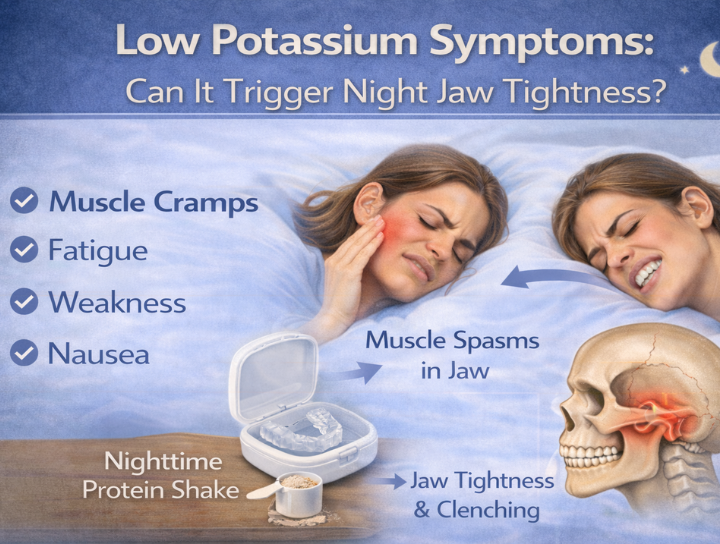
Night clenching happens when your jaw muscles stay active during sleep. Your teeth may gently come together for brief moments, and your jaw may feel strong and rested in the morning.Many people notice clenching during stressful weeks, busy work seasons, or nights with lighter sleep. A night guard supports you by creating a protective barrier and by helping your jaw settle into a more comfortable position.
What a soft night guard for clenching does
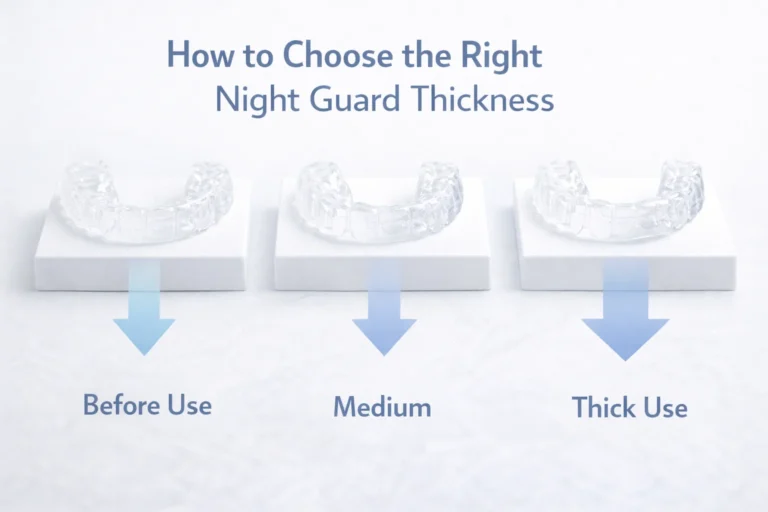
A soft guard is made from a flexible, cushioned material. It feels comfortable because it absorbs pressure and reduces direct tooth-to-tooth contact. For many clenchers, that “pillow-like” feel supports a calmer bite during sleep.
A soft guard is especially helpful when:
- Your main issue is clenching more than grinding
- You want a comfortable first-time experience
- You get occasional jaw tightness and want extra cushioning
- You want a guard that feels smooth and easy to adapt to
Does a night guard stop clenching?
A night guard provides realistic clench relief. Many people feel fewer symptoms because the guard:
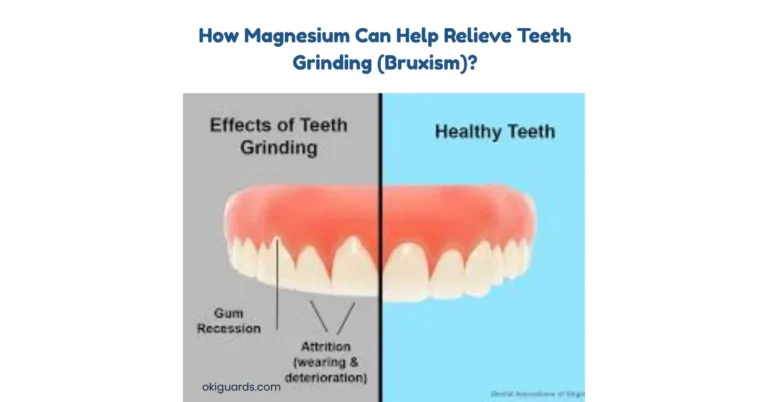
- Protects enamel from pressure wear
- Reduces stress on teeth and dental work
- Helps jaw muscles feel less overworked in the morning
- Creates a consistent “nighttime cue” that encourages a relaxed bite
A night guard is most effective when paired with a calm bedtime routine, good hydration, and a few jaw-relaxing habits.
Soft or hard—both night guards help protect your teeth from clenching.
This comparison makes choosing easier:
Soft night guard
- Feels cushioned and gentle
- Feels great for first-time wearers
- Works well for clenching and light-to-moderate grinding
- Feels smooth for sensitive teeth
Hard night guard
- Feels firm and very durable
- Works well for heavy grinding patterns
- Feels stable for strong bite pressure
- Often chosen when grinding is intense and frequent
Hybrid night guard
- Feels soft on the inside and strong on the outside
- Feels balanced for moderate grinders who want comfort
- Works well when you want cushioning plus extra strength
If you mainly clench, a soft night guard is often the most comfortable first step. If your grinding is strong or your guard wears down quickly, a hybrid or hard option can feel like a better long-term match.
First-night success: best sleeping tips for first-time wearers
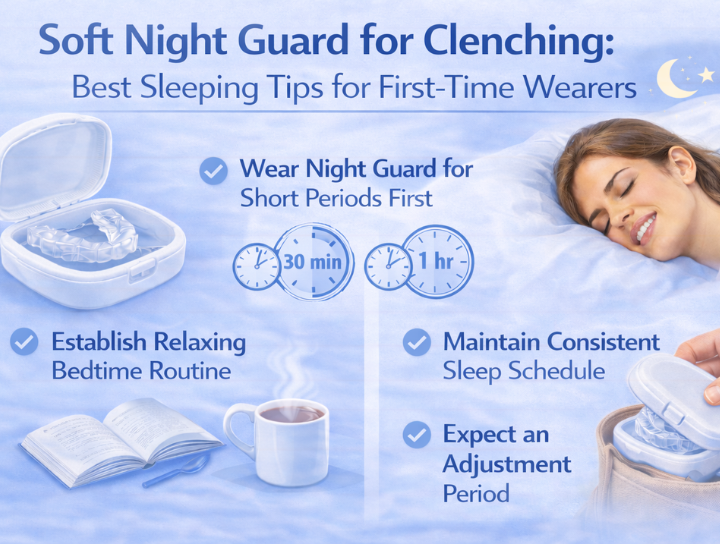
1) Wear it for a short “practice session” before bed
A short practice session helps your mouth adjust smoothly. You can wear your guard for 10–20 minutes while doing something relaxing. This practice helps your brain treat the guard as normal and comfortable.
2) Insert it gently and seat it evenly
A custom night guard feels best when it sits fully in place. You can press it in with your fingertips and ensure it feels even on both sides. A gentle insertion routine feels more comfortable than biting it into place.
3) Keep your jaw in the “lips together, teeth apart” position
- Lips stay softly closed
- Teeth stay slightly apart
- Tongue rests gently on the roof of the mouth
- This position encourages jaw relaxation and supports calmer clenching patterns.
4) Use slow nasal breathing for one minute
Slow breathing feels calming and supports jaw comfort. You can inhale through your nose for a smooth count and exhale slowly. This habit helps your jaw muscles feel less “switched on” as you fall asleep.
5) Use a simple jaw-relax routine
- Warm compress on the jaw for 3–5 minutes
- Gentle cheek and temple massage for 30 seconds
- Small, slow jaw opening and closing for 5 reps
- This routine supports softer muscles and smoother sleep.
6) Choose a sleep position that supports jaw comfort
Many people feel more relaxed when they keep their neck neutral and their jaw supported by a stable pillow. A supportive pillow helps keep your head aligned, which feels good for your jaw and facial muscles.
7) Keep water nearby and aim for a comfortable mouth feel
A comfortable mouth supports better sleep. A few sips of water earlier in the evening often feels helpful, and a calm bedtime routine supports steady saliva flow. A soft guard feels even better when your mouth feels comfortably hydrated.
Night guard jaw pain: what helps fast
A soft guard feels gentle, and comfort improves quickly with small tweaks. If you notice jaw soreness, these steps often feel supportive:
- Shorten wear time for 2–3 nights, then build up gradually
- Use a warm compress before bed
- Keep your jaw relaxed during the day with “teeth apart” check-ins
- Avoid very chewy foods in the evening so your jaw feels rested
- Focus on slow breathing at bedtime to reduce muscle tension
Jaw comfort often improves as your muscles adapt, and your routine becomes consistent.
Wearing a night guard: a daily routine that feels easy
A consistent routine helps you enjoy wearing a night guard because everything feels predictable.
Night routine
- Brush and floss
- Rinse the guard with cool or lukewarm water
- Insert the guard gently
- Do one minute of slow breathing
- Sleep comfortably
Morning routine
- Remove the guard gently
- Rinse it right away
- Brush it lightly with a soft toothbrush
- Air-dry it fully
- Store it in a ventilated case
Best night guard for teeth grinding: where a soft guard fits.
A soft guard can work well for mild grinding and feels excellent when clenching. For heavier grinding, many people prefer a hybrid or hard guard because the outer structure holds up strongly over time. Your best match depends on your intensity, your comfort preference, and how quickly your guard shows wear.
A helpful approach is:
- Choose Soft when comfort and clenching relief are your main goals
- Choose Hybrid when you want comfort plus extra durability
- Choose Hard when grinding is heavy and consistent
OkiGuards-style custom options feel smoother because the fit matches your impressions, which supports stability and comfort all night.
Frequently Asked Questions
Does a night guard stop clenching?
A night guard improves comfort and protects teeth from clenching pressure, and many people report fewer morning symptoms with consistent use.
Hard or soft night guard for clenching?
Soft guards often feel best for first-time wearers and clenching-focused patterns because the cushioning feels gentle and comfortable.
What if I wake up and the guard feels strange?
That experience feels common in the first week, and comfort improves as your mouth adapts. A short practice session before sleep helps a lot.

Final note
A soft night guard feels like a friendly way to protect your teeth and help keep your jaw calmer at night. When you pair it with a simple bedtime routine, gentle insertion habits, and consistent cleaning, wearing a night guard feels easy and rewarding. With a custom-fit OkiGuards guard, your nights can feel more comfortable, and your mornings can feel lighter and more refreshed.