How Teeth Grinding (Bruxism) Causes Headaches
If you wake up with a tight, heavy feeling around your temples—or you notice morning headaches that seem to fade as the day goes on—your jaw may be a bigger part of the story than you think. Teeth grinding (also called bruxism) is a common habit where you grind, clench, or press your teeth together. Many people experience this during sleep, and they usually discover it later through small, manageable signs in the morning. The encouraging news is that bruxism-related headaches are very treatable. Once you understand why they happen, you can choose support that protects your teeth, helps your jaw feel calmer, and makes mornings feel noticeably better. In this guide, you’ll learn how grinding triggers headache patterns, what signs to look for, and which teeth grinding treatment options are most helpful—including the right Night Guard.
What is Teeth Grinding (bruxism)?
Bruxism is an umbrella term for two closely related habits:
- Grinding (teeth sliding and rubbing)
- Clenching (teeth pressing together with firm pressure)
Both can happen while you’re awake, but sleep bruxism is prevalent because it’s automatic. You don’t have to “try harder” to stop it. Instead, the best approach is to protect your teeth and support your jaw so it can relax. A key point: you don’t always hear grinding sounds. Many people are primarily clenchers, and clenching can be silent yet still strong enough to tire jaw muscles and contribute to morning headaches.
How Teeth Grinding causes headaches
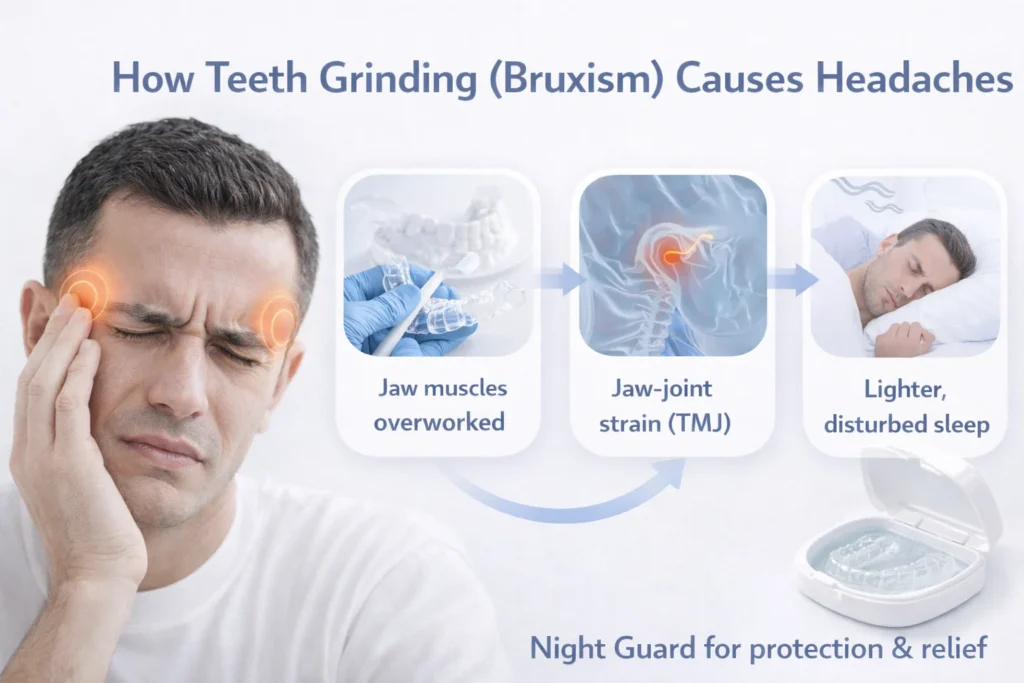
Bruxism headaches usually come from a combination of three comfort-focused mechanisms.
1) Your jaw muscles stay active for too long
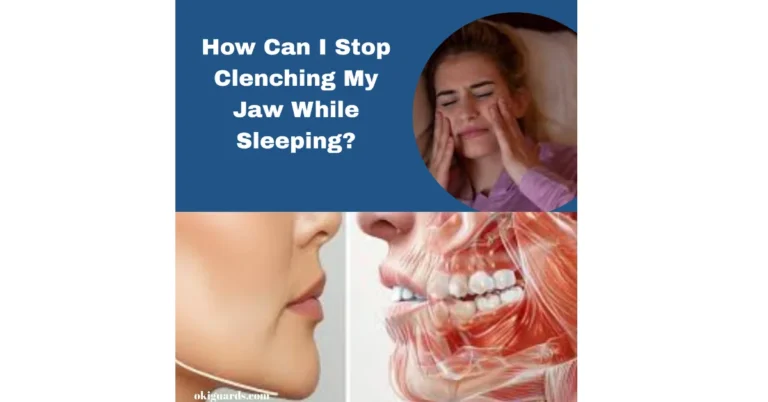
Your chewing muscles especially the ones near the temples are powerful. When you grind or clench, those muscles can stay “switched on” for long stretches. Like any muscle that works overtime, they can feel fatigued. That muscle fatigue can show up as temple pressure, a tight head feeling, or a morning headache.
2) Extra workload in the jaw joint region (TMJ area)
Your jaw joint sits in a region that connects closely with facial muscles and nerves. When bruxism is frequent, the joint area can carry an extra workload. The body can interpret that activity as tension that spreads across the temples, forehead, cheeks, or jawline.
3) Sleep becomes lighter and less settled
Sleep bruxism often happens around brief sleep shifts. Even if you don’t fully wake up, those micro-changes can make sleep feel less deep. When sleep is lighter, many people are more likely to notice morning headache patterns. Supporting better sleep and calmer jaw muscles is a win-win. Together, this forms a clear and manageable pattern: the jaw stays active overnight, sleep continues its natural cycles, and the morning brings helpful signals that guide awareness.
Signs your headaches may be linked to Teeth Grinding
- Bruxism-related headaches often have a recognisable “signature.”
- If you relate to several of these, your jaw may be involved:
- Morning timing: you notice it most on waking, and it softens as the day goes on.
- Temple focus: the sensation sits around the temples or sides of the head.
- Jaw clues: you notice jaw tightness, cheek muscle fatigue, or a “busy bite” feeling in the morning.
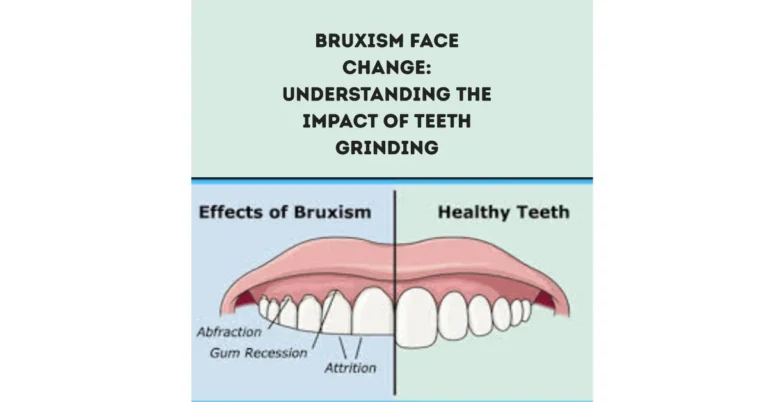
- Tooth clues: sensitivity, worn edges, tiny chips, or your dentist has mentioned grinding or clenching.
- These clues are not a reason to worry. They’re proper signals that help you choose the most effective support.
Why clenching can cause headaches even without noticeable tooth wear
Some people expect grinding to leave noticeable tooth changes but clenching can be just as crucial for headaches. Clenching is mainly pressure. Because there’s less sliding, teeth may look normal early on, yet the muscles can still be working hard. If your main symptom is headaches or temple tightness rather than worn teeth, clenching may be the bigger player. That’s why the best plan focuses on muscle comfort and protection, not just visible tooth wear.
A dentist check is a positive step (and often fast)
A dentist can often identify bruxism by checking wear patterns, bite contact points, and jaw muscle tenderness. They can also help you choose the right type of guard for your exact pattern. Even if your grinding is mild, early protection is a smart move because it supports comfort and keeps your enamel protected long-term.
Teeth grinding treatment: what actually helps headaches
A great teeth-grinding treatment plan usually has two parts:
- Protection at night to reduce tooth-to-tooth contact and jaw overload.
- Simple daily habits that help the nervous system and jaw feel calmer.
Night-time protection with a Night Guard
A Night Guard creates a protective layer between the top and bottom teeth. It helps distribute pressure more evenly and reduces direct tooth-to-tooth contact. If you’re searching for a night guard for teeth, here’s the most practical truth: the “best” guard is the one you’ll actually wear consistently. Comfort and fit matter because they make wearing it easy. Many people notice that once they start wearing a comfortable guard consistently, mornings feel smoother and the jaw feels less “worked.”
Supportive habits that pair well with a Night Guard
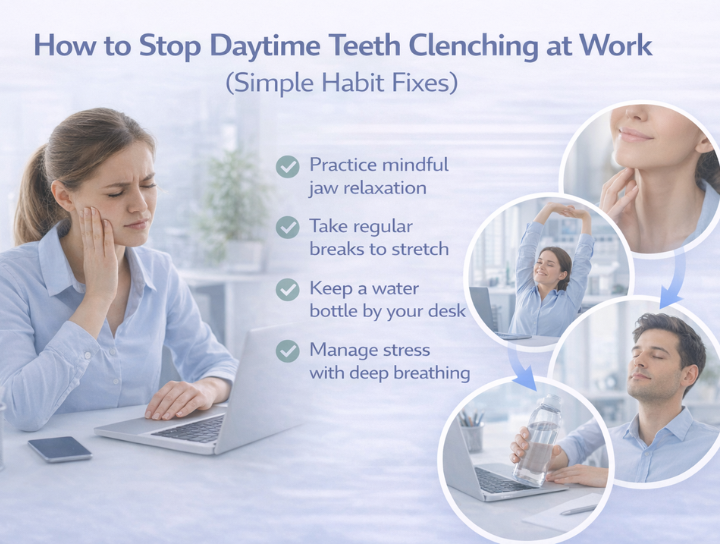
These simple habits often support calmer nights: A short wind-down routine before bed (even 15–30 minutes). Moving caffeine earlier in the day if you’re sensitive. Reducing late-night screen intensity and keeping bedtime consistent. Daytime jaw awareness—many people like the cue “lips together, teeth apart.” Gentle jaw relaxation, like warm compresses or light cheek massage, if it feels soothing. These steps are not strict rules. They’re flexible options you can try and keep if they feel good.
Mouth guard for grinding teeth: what to choose
- When people search for a mouth guard for grinding teeth, they often see store-bought options and custom options. The most significant difference is fit.
- Store-bought guards can be a quick starting point for some people, but they may feel bulky, uneven, or shift during sleep.
- Custom options are designed around your bite, which often feels more stable and natural especially for nightly wear.
- If headaches are part of your bruxism pattern, a stable, comfortable fit is a massive advantage because it supports consistent use.
Best night guard for teeth grinding: what “best” really means.
- The phrase best night guard for teeth grinding is popular because people want something that actually feels good and helps.
- In real life, “best” usually comes down to three things.
- Grinding intensity: light clenching vs vigorous grinding.
- Comfort preference: thin feel vs maximum durability.
- Fit quality: stable, balanced, and easy to sleep with.
- If you’re not sure what you need, your dentist can recommend a style based on your bite and wear pattern.
How OKI Guards can support better mornings
If you want a comfort-first solution, custom night guards can be a significant step especially if you’ve tried a generic guard and didn’t love the feel. At OKI Guards, the focus is on custom-fit protection designed for consistent nightly wear. When the guard feels natural, it becomes an easy habit. And that consistent protection is what many people credit for calmer jaw mornings and fewer headache-style wakeups.
Frequently Asked Questions
Can Teeth Grinding cause headaches even if I don’t hear it?
Yes. Many people mainly clench, and clenching can be completely silent. Morning temple tightness and jaw fatigue are common clues.
How long does it take for a Night Guard to help?
Some people notice improvement quickly, while others see steady progress over a few weeks as the jaw muscles relax and sleep becomes more settled. Consistent wear is the most significant success factor.
Is a mouth guard for grinding teeth the same as a Night Guard?
People often use the terms interchangeably, but a Night Guard is designed specifically for sleep bruxism (not sports impact).
What else helps besides a night guard for teeth?
Supportive habits—like consistent sleep routines, moving caffeine earlier, and daytime jaw awareness—often make a noticeable difference alongside protection.
Final note
Teeth grinding (bruxism) can trigger headaches because it keeps jaw muscles active, increases workload in the jaw joint region, and can make sleep feel lighter. The bright side is that the solution path is straightforward and optimistic. A comfortable Night Guard especially a well-fitted night guard for teeth helps protect tooth surfaces and support calmer jaw mornings. Combine that with a gentle bedtime routine and simple daytime jaw resets, and many people are pleasantly surprised by how much better mornings can feel.