Why Teeth Grinding Sounds Loud at Night (And What It Means)
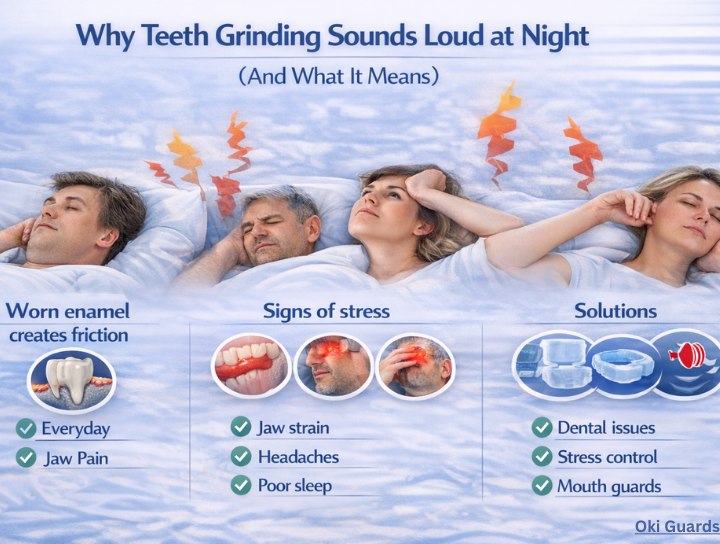
Teeth grinding can sound surprisingly loud at night because the jaw muscles are powerful and the tooth surfaces can create friction during brief sleep episodes. Many people search for teeth grinding sounds because they want a clear explanation, a calmer plan, and practical steps that support quieter nights and more comfortable mornings. This guide explains what teeth grinding sounds like, why loud teeth grinding occurs, what the sound often reflects about movement and pressure, and how a well-fitted custom OkiGuards night guard supports tooth protection and smoother jaw mechanics during sleep.
What Does Teeth Grinding Sound Like?
People describe what teeth grinding sounds like in a few common ways, and these descriptions help identify the movement pattern.
- Many people hear a rough, scraping, “sandpaper” sound when their teeth slide across each other.
- Some people hear a clicking sound when the jaw closes firmly, and the teeth contact quickly.
- Some people hear a rhythmic rubbing sound during short bursts, especially during lighter sleep.
These sound types feel useful because they reflect how the jaw is moving, and movement information helps guide supportive solutions.
Why Teeth Grinding Sounds Can Feel So Loud at Night
Jaw Muscles Generate Strong, Efficient Force
The jaw-closing muscles, especially the masseter and temporalis, can produce impressive force during sleep. When that force combines with sliding, the sound becomes more noticeable. This muscle strength is a normal part of human anatomy, and it becomes a benefit when it is guided into a more stable, protected pattern.
Tooth Surfaces Create Friction During Micro-Sliding
A grinding episode often includes tiny side-to-side movements. Those micro-slides create friction between enamel surfaces, and friction can produce a clear sound. A smoother bite surface during sleep supports smoother movement and a quieter experience.
Bedroom Acoustics Amplify Small Sounds
Nighttime environments tend to be quiet, so even small noises feel prominent. “Hard surfaces like walls and headboards can reflect sound, making it easier for a sleeping partner to notice and support your nighttime comfort. A simple protection setup supports confidence because it reduces friction and supports calmer contact.
Light Sleep and Sleep Transitions Support More Audible Episodes
Grinding often appears during brief transitions between sleep stages. These transitions can occur more often in the second half of the night, and more transitions increase the chances of sound. A smoother sleep routine supports a steadier night and results in fewer audible moments.
Loud Teeth Grinding: What the Sound Often Indicates
Loud teeth grinding often suggests that friction and pressure are occurring simultaneously. Sound can reflect a few practical elements that guide next steps.
Sliding Movement Is Happening
A scraping sound usually reflects movement across tooth surfaces. This clue supports the idea that a stable, protective surface can be very helpful.
The Bite Is Meeting Firmly
A sharp click or clack often indicates firm contact. This pattern often pairs with clenching episodes, and a guard helps protect the teeth during these contacts.
Short Episodes That Support Better Sleep Awareness
Many grinding sounds occur in brief moments, offering helpful cues to support relaxation and nighttime comfort. These bursts often align with micro-arousals, and a calmer sleep rhythm supports fewer bursts over time.
Teeth Grinding at Night Sound: What It Means for Teeth and Jaw Comfort
Teeth grinding at night usually means the teeth are contacting with enough pressure or friction to create noise. The positive takeaway is that sound provides information early, and early information supports early protection. Tooth surfaces stay strongest when they are protected from repeated friction, and jaw muscles feel more comfortable when the bite closes on a stable surface.Sound also provides a helpful opportunity to support a partner. When a partner hears the sound, it becomes easier to notice patterns related to sleep position, stress weeks, late caffeine timing, or congestion nights, and those patterns support constructive changes.
Grinding Teeth Sound Effect: Why People Search It and What to Know
People search for the grinding-teeth sound effect to determine whether the noise they hear matches bruxism. A true grinding sound often has a distinct, repetitive pattern, offering a helpful cue to become more aware of your jaw and support its relaxation. Many people also hear short clicks or taps, which often align with clenching their teeth.A practical approach is to observe patterns with curiosity. When the sound appears more often after busy days, late screen time, or alcohol nights, it creates a clear path for supportive habit upgrades.
Common Triggers That Make Grinding Sounds More Noticeable
Grinding episodes often increase during lighter sleep or during transitions to increased arousal. These triggers feel workable because they respond well to gentle routine improvements.
Sleep schedule shifts
A consistent sleep schedule supports smoother sleep stages and fewer arousal transitions.
Late caffeine timing
Earlier caffeine timing supports steadier sleep depth and calmer muscle activity.
Nasal congestion and mouth breathing
Comfortable breathing supports smoother sleep. A simple congestion routine supports calmer nights and less jaw bracing.
High mental load weeks
Busy weeks often increase body bracing. A calming wind-down routine supports nervous system settling and supports a quieter jaw pattern.
How a Night Guard Helps When Teeth Grinding Sounds Loud
A night guard helps protect teeth by creating a barrier between the upper and lower teeth. This barrier supports two key improvements that often reduce sound:
- Less enamel-to-enamel friction, which supports quieter sliding
- More stable bite contact, which supports smoother muscle coordination
A custom-fit guard supports these benefits because it seats securely and stays consistent night after night. Consistent wear supports consistent results, and consistent results support calmer mornings.
How OkiGuards Fits Into a Quieter, More Comfortable Routine
OkiGuards provides custom night guards made from an at-home impression kit, and the custom fit supports stable seating and predictable comfort. A stable fit supports a stable bite surface, and a stable surface supports smoother movement patterns that often feel quieter.
Step-by-Step: How to Fit and Use Your OkiGuards Night Guard
Step 1: Set up the impression kit calmly
You place the kit items on a clean surface, wash and dry your hands, and read the instructions once to familiarise yourself with the flow.
Step 2: Practice tray placement once
A quick practice placement supports confidence and supports a smoother impression moment.
Step 3: Make the impression with gentle, even pressure
You mix the putty as instructed, fill the tray evenly, seat it, and bite down with gentle, even pressure while breathing calmly through the nose.
Step 4: First wear feels smooth
You rinse the guard with cool water, seat it evenly with your fingers, and press gently until it feels secure. Slow breaths help the jaw feel relaxed.
Step 5: Morning care supports long-term comfort
You remove gently with even pressure, rinse, brush lightly with a soft brush and mild soap, rinse again, and air-dry fully in a ventilated case.
This routine supports comfort by keeping the fit stable and the surface clean.
A Simple “Quieter Nights” Plan That Feels Easy
This plan supports progress without feeling complicated.
Create a 3-minute wind-down
A calm wind-down supports smoother sleep transitions. A warm shower, soft lighting, and a slow breathing reset support a steady start to sleep.
Support nasal breathing comfort
A humidifier, saline rinse, or a warm drink supports easier breathing, and easier breathing supports calmer jaw activity.
Use a gentle jaw relaxation cue
The “lips together, teeth apart” posture helps relax the jaw muscles in the evening. A soft tongue-on-palate position supports a calm jaw rest posture.
Wear your night guard consistently
Consistent wear supports consistent protection, and consistent protection supports calmer, smoother contact at night.
How to Help a Sleep Partner Feel Supported
A partner often feels better with a clear plan. A simple, positive partner approach supports teamwork:
- Share that the sound is a common bruxism sign, and the plan supports protection and comfort.
- Use a night guard consistently to keep the bite surface protected.
- Try sleep position adjustments that support a comfortable jaw and steady breathing.
- Use white noise if the room is very quiet, as it helps create a smoother sound environment.
These steps support restful sleep for everyone.
Frequently Asked Questions
What does teeth grinding sound like?
Teeth-grinding sounds often include scraping, rubbing, clicking, or rhythmic rough sounds that come in brief bursts, and these sounds provide helpful clues about jaw movement.
Does loud teeth grinding mean strong grinding?
Loud teeth grinding often reflects friction plus pressure, and the sound helps guide a protective plan that supports tooth safety and smoother jaw mechanics.
Is a grinding teeth sound effect the same as real bruxism?
A grinding teeth sound effect usually imitates the rough rubbing pattern that real grinding can produce. Real bruxism often appears in short, repeated episodes that a partner may notice.
What helps reduce teeth grinding at night?
A consistent sleep routine, comfortable breathing, and a custom-fit night guard help ensure smoother contact and quieter nights.
Can a night guard reduce teeth grinding sounds?
A night guard can reduce sound by reducing enamel-to-enamel friction and supporting a stable bite surface, and a custom fit supports consistency.
How do I keep my night guard comfortable and clean?
A daily rinse, gentle brushing, thorough rinsing, and full air-drying in a ventilated case support long-term comfort and freshness.

Final note
Teeth grinding can sound loud at night because jaw muscles are strong, tooth surfaces can create friction during micro-sliding, and quiet rooms amplify small sounds. The best part is that sound offers early information that supports early protection. When you understand the sounds of teeth grinding, you can connect them to movement patterns, sleep transitions, and breathing comfort, and build a simple plan that supports quieter nights and more comfortable mornings. A custom-fit OkiGuards night guard protects teeth, provides a stable bite surface that often feels smoother and quieter through the night, and supports consistent wear for consistent results. With a calm wind-down routine, comfortable nasal breathing support, and a reliable night guard habit, loud grinding sounds become easier to manage, and sleep feels more peaceful and restorative.