How to Choose the Right Night Guard Thickness
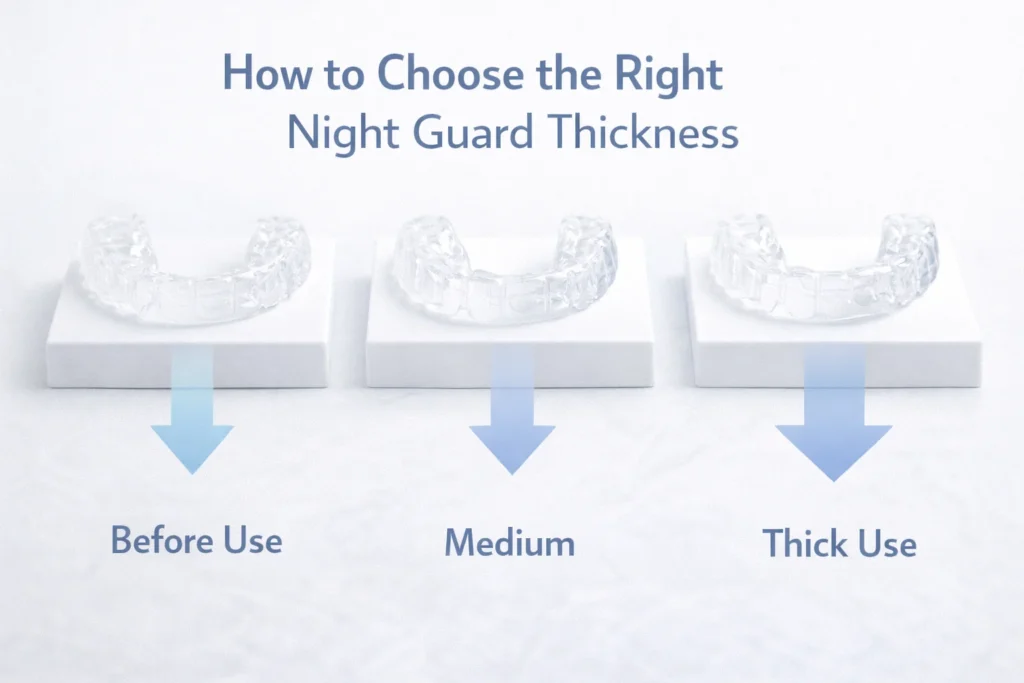
The right night guard thickness depends on your grinding intensity, preferred mouthfeel, guard material, and dental condition. A 1.0–1.5 mm night guard provides a slim feel for light grinding or daytime clenching. A 2.0 mm guard offers a comfortable balance for light-to-moderate grinding. A 3.0 mm guard provides additional durability for heavy grinding and strong clenching. For many users, 2.0 mm is the best starting point because it combines comfort, protection, and easy adaptation. Heavy grinders commonly benefit from a 3.0 mm Hybrid or Hard Night Guard, while light grinders may enjoy the slimmer feel of a 1.0–2.0 mm appliance. The best night guard thickness works together with an accurate custom fit and suitable material. A dental professional can also evaluate your teeth, bite, restorations, and grinding pattern before recommending a personalized option.
Night Guard Thickness Comparison
| Thickness | Best suited for | Mouthfeel | Protection |
| 1.0–1.5 mm | Light grinding or daytime clenching | Slim and lightweight | Light |
| 2.0 mm | Light-to-moderate grinding | Balanced and comfortable | Moderate |
| 3.0 mm | Heavy grinding or strong clenching | Firm and substantial | High |
This comparison provides a helpful starting point. Material, fit, grinding strength, and comfort preferences also contribute to the final decision.
What Does Night Guard Thickness Mean?
Night guard thickness refers to the amount of material used to create the appliance. Manufacturers usually express this measurement in millimetres. A thicker night guard places more material between the upper and lower teeth. This additional material supports durability when the appliance receives strong and repeated grinding contact. A thinner night guard creates a lightweight profile that many people find easy to wear. The completed appliance may have slight variations because the material is formed around the unique contours of the teeth. Accurate customization helps the guard remain secure and allows its thickness to support comfortable wear.
The ideal thickness creates a balance between:
- Grinding protection
- Material durability
- Comfortable wear
- Secure placement
- Easy adaptation
- Personal mouthfeel
A well-fitted thin guard can feel more comfortable and stable than a bulky generic appliance. Fit and thickness should therefore be considered together.
How Thickness Affects Comfort and Protection
Thickness influences how a night guard feels and how much material is available to receive grinding contact.
Thin Night Guards
A thin night guard usually feels light and discreet. It leaves more room inside the mouth and may also support comfortable speaking during occasional daytime use.
A 1.0–1.5 mm guard can suit people who:
- Have light grinding patterns
- Clench during the day
- Prefer a minimal mouthfeel
- Are beginning a night guard routine
- Want a less noticeable appliance
A custom thin guard can still create an effective surface between the teeth when its thickness matches the wearer’s grinding level.
Medium Night Guards
A 2.0 mm night guard provides a balanced choice for many users. It contains enough material to support regular protection while maintaining a manageable profile.
A medium guard can suit people who:
- Have light-to-moderate grinding
- Want comfort and protection together
- Prefer a balanced nightly appliance
- Are selecting their first custom guard
- Value easy adaptation
OkiGuards offers its Soft Night Guard in 2.0 mm because this thickness complements its cushioned material. The Hybrid Night Guard is also available in 2.0 mm for users seeking interior softness with exterior strength.
Thick Night Guards
A 3.0 mm night guard provides additional material for heavier grinding and stronger clenching. Its substantial design supports greater wear resistance and a more structured feel.
A thick guard commonly suits people who:
- Have confirmed heavy grinding
- Apply strong clenching pressure
- Create deep marks in softer guards
- Prefer a firm and substantial appliance
- Want greater durability
OkiGuards offers 3.0 mm Hybrid and Hard Night Guards, allowing heavy grinders to choose between a comfortable dual-layer design and a fully firm appliance.
Thickness and Materials: Soft, Hard, and Dual-Layer Feel Different
Grinding intensity provides the clearest starting point for selecting night guard thickness.
Light Grinding
Light grinding may create gentle surface marks while allowing the appliance to maintain its shape. A slim or medium guard can provide a comfortable protective layer for this level of activity. A 1.0–1.5 mm guard delivers a lightweight feel. A 2.0 mm Soft Night Guard provides additional cushioning for users who prioritize flexibility and comfort.
Moderate Grinding
Moderate grinding creates regular contact and may leave visible marks on an appliance over time. A 2.0 mm Hybrid Night Guard often provides an excellent balance between comfort and durability. Its soft inner layer follows the shape of the teeth, while its firm exterior receives grinding contact. This dual-layer construction makes the medium Hybrid Guard a versatile nightly option.
Heavy Grinding
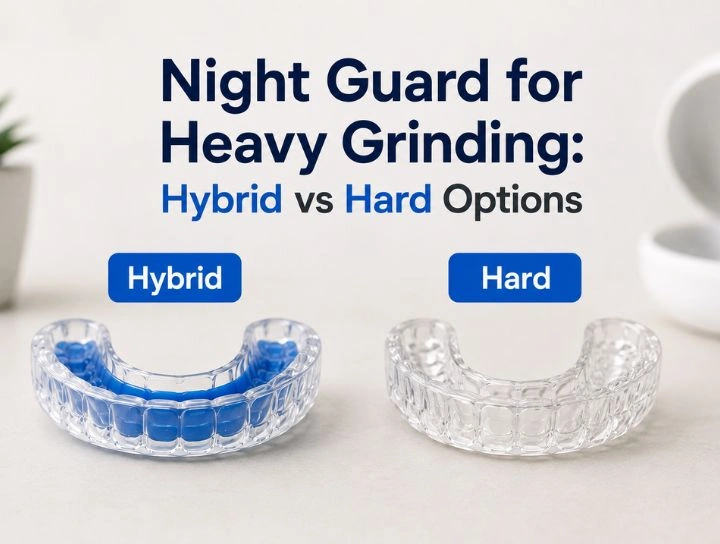
Heavy grinding produces strong and repeated contact. A 3.0 mm Hybrid or Hard Night Guard generally provides greater durability for this pattern. The 3.0 mm Hybrid Guard offers a soft interior with a durable exterior. The 3.0 mm Hard Night Guard provides a firm and stable surface for people seeking maximum wear resistance. A dentist can confirm grinding severity by reviewing tooth surfaces, jaw muscles, restorations, and existing appliance wear.
How Material Changes the Feel of Thickness
Two guards with the same thickness can feel different because their materials respond differently inside the mouth.
Soft Night Guard
A Soft Night Guard uses flexible and cushioned material. Its gentle texture can make 2.0 mm feel comfortable and easy to adapt to. A Soft Guard commonly suits light grinders, mild clenchers, first-time users, and people who prioritize flexibility. OkiGuards offers its Custom Soft Night Guard in 2.0 mm to provide cushioning with a practical nightly profile.
Hybrid Night Guard
A Hybrid Night Guard combines a soft inner layer with a firm outer layer. This construction brings comfort and durability together.
OkiGuards Hybrid Night Guards are available in:
- 1.0 mm for lighter grinding and a slim feel
- 2.0 mm for balanced comfort and durability
- 3.0 mm for heavier grinding and clenching
The 2.0 mm Hybrid is a strong all-around choice, while the 3.0 mm version provides additional material for heavier pressure.
Hard Night Guard
A Hard Night Guard uses firm material throughout the appliance. Its smooth and rigid construction provides a stable contact surface for moderate-to-heavy grinding.
OkiGuards Hard Night Guards are available in:
- 1.5 mm for a slim and firm appliance
- 3.0 mm for heavy grinding and maximum durability
The 3.0 mm Hard Night Guard is the strongest OkiGuards option for users who consistently create substantial wear in softer appliances.
Which Thickness Offers the Best Comfort?
Comfort comes from thickness, material, custom fit, edge finishing, and personal preference.
A thinner appliance may feel more natural for users who enjoy a minimal profile. A 2.0 mm guard may provide the best balance for regular nightly wear. A 3.0 mm guard can feel reassuring and stable for users who value additional protection.
The following guidance can simplify your selection:
- Lightest feel: 1.0–1.5 mm
- Best overall balance: 2.0 mm
- Greatest material support: 3.0 mm
- Softest experience: 2.0 mm Soft Guard
- Balanced experience: 2.0 mm Hybrid Guard
- Heavy-grinding support: 3.0 mm Hybrid or Hard Guard
A precise custom fit helps every thickness remain stable. Smooth edges and accurate impressions also support comfortable nightly wear.
What Thickness Is Best for Heavy Grinding?
A 3.0 mm Hybrid or Hard Night Guard is generally best for heavy grinding. Choose a 3.0 mm Hybrid Guard when you want a cushioned interior, firm outer surface, and balanced combination of comfort and strength. Choose a 3.0 mm Hard Guard when you want maximum durability, firm support, and a stable surface for strong grinding or clenching. People who experience rapid appliance wear can show their current guard to a dentist. Its wear pattern can help the dentist assess grinding intensity and recommend a suitable design.
What Thickness Is Best for Light Grinding?
A 1.0–2.0 mm night guard generally suits light grinding. A 1.0 or 1.5 mm appliance provides a slim feel for lighter contact or daytime clenching. A 2.0 mm Soft Guard offers additional cushioning and flexibility. First-time users frequently appreciate a 2.0 mm Soft or Hybrid Guard because these options provide comfortable coverage while supporting easy adaptation.
Does Thickness Affect Durability?
Thickness can influence durability because a thicker appliance contains more material to receive grinding contact. A 3.0 mm guard generally provides greater wear capacity than a similar 1.0 mm guard made from the same material. Material also contributes to durability. Soft material provides flexibility, Hybrid material balances cushioning with exterior strength, and Hard material provides maximum wear resistance. Accurate fit supports even contact across the appliance. Consistent cleaning and proper storage also help maintain its shape, surface, and freshness.
Thickness for Crowns and Dental Work
A custom night guard can provide a protective surface around crowns, bridges, veneers, implants, and other restorations. The ideal thickness depends on the location of the dental work, grinding intensity, available space, and bite relationship. A 2.0 mm Hybrid Guard may provide a comfortable combination of cushioning and firmness for many people with restorations. A 3.0 mm Hard Guard may suit heavy grinding when a dental professional confirms its suitability. Professional guidance adds value when you have extensive dental work, orthodontic appliances, recent treatment, or noticeable bite changes.l.
How to Select Your Thickness
Follow this straightforward process:
- Estimate whether your grinding is light, moderate, or heavy.
- Choose Soft, Hybrid, or Hard material.
- Match the thickness to your grinding intensity.
- Consider whether you prefer a slim or substantial mouthfeel.
- Review your dental restorations and bite condition.
- Seek professional guidance when personalized support would be valuable.
For a simple selection, choose 1.0–1.5 mm for light contact, 2.0 mm for balanced protection, or 3.0 mm for heavy grinding.
How to Care for Your Night Guard
Daily care supports freshness and comfortable wear for every thickness. Rinse the guard with cool or lukewarm water after use. Clean it gently according to its care instructions. Use a soft brush to reach the grooves and edges, rinse thoroughly, and allow the appliance to air-dry completely. Store the dry guard in a clean, ventilated case. Review its surface and fit regularly so you can follow its condition with confidence.
Frequently Asked Questions
What is the best night guard thickness for most people?
A 2.0 mm night guard provides a comfortable balance of protection, durability, and easy adaptation for many light-to-moderate grinders.
Is a thicker night guard always better?
The best thickness matches your grinding level and comfort preference. Thicker guards support heavy grinding, while thinner guards provide a lightweight feel for mild grinding.
Can a thin night guard protect my teeth?
Yes. A custom thin guard can create an effective protective surface when it matches a lighter grinding pattern and fits securely.
What thickness is best for heavy grinding?
A 3.0 mm Hybrid or Hard Night Guard generally provides the greatest material support and durability for heavy grinding.
Does thickness affect speech?
A slimmer guard usually feels easier for daytime speaking. A precise custom fit can support a smooth adjustment experience.

Final note
The right night guard thickness balances comfort, protection, and durability. A 1.0–1.5 mm guard supports light grinding and a slim feel. A 2.0 mm guard offers the best overall balance for many users. A 3.0 mm Hybrid or Hard Guard provides additional material for heavy grinding and strong clenching. OkiGuards offers Soft, Hybrid, and Hard custom night guards in thicknesses designed for different grinding levels. Choose your material, match the thickness to your bite pressure, and select the option that supports comfortable and consistent nightly wear.