Digital Dental Scan: Can You Use an Existing Scan for a Custom Night Guard?
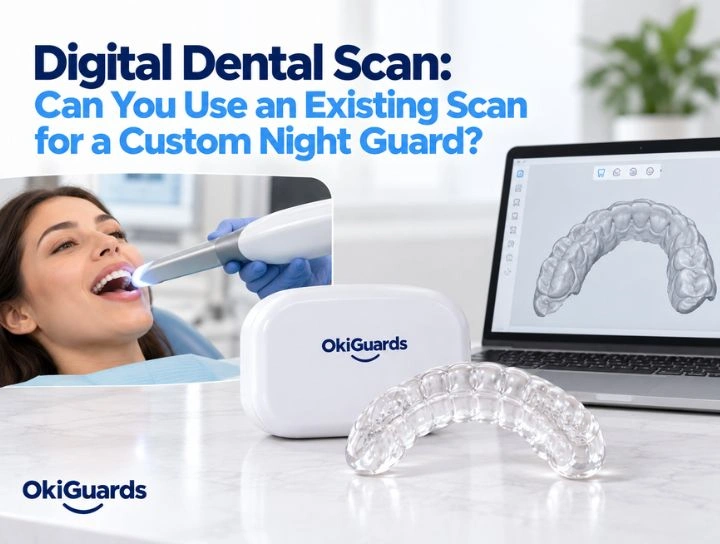
An existing digital dental scan may be suitable for making a custom night guard when it accurately represents your current teeth, includes the required dental arches and bite information, and uses a file format compatible with the selected laboratory. The laboratory should review and approve the files before fabrication begins.
OkiGuards currently provides a clearly established at-home physical impression process for its Soft, Hybrid, and Hard Custom Night Guards. Customers who already have an intraoral scan can contact OkiGuards before ordering to ask whether their specific dental files can be reviewed or whether the standard impression kit will provide the best route. This simple confirmation protects the accuracy of the custom fit and allows the laboratory to guide the customer toward the appropriate next step.
Digital Dental Scan Requirements at a Glance
| Item to confirm | Why it matters |
| Current dental anatomy | The scan should match the present shape and position of the teeth |
| Complete selected arch | The laboratory needs the full upper or lower arch for accurate coverage |
| Opposing arch | This can help technicians evaluate how the teeth meet |
| Bite scan | It records the relationship between the upper and lower teeth |
| Compatible file format | The laboratory must be able to open and process the scan |
| Original 3D files | Digital models provide usable surface data |
| Laboratory approval | Review confirms that the scan contains the required details |
| Recent dental work | A new scan or impression can capture updated tooth contours |
What Is a Digital Dental Scan?
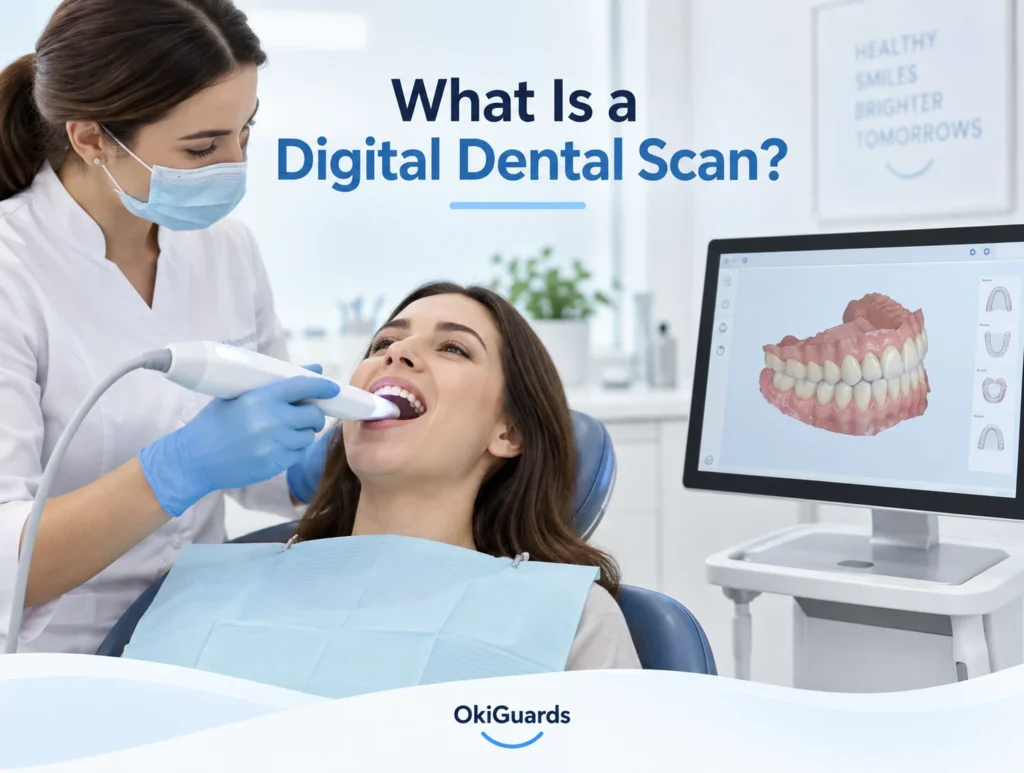
A digital dental scan is a three-dimensional record of the teeth and surrounding oral structures. A dentist or orthodontist creates it with a handheld intraoral scanner that captures the surfaces of the teeth from several angles. Specialized software combines these images to build a detailed digital model. The final model can display tooth contours, spacing, alignment, the dental arch, chewing surfaces, and selected gumline areas.
The process is also called a digital impression because it serves a purpose similar to a traditional putty impression. Both methods create a record that can support the fabrication of custom dental appliances. Digital scans are commonly used for retainers, aligners, crowns, bridges, dental models, and selected occlusal appliances. Their usefulness for a custom night guard depends on the quality, completeness, age, format, and compatibility of the scan.
What Is an Intraoral Scan?
An intraoral scan is the scanning procedure used to create a digital model of the mouth. A dental professional moves a compact scanner around the teeth while the software records their visible surfaces. The process may include three separate records: an upper-arch scan, a lower-arch scan, and a bite scan. Together, these files can show the laboratory both the shape of the teeth and how the upper and lower arches relate. For custom night guard fabrication, the laboratory may need the complete arch receiving the appliance. The opposing arch and bite relationship can also provide valuable information about contact between the teeth. The exact requirements depend on the laboratory workflow and the type of appliance being created. Confirming those requirements before sending files creates a smoother experience.
Can an Existing Digital Teeth Scan Be Reused?
An existing digital teeth scan can remain useful when it accurately represents the current dental anatomy. The age of the file provides helpful context, while the condition of the teeth determines its practical value. A scan may remain current when the teeth, restorations, and alignment have remained stable since it was created. The laboratory can evaluate the files and determine whether the captured details support fabrication. Several dental changes can make a fresh record valuable. A new crown, filling, bridge, implant, veneer, inlay, onlay, extraction, orthodontic movement, or change in tooth position can alter the shape of the dental arch.
A current impression or scan records these updated contours. This helps the finished night guard follow the teeth as they appear today. Customers can ask their dental office when the scan was taken and whether any later treatment changed the recorded area. This information gives the night guard laboratory useful context during the review.
What Digital Files Might the Laboratory Need?
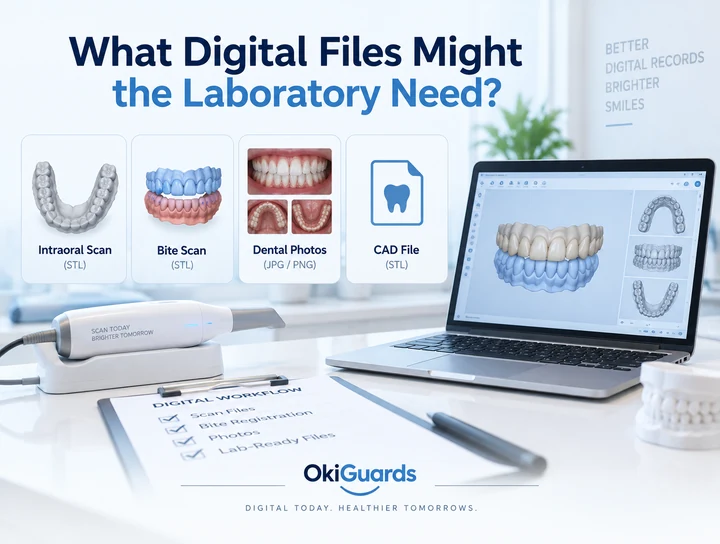
Many dental scanning systems can export three-dimensional surface files. STL is a commonly used format in digital dental workflows, while some systems also produce PLY, OBJ, or proprietary formats. File extension alone does not establish suitability. The scan must also contain clear and complete dental anatomy. A screenshot, photograph, printout, or PDF can show what a digital model looks like, while the original three-dimensional files contain the surface information required for digital design. For this reason, customers should request the original exported files from their dentist or orthodontist.
What Makes a Dental Scan Suitable?
A suitable digital impression clearly captures the teeth that the night guard will cover. The chewing surfaces, front teeth, back molars, contours, and relevant gumline areas should appear complete. The record should also represent the current dental situation. Recent restorative or orthodontic care can make an updated scan especially helpful. Laboratory review remains the most reliable confirmation. A technician can open the files, inspect their completeness, check compatibility, and explain whether another record will support an even better result. This review helps connect digital convenience with the personalized fit expected from a custom appliance.
Digital Impression vs. Physical Impression
A digital and physical impression are two methods of recording dental anatomy. Both can support a custom fit when they are accurate and compatible with the laboratory’s production process. A digital impression creates a computer-based three-dimensional model through an intraoral scanner. A physical impression uses a dental putty inside a tray to record the shape of the teeth directly. The better option depends on the provider’s established workflow. A laboratory with a digital intake system may review compatible scan files, while a laboratory with an at-home impression system can provide the exact trays and materials required for its fabrication process.
OkiGuards uses a straightforward physical impression workflow. Every standard order includes three tray sizes, two sets of impression putty, instructions, video guidance, and a prepaid return mailer. This complete kit gives customers the materials needed to create a dental mold at home and return it for custom fabrication.
Can OkiGuards Use Your Existing Scan?
The current OkiGuards website presents an at-home physical impression kit as its standard and verified ordering process. It does not publish a digital scan upload option or a list of accepted dental file formats. For this reason, customers with an existing scan should contact OkiGuards support before placing an order based on digital files. The support team can provide current guidance about scan compatibility and the preferred impression method.This confirmation is particularly important because scan requirements can involve the selected arch, opposing teeth, bite relationship, file format, and current dental anatomy.
When the existing scan does not match the laboratory’s workflow, the included OkiGuards impression kit provides a convenient alternative. Customers receive everything needed to complete the standard custom-fit process from home.
How the OkiGuards Impression Process Works
The OkiGuards How It Works process has three main stages. First, the customer selects a Soft, Hybrid, or Hard Night Guard and receives an impression kit. The package includes three tray sizes and two sets of impression putty, allowing the customer to select a comfortable tray and retain backup material. Next, the customer follows the written instructions and instructional video to create the dental impression. The completed mold returns to OkiGuards using the prepaid mailer.
Finally, trained laboratory technicians fabricate two custom night guards from the impression and ship the finished appliances to the customer. Free standard shipping within the continental United States covers delivery of the impression kit, return of the completed impression, and shipment of the custom guards.
Choosing the Right OkiGuards Night Guard
The method used to capture the teeth is one part of the process. Customers should also select a guard material and thickness that match their grinding intensity.
| OkiGuards product | Price | Thickness | Suitable for |
| Soft Night Guard | $149 for two | 2 mm | Mild grinding, clenching, and cushioned comfort |
| Hybrid Night Guard | $149 for two | 1, 2, or 3 mm | Balanced comfort and durability for mild to heavy grinding |
| Hard Night Guard | $169 for two | 1.5 or 3 mm | Strong clenching and heavy or severe grinding |
Soft Night Guard
The OkiGuards Soft Night Guard uses flexible and cushioned material in a 2 mm thickness. It can suit mild grinders, clenchers, first-time wearers, and customers who value a gentle feel.
Hybrid Night Guard
The OkiGuards Hybrid Night Guard combines a soft inner layer with a firm outer surface. Its three thickness choices allow customers to balance profile and durability according to their grinding level. The 1 mm option offers a slim feel, the 2 mm option provides a balanced middle choice, and the 3 mm option adds material for stronger grinding.
Hard Night Guard
The OkiGuards Hard Night Guard uses firm material for heavy grinding and strong clenching. Customers can choose a 1.5 mm design or a more substantial 3 mm option. Dental guidance can add valuable personalization when the customer has extensive restorations, orthodontic changes, significant wear, or a specialized bite.
When Is a New Impression Helpful?
A new impression is helpful whenever the current teeth differ from the existing digital model. Dental changes can include a new restoration, tooth movement, orthodontic treatment, extraction, implant, or change in bite. A fresh impression records the updated dental shape and gives the laboratory a current foundation. A new record can also provide confidence when the original scan contains only one arch or when the dental office exports a format that the selected laboratory cannot process. The OkiGuards kit offers a complete alternative because its trays, putty, instructions, and return process are designed around the company’s standard workflow.
Questions to Ask Before Sending a Scan
Before relying on an existing dental scan, ask OkiGuards whether digital files are currently accepted and which formats can be reviewed. You can also confirm whether the laboratory requires upper, lower, and bite scans. Tell the support team when the scan was created and whether you received dental treatment afterward. Mention the guard placement, material, and thickness you are considering. These details help the company provide an accurate answer before the order proceeds.
Frequently Asked Questions
Can an existing digital dental scan be used for a night guard?
It may be suitable when the scan is current, complete, and available in a format compatible with the selected laboratory. Laboratory approval should come before fabrication.
What files are commonly created by an intraoral scan?
Dental scanning systems commonly export STL files, while some systems also provide PLY, OBJ, or proprietary formats. The receiving laboratory can confirm its accepted formats.
Do OkiGuards currently accept digital scans?
OkiGuards currently publishes an at-home physical impression workflow. Customers with digital files should contact OkiGuards for current compatibility guidance before ordering.
When should I get a new dental impression?
A fresh impression can provide the best fit after a crown, filling, implant, extraction, orthodontic movement, or another change to the teeth.
What is included in the OkiGuards impression kit?
The kit includes three tray sizes, two sets of impression putty, written instructions, video guidance, and a prepaid return mailer.

Final note
An existing digital dental scan may support custom night guard fabrication when it is current, complete, and compatible with the selected laboratory. The files should accurately represent the present teeth and include the anatomy required for the appliance. OkiGuards currently offers a verified at-home physical impression process rather than a published digital-upload pathway. Customers who already have an intraoral scan can contact the company first for current compatibility guidance. The included impression kit provides a convenient route whenever a fresh physical record offers the clearest option. Each standard order includes two custom guards, three tray sizes, two putty sets, prepaid return shipping, free standard shipping within the continental United States, and a 60-night policy. After confirming the preferred impression method, customers can shop OkiGuards Custom Night Guards and select the material, thickness, and placement that match their grinding level.