How to Stop Daytime Teeth Clenching at Work (Simple Habit Fixes)
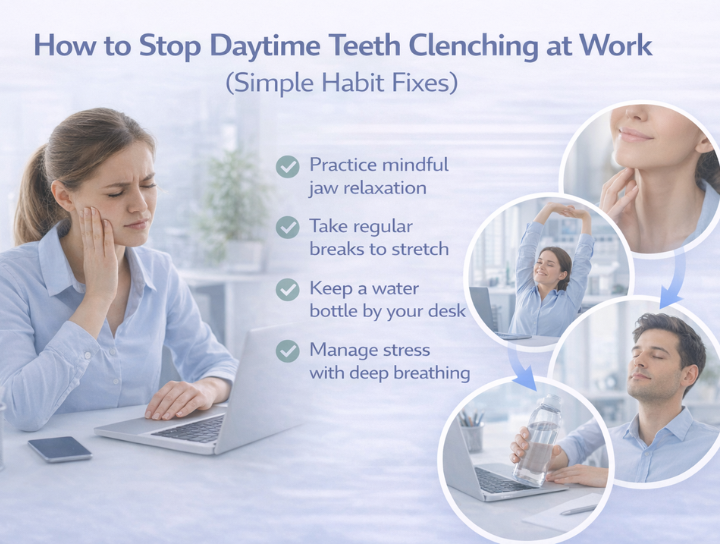
Daytime teeth clenching often occurs during focused work, tight deadlines, long screen time, and high-stakes conversations. Many people become aware of their jaw, noticing its strength and the subtle signals it gives throughout the day. The good news is that daytime teeth clenching responds very well to small, repeatable habits that fit naturally into a work routine.
This guide explains daytime bruxism in a clear, research-informed way, then gives practical, real-life strategies you can use at your desk, in meetings, and during deep-focus tasks. You will also learn how a custom OkiGuards night guard supports overnight recovery so your jaw feels lighter and more comfortable during the day.
What Is Daytime Teeth Clenching?
Daytime teeth clenching is a sustained, low-movement contraction of the jaw muscles that presses the upper and lower teeth together while you are awake. This pattern often occurs without awareness, especially during concentration.
Daytime Bruxism vs Night time Bruxism
Daytime bruxism typically looks like clenching, holding tension, or bracing the jaw during work and stress. Nighttime bruxism often includes grinding or clenching during sleep. Both patterns involve the same core players: the chewing muscles (especially the masseter and temporalis), the bite, and the nervous system’s “focus and effort” signals.
Clenching Teeth Symptoms You Can Spot Early
Many people connect the dots faster when they know what to look for. These clenching teeth symptoms often appear together:
- A tight or tired feeling in the cheeks in the afternoon
- A sense of jaw “pressure” during emails, spreadsheets, or calls
- Tenderness near the temples after long focus periods
- A feeling of jaw pain from clenching, especially after stressful tasks
- Tooth sensitivity that improves when the bite pressure feels lighter
- A habit of pressing the tongue firmly or holding the jaw in a “ready” position
These signals support a positive next step: build awareness, add micro-breaks, and train a relaxed jaw-resting posture.
Why People Clench at Work (And Why It Feels Automatic)
Daytime teeth clenching often follows a simple loop:
- Your brain enters deep focus.
- Your body “braces” to feel stable and productive.
- The jaw muscles join that bracing pattern.
- The teeth align gently, and the jaw stays strong and relaxed.
This pattern makes sense from a body-mechanics perspective because the jaw is powerful and responsive. When you guide it with small cues, the jaw follows those cues efficiently.
The Best “Neutral Jaw” Position for Work
A calm jaw posture gives your muscles a home base.
The Relaxed Resting Posture (Simple and Effective)
- Lips rest together gently.
- Teeth stay slightly apart.
- The tongue rests softly on the roof of the mouth, just behind the front teeth.
This posture supports comfort because it keeps jaw muscles in a lighter, more efficient state.
How to Stop Clenching Jaw at Work: A Simple Habit System
The most reliable solution feels easy enough to repeat. These habits work best when they are small, specific, and tied to moments you already have in your day.
Habit 1 — The 5-Second “Jaw Check” (Every Transition)
Transitions already happen at work, and transitions make ideal habit triggers.
Use this quick reset:
- Let your tongue rest softly on the palate.
- Let your teeth float slightly apart.
- Let your shoulders feel wide and easy.
Great transition moments:
- Before you start typing
- When you open a new tab
- When you join a meeting
- When you hit “send.”
Habit 2 — The “Soft Bite” Reminder (Visual Cue That Works)
Choose one visible cue:
- A sticky note on your monitor
- A small dot in the corner of your laptop corner
- A phone wallpaper that says “Soft Jaw.”
Every time you see it, you run the 5-second jaw check. This approach keeps stopping clenching during the day simple and repeatable.
Habit 3 — Release the “Typing Brace”
Many people clench their jaws most while typing. You can keep performance high and muscle load low with a tiny adjustment:
- Let your elbows rest closer to your sides.
- Let wrists feel supported.
- Let the jaw stay soft while fingers move quickly.
Desk Setup That Supports Less Clenching
Jaw tension often pairs with neck and shoulder tension. A supportive setup improves the whole chain.
Screen and Chair Position
- The screen top sits near eye level for a natural neck position.
- The chair supports a tall spine and relaxed shoulders.
- Feet feel grounded for stable posture.
The “Breath + Jaw” Pair
Breathing gently through the nose supports steadier focus and calmer muscle tone.
Try this simple pairing
- Inhale slowly for 3 seconds.
- Exhale softly for 4 seconds.
- Let the jaw stay heavy and relaxed as the exhale ends.
Meeting Mode: The Most Common Clenching Zone
Meetings create a “perform and respond” state, and the jaw often joins that state.
A Meeting Script That Keeps the Jaw Soft
Before you speak:
- Tongue rests lightly on the palate.
- Teeth stay slightly apart.
- You begin with a slow exhale.
During listening:
- You keep your lips closed gently.
- You keep your teeth separated.
- You keep your shoulders relaxed.
Quick Relief Techniques That Feel Real at Work
These options fit into a normal day and feel easy to apply.
30-Second Masseter Reset (Cheek Muscles)
- Place fingertips on the thick cheek muscle near the back teeth.
- Make small, gentle circles for 15 seconds per side.
- Let your jaw hang loose for one soft breath.
The “Wide Yawn Without the Yawn”
- Open your mouth slightly, as if you are starting a yawn.
- Keep it gentle and comfortable.
- Hold for one slow breath, then close softly.
When Night Protection Supports Daytime Comfort: The Role of OkiGuards
Daytime teeth clenching often feels lighter when the jaw gets a high-quality recovery at night. Nighttime clenching and grinding create muscle workload, and recovery supports better daytime baseline comfort.
A custom-fit OkiGuards night guard protects teeth and provides a stable bite surface during sleep. This stability supports smoother jaw mechanics, and smoother mechanics support calmer mornings and easier workdays.
Why Custom Fit Supports Consistency
A guard that feels comfortable and fits well supports consistent wear, and consistent wear supports a steady recovery pattern.
How to Fit and Use Your OkiGuards Night Guard
This section aligns with the OkiGuards process and gives practical “real-life” guidance that feels easy to follow.
Step 1 — Choose Your Guard Style With Your Clenching Pattern
- Soft styles often feel comfortable for lighter clenching.
- Hard styles often feel durable for stronger grinding forces.
- Hybrid styles often feel balanced for comfort and strength.
A well-matched guard supports a smooth experience from the start.
Step 2 — Make Your At-Home Impression With a Calm Setup
Set yourself up for success:
- Wash and dry your hands.
- Read the instruction card once from start to finish.
- Lay everything out on a clean surface.
- Practice placing the tray in your mouth once before mixing.
When the putty is ready:
- Seat the tray evenly.
- Bite down gently and hold steady.
- Keep your tongue relaxed and breathe through your nose.
Step 3 — Return the Impression and Let the Lab Create Your Custom Guard
A lab-made guard is shaped from your impression, which supports a secure fit and stable bite contact.
Step 4 — First Night Wear: Build Comfort Like a Pro
Your first night can feel smooth with a simple routine:
- Rinse the guard with cool water.
- Place it gently and press evenly with your fingers.
- Let your jaw relax for a few breaths before sleep.
Step 5 — Morning Routine That Protects Fit and Freshness
- Remove with gentle, even pressure.
- Rinse with cool water.
- Brush lightly with a soft toothbrush and mild soap.
- Let it dry fully in a ventilated case.
Frequently Asked Questions
What is daytime teeth clenching?
Daytime teeth clenching is a habit of pressing the teeth together while awake, often during focus or stress. It responds well to awareness cues and relaxed jaw posture training.
What are common teeth clenching symptoms?
Common clenching teeth symptoms include jaw tightness, temple tension, cheek soreness, and jaw pain from clenching that improves as the jaw rests more often.
How to stop clenching teeth during the day in a busy job?
A transition-based habit system works well: a 5-second jaw check at tab switches, meeting joins, and “send” moments supports consistent improvement.
Does a night guard help daytime bruxism?
A night guard protects teeth during sleep and supports better jaw recovery, often leading to a calmer daytime baseline for people with daytime bruxism.
How long does it take to notice improvement?
Many people notice progress within days as awareness increases and micro-habits become automatic. Consistent routines support steady improvement.
Final note
Daytime teeth clenching at work responds beautifully to small habit changes that fit naturally into real routines. When you pair a relaxed jaw-resting posture with transition-based resets, meeting-friendly breathing cues, and short muscle-release techniques, you create an efficient system that supports comfort and performance. Nighttime recovery also supports daytime ease, and a custom-fit OkiGuards night guard for bruxism supports stable bite protection and smoother jaw mechanics through sleep. With consistent micro-habits and a supportive night routine, stopping clenching teeth during the day becomes a realistic, sustainable outcome that supports calmer workdays and better-feeling mornings.