Bruxism and Ear Pain: When Jaw Clenching Feels Like an Ear Infection
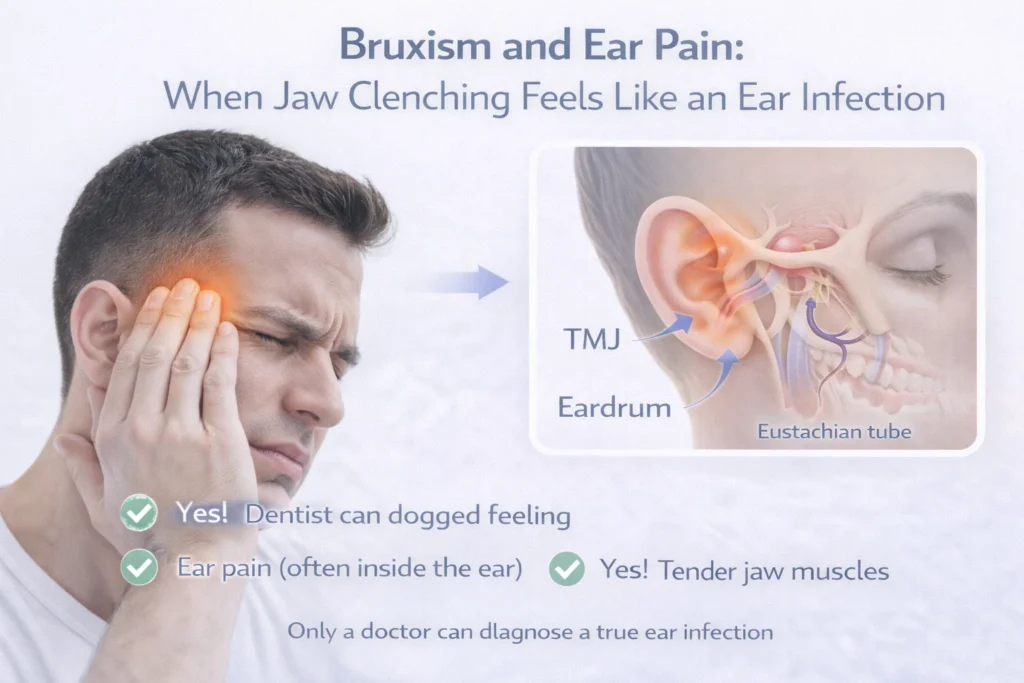
Ear-area sensations can catch anyone’s attention especially when they resemble an ear infection, yet the rest of your day feels normal. If you’ve noticed ear pressure, fullness, or an earache-like feeling, there’s a very encouraging possibility: the sensation may be coming from the jaw. When your jaw muscles stay active overnight through Jaw Clenching or teeth grinding, the ear region can “pick up” those nearby signals even when the ear itself is healthy. Think of it as shared neighborhood wiring: the jaw and ear sit close together, and your nervous system can translate jaw muscle activity into ear-area sensations.
The best part is that this pattern responds beautifully to comfort-first support. In this guide, you’ll learn why bruxism can create ear-area sensations, how to recognize jaw-related clues in a simple way, and how a well-fitted Night Guard including custom night guards can support your teeth and jaw. You’ll also see when it’s helpful to speak with a dentist or an ENT so that you can move forward with clarity and confidence.
Why the jaw can create ear-area sensations
The jaw joint sits just in front of the ear canal. The chewing muscles that move your jaw run along the side of the face, and the nerves in this region overlap in ways that can make sensations feel shared. That closeness is the main reason Bruxism and Ear Pain are such a common experience. Even though the sensation is felt near the ear, the jaw can be the starting point.
When you’re clenching, the jaw muscles can stay engaged for longer stretches. When you’re grinding, there’s pressure plus movement. Both patterns can leave the jaw muscles feeling extra active after sleep and the ear area may “echo” that activity as pressure, fullness, or a gentle ache-like sensation. A very reassuring clue is that jaw related ear sensations often shift with jaw activity. If chewing, talking, yawning, or lightly pressing your teeth together changes the sensation, it strongly suggests the jaw is part of the picture.
Bruxism, TMJ, and ear sensations: simple definitions
These terms are often used interchangeably online, so here’s a clean map. Bruxism is the umbrella term for nighttime or daytime Clenching and teeth grinding. When it happens during sleep, people often call it clenching at night or sleep bruxism. TMJ is the name of the jaw joint itself (temporomandibular joint). When people say “TMJ,” they often mean jaw-joint and jaw-muscle symptoms as a whole. Bruxism can place extra workload on the joint and muscles, so bruxism and TMJ-style sensations commonly overlap. Ear sensations can be primary (ear is the source) or referred (you feel it near the ear, but the source is nearby structures such as jaw muscles). The positive takeaway is that jaw-related ear sensations usually respond very well to supportive care especially when you combine protection, routine, and a comfortable fit.
Bruxism patterns that most often influence the ear area
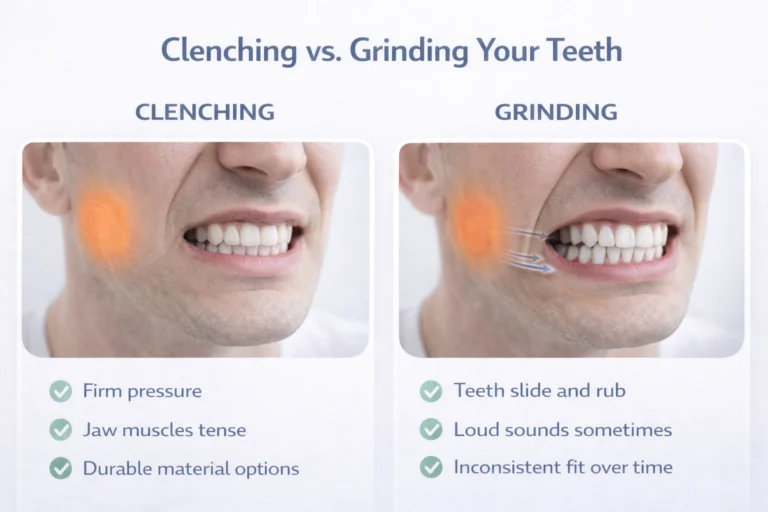
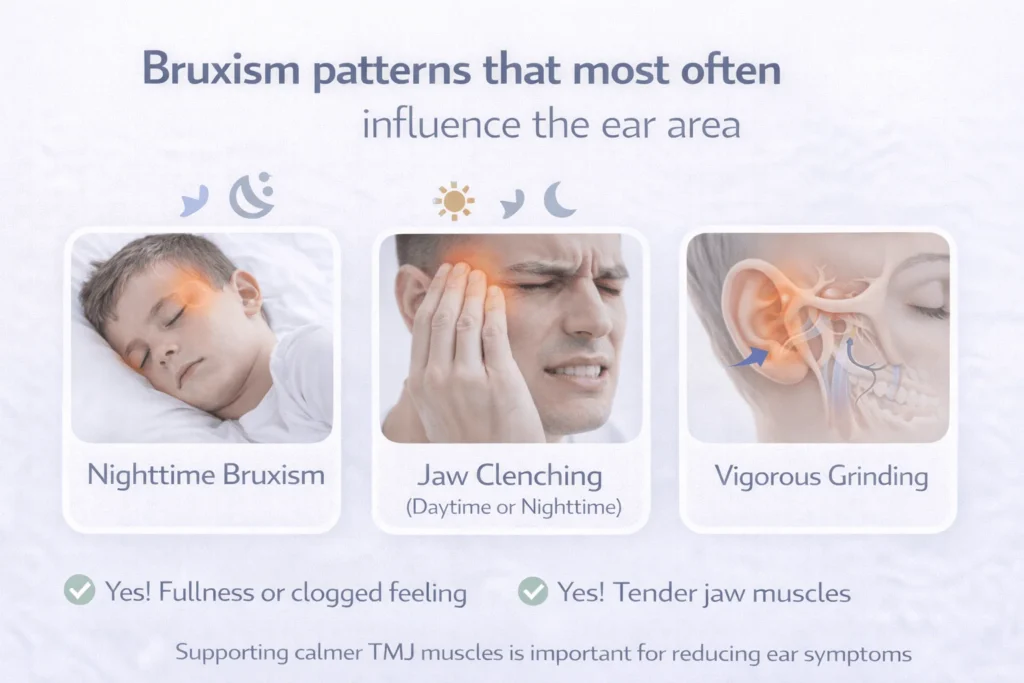
Some people mainly grind. Others mainly clench. Many people do both, and the pattern can vary depending on sleep depth, breathing comfort, and daily rhythm. With Jaw Clenching, the teeth press together with intense pressure and minimal movement. Because there isn’t much sliding, it can be quiet. Many people discover clenching simply by how their jaw muscles feel on waking—tight, heavy, or “worked.”
With teeth grinding, there’s pressure plus movement. Grinding can sometimes be audible, and over time, it may smooth tooth edges or contribute to sensitivity. Grinding can also keep the jaw muscles active enough that the ear area feels the “echo” of that activity. If your ear sensation feels more like pressure or fullness, Clenching is often a significant contributor. This doesn’t signal a problem—it simply means your jaw muscles may be working harder than they need to during sleep, and your body is giving you a helpful cue to add support.
How to notice jaw-related clues in a calm, practical way
You don’t need a perfect diagnosis at home. You only need a few simple observations that help you choose the best next step. Timing is a friendly clue. If the sensation is most noticeable in the morning and then gradually softens through the day, that rhythm fits well with clenching at night. Movement is another helpful clue. If chewing, yawning, talking for a long time, singing, or gently tightening the jaw changes the sensation, that points toward a jaw-muscle contribution. A third clue is what many people call the “jaw story.” You may also notice temple tension, cheek fatigue, a sense that the jaw needs a moment to loosen up when the day begins, or tooth sensitivity. These are common and useful signals simply information that helps you choose the most effective support. If you recognize these patterns, you’re already doing something powerful: you’re collecting the exact details that help your dentist tailor the right plan.
Ear infection vs jaw-related sensations: a supportive comparison
Because the topic includes “ear infection,” here’s a gentle, reassuring way to compare. A classic ear infection often follows a cold or congestion and may come with noticeable cold-like symptoms (such as a blocked nose or overall “under-the-weather” feeling). The sensation is often steady and may not change much with jaw movement. Jaw-related ear sensations often feel like pressure or fullness that shifts with jaw activity. They are commonly more noticeable on waking and may come with jaw tightness or temple tension. If you’re not sure which one fits, that’s completely normal. The easiest next step is simply choosing the right professional for confirmation: a dentist for bruxism and bite evaluation, or an ENT/primary care provider for a direct ear exam. Many people start with a dentist when jaw clues are clear and feel relieved to have an explanation that matches their experience.
Why the ear can feel full even when hearing is fine
A “plugged” feeling can make people think about hearing, but jaw-related ear sensations don’t automatically mean anything is happening to hearing. When jaw muscles stay tense, the nervous system can interpret that regional activity as fullness or pressure. It’s a sensation signal rather than a hearing signal. This is also why gentle jaw support can feel so rewarding. As the jaw muscles relax, many people notice the ear area feels more settled, too.
The role of a Night Guard for Bruxism and Ear Pain
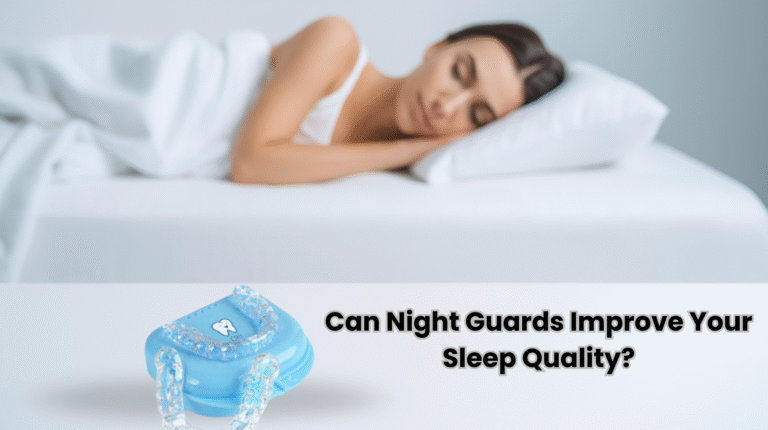
A Night Guard is one of the most trusted tools for bruxism support. It helps in two straightforward ways. First, it creates a protective layer so your teeth aren’t contacting directly during Clenching or teeth grinding. Second, it helps distribute pressure more evenly, which many people find supportive for jaw comfort. A night guard for teeth doesn’t need to “stop” bruxism to be valuable. It simply needs to protect tooth surfaces and support the jaw, so it feels less overworked during sleep. When a guard fits well, many people describe smoother mornings and a more relaxed jaw feeling. Comfort and stability matter because they make it easy to wear the guard consistently—and consistency is what creates the best results.
Over-the-counter guards vs custom night guards
Some people like over-the-counter options as a quick trial. But many people discover that fit is the biggest difference-maker. If a guard is bulky or shifts, it can feel less natural to wear all night. The goal is a guard that feels stable and comfortable enough that you forget it’s there. Custom night guards are made from your unique bite, so they tend to feel snug, balanced, and natural. When pressure is distributed evenly, the jaw often feels calmer in the morning. At OKI Guards, the focus is comfort-first custom fit. The aim is a guard that feels “made for you,” so wearing it becomes an easy, automatic habit.
How an impression kit helps create a custom fit
An impression kit captures the shape of your teeth so a lab can craft a guard that matches your bite. Many people like this approach because it combines custom comfort with at-home convenience. The process is typically straightforward: you follow clear instructions, take your impressions, send them back, and receive your custom-fit guard. For many people, the best part is how stable and slim a custom guard can feel compared with one-size designs especially for nightly wear. If you’re working with a dentist for jaw symptoms, you can also ask which guard style best fits your Clenching or grinding pattern.
Gentle habits that support a calmer jaw
A Night Guard protects your teeth, and daily habits help the jaw feel even more settled. A calming wind-down routine is one of the best supports for clenching at night. Many people do well with a short screen-free window before bed, relaxed breathing, and a consistent sleep schedule. During the day, a simple awareness cue can make a big difference. Many people like the phrase “lips together, teeth apart.” It encourages the jaw to rest without Clenching. Warmth can feel soothing for tight jaw muscles. A warm compress near the cheeks and temples, or a gentle cheek/temple massage, can help the muscles feel more relaxed. Hydration, reducing long gum-chewing sessions, and moving caffeine earlier in the day can also support calmer nights. These are easy options—not strict rules. Choose what feels good and fits your life.
Posture, neck comfort, and jaw relaxation
Jaw comfort is often connected to neck and shoulder comfort. If you spend long hours at a desk or looking down at a phone, the neck muscles can carry an extra load, and the jaw sometimes follows. Minor posture resets during the day can help the jaw feel lighter. You don’t need perfect posture just occasional reminders to relax the shoulders and let the jaw rest. These small changes often pair beautifully with Night Guard use.
When to speak with a dentist or an ENT
If your ear sensations clearly track with jaw tightness, a dentist is often a great first stop. A dentist can look at tooth wear patterns, check bite balance, and assess jaw muscle tenderness. They can also recommend the best Night Guard style for your pattern. If you’d like confirmation that the ear itself is healthy, an ENT or primary care provider can perform a direct ear exam and offer reassurance. Many people benefit from a team approach: a dentist for bruxism and bite support, and a medical provider for ear-specific evaluation when needed.
Frequently Asked Questions
Can Bruxism and Ear Pain happen without teeth grinding sounds?
Yes. Clenching can be completely quiet. Many people with Bruxism and Ear Pain mainly clench rather than grind, so the first clue is often morning jaw tightness or ear pressure rather than noise.
Can a Night Guard help with ear pressure?
If the ear sensation is coming from jaw muscle tension, a well-fitted Night Guard can be very supportive. Many people find that consistent wear improves how the jaw and ear area feel in the morning.
Is a night guard for teeth useful if I only clench at night?
Yes. A night guard for teeth is designed for clenching as well as grinding. Even without sliding, clenching pressure can keep jaw muscles active, and the guard helps distribute that pressure more comfortably.
Should I choose custom night guards if I’m comfort-sensitive?
Many comfort-sensitive people prefer custom night guards because the fit is designed around their bite, which usually feels more stable and natural.
How fast can I notice improvement?
Some people notice comfort changes quickly, while others see steady improvement over a few weeks as routines become consistent. The most common success factor is a guard that feels good enough to wear every night.
Final note
Bruxism and Ear Pain can feel surprising at first, especially when Jaw Clenching creates ear-infection-like sensations. The bright side is that this is a well-understood pattern with practical, comfort-first solutions. When Clenching, Clenching at night, teeth grinding, and bruxism are part of the picture, a well-fitted Night Guard can support your teeth and your jaw. And when comfort is the priority, custom night guards can provide the stable, natural fit that makes nightly wear easy. If you want calmer mornings, start simple: notice jaw-related patterns, support sleep, and choose a guard that feels comfortable enough to stick with. Small steps add up, and many people are pleasantly surprised by how much more settled the ear area and jaw can feel with the proper support.