Clenching vs. Grinding Your Teeth
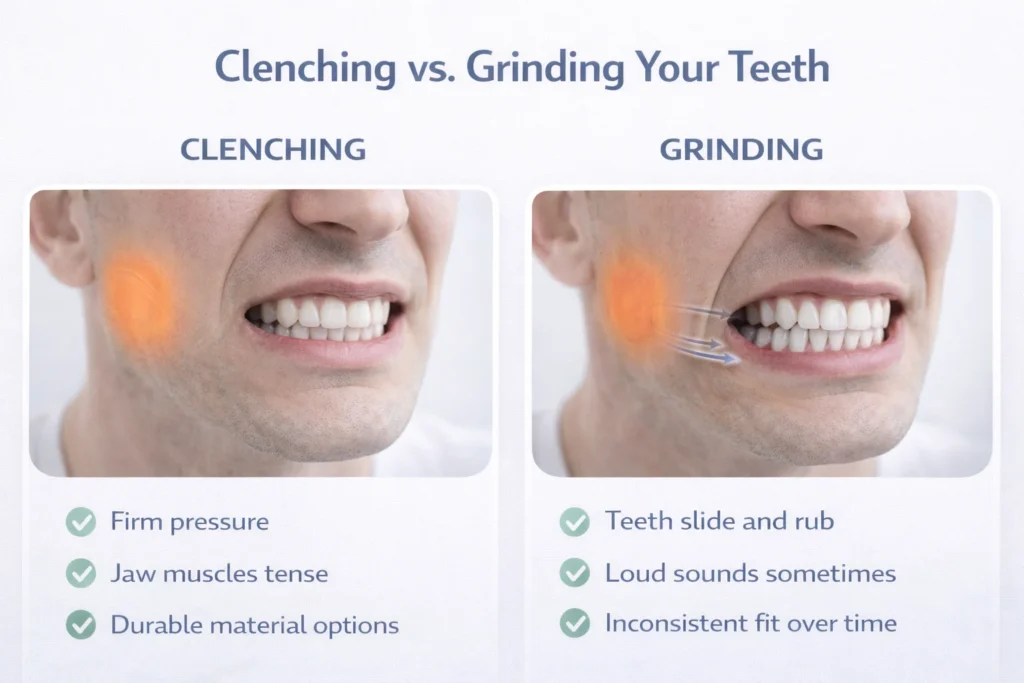
Clenching means pressing the upper and lower teeth together with limited jaw movement, while grinding combines pressure with sliding movement between tooth surfaces. Both patterns are forms of bruxism and may occur during sleep or while awake.
A custom Hybrid Night Guard is the best all-around option for many people who clench or grind because it combines a comfortable inner layer with a durable outer surface. A Soft Night Guard generally suits light grinding and mild clenching, while a Hard Night Guard provides firm protection for heavy grinding and strong clenching. The right choice depends on your bruxism pattern, pressure level, comfort preference, dental restorations and desired thickness.
Clenching vs Grinding at a Glance
| Factor | Teeth clenching | Teeth grinding |
| Main action | Teeth press together | Teeth press and slide |
| Jaw movement | Limited movement | Side-to-side or forward movement |
| Common sign | Jaw-muscle tightness | Smooth or flattened tooth surfaces |
| Sound | Often quiet | Sometimes audible |
| Main goal | Manage strong pressure | Reduce direct surface contact |
| Suitable guard | Hybrid or Hard | Soft, Hybrid or Hard |
Many people experience both patterns. A dental evaluation can identify signs of each and provide personalized guidance.
What Is Teeth Clenching?
Teeth clenching occurs when the jaw muscles contract and hold the upper and lower teeth firmly together. The jaw usually makes limited sliding movement. Clenching can happen while concentrating, driving, studying, working or sleeping. Daytime awareness often makes awake clenching easier to recognize.
Common signs may include:
- Morning jaw tightness
- Tired facial muscles
- Pressure near the temples
- Tooth sensitivity
- Tenderness during chewing
- Strong marks in an existing guard
Clenching applies sustained pressure to the teeth and dental restorations. A custom night guard creates a dedicated contact surface between the dental arches and supports consistent tooth protection.
What Is Teeth Grinding?
Teeth grinding involves contact and movement between the upper and lower teeth. The jaw may slide from side to side or move slightly forward while the teeth remain together.
Grinding may create:
- Smooth biting surfaces
- Flattened tooth edges
- Increased sensitivity
- Audible nighttime sounds
- Wear marks in a guard
- Changes around fillings or crowns
A night guard places a physical barrier between the teeth. This barrier receives grinding contact and helps preserve the enamel underneath. The National Institute of Dental and Craniofacial Research explains that mouth guards separate the teeth and help protect them from the effects of grinding and clenching.
Awake vs Sleep Bruxism
Awake bruxism commonly involves clenching during concentration or emotionally demanding moments. Many people recognize it when they notice their teeth touching throughout the day.
Helpful awareness habits include:
- Resting the lips comfortably together
- Keeping a small space between the teeth
- Setting gentle reminders during work
- Taking regular movement breaks
- Practising calming breathing exercises
Sleep bruxism happens automatically during sleep. Dental wear, morning sensations or observations from a sleep partner may help identify it. A night guard provides valuable protection during sleep by maintaining a physical surface between the dental arches. Regular dental visits can also help track tooth surfaces and appliance wear. People who snore loudly, gasp during sleep or experience unusual daytime sleepiness can discuss these signs with a qualified healthcare professional.
Which Night Guard Is Best for Clenching?
A Hybrid or Hard Night Guard generally provides the strongest option for moderate-to-heavy clenching. The final choice depends on clenching intensity and preferred mouthfeel.
Soft Night Guard
A Soft Night Guard can suit:
- Mild clenching
- Light grinding
- First-time users
- Comfort-focused wearers
- People who prefer flexible material
The OkiGuards Soft Night Guard uses a cushioned 2.0 mm material that provides a welcoming introduction to regular wear.
Hybrid Night Guard
A Hybrid Night Guard can suit:
- Moderate clenching
- Moderate grinding
- Users seeking comfort and strength
- People who prefer a softer interior
- Customers seeking multiple thicknesses
The OkiGuards Hybrid Night Guard combines a soft inner layer with a firm outer surface. Its balanced construction makes it the best all-around option for many users.
Hard Night Guard
A Hard Night Guard can suit:
- Strong clenching
- Heavy grinding
- Rapid wear in softer guards
- Users who prefer firm material
- People seeking maximum durability
The OkiGuards Hard Night Guard provides a stable grinding surface for substantial pressure and repeated contact.
Which Night Guard Is Best for Grinding?
The ideal night guard for grinding depends on the intensity of tooth contact.
| Grinding level | Recommended guard | Thickness |
| Light | Soft Night Guard | 2.0 mm |
| Moderate | Hybrid Night Guard | 2.0 mm |
| Moderate to heavy | Hybrid Night Guard | 3.0 mm |
| Heavy | Hard Night Guard | 3.0 mm |
A Soft Guard provides flexible comfort for lighter activity. A Hybrid Guard combines cushioning and durability for moderate grinding. A Hard Guard offers firm wear resistance for heavy grinding.
Choose the Right Thickness
Thickness influences mouthfeel and durability.
1.0–1.5 mm
A slim guard provides a lightweight experience for light grinding or daytime clenching. OkiGuards offers a 1.0 mm Hybrid option and a 1.5 mm Hard option.
2.0 mm
A 2.0 mm guard balances comfort and protection. This thickness suits many light-to-moderate grinders and clenchers.
3.0 mm
A 3.0 mm guard provides additional material for heavy grinding and strong clenching. OkiGuards offers this thickness in Hybrid and Hard designs.
Why Custom Fit Matters
A custom night guard is made from an impression of your teeth. The laboratory uses this impression to create an appliance shaped around your individual dental arch.
A precise custom fit supports:
- Secure placement
- Smooth edges
- Even dental coverage
- A refined profile
- Personalized upper or lower placement
- Comfortable nightly wear
OkiGuards provides an at-home impression kit with multiple tray sizes, impression material and clear instructions. The completed impression allows the laboratory to create a personalized guard.
Can a Retainer Replace a Night Guard?
A retainer and a night guard have different primary purposes. A custom retainer maintains tooth position after orthodontic treatment. A night guard provides a dedicated surface for grinding and clenching contact. Regular bruxism generally benefits from an appliance designed for that pressure. People who require orthodontic retention and grinding protection can ask their dentist or orthodontist which appliance supports both goals.
How to Check the Fit
A well-fitted guard should feel secure, smooth and comfortable.
- Place it gently over the correct teeth.
- Press evenly until it seats fully.
- Confirm that it remains securely positioned.
- Feel the edges with your tongue.
- Close your mouth gently.
- Follow the recommended adjustment routine.
A short adaptation period helps the appliance become a familiar part of your routine.
Which OkiGuards Option Should You Choose?
Match your primary pattern with the appropriate product:
- Mild clenching or light grinding: Soft Night Guard
- Moderate clenching or grinding: 2.0 mm Hybrid Night Guard
- Moderate-to-heavy grinding: 3.0 mm Hybrid Night Guard
- Strong clenching or heavy grinding: 3.0 mm Hard Night Guard
- Slim and firm preference: 1.5 mm Hard Night Guard
The Hybrid Guard provides the best balance for many users. The Hard Guard provides the strongest material choice for substantial pressure.
Compare all OkiGuards custom night guards and select the material and thickness that match your bruxism pattern.
Frequently Asked Questions
Is clenching worse than grinding?
They’re simply different patterns. Grinding tends to show tooth-surface changes sooner, while clenching tends to show muscle fatigue sooner. Both respond well to protection and supportive habits.
Can a Night Guard help with clenching at night?
Yes, many people find that a well-fitted guard helps them wake up with a more relaxed jaw because it supports even pressure distribution and protects tooth surfaces.
Do I need a hard night guard or a hybrid night guard?
If you grind firmly or you’ve worn through previous guards, a hard night guard or hybrid night guard can be a great match. If your main pattern is gentle clenching and you prioritise softness, a softer-feel option may be ideal.
What thickness should I choose?
A 2.0 mm guard suits many light-to-moderate users. A 3.0 mm Hybrid or Hard Guard provides additional material for stronger grinding and clenching.
Can I use my custom retainers instead of a Night Guard?
Sometimes retainers provide a light barrier, but for regular clenching or grinding, a dedicated Night Guard is often the more durable and comfort-forward choice.

Final note
Clenching and Grinding Your Teeth are two sides of the bruxism coin. Clenching is mainly pressure, grinding is pressure with movement, and many people experience a mix. The best part is that you have strong, practical options. With a well-fitted Night Guard especially a custom-fit night guard for teeth made from an impression kit you can protect enamel, support jaw comfort, and enjoy calmer mornings. If you’re choosing between styles, a hard night guard and a hybrid night guard are excellent choices for stronger bruxism, while softer-feel designs can be wonderfully comfortable for mild clenching. And if you already use custom retainers, your dentist can guide you on whether a dedicated guard would add extra durability and comfort. A small nightly habit can make a big difference. Protect your smile, support your comfort, and enjoy better mornings.