Can I Wear a Night Guard with Braces and Invisalign?
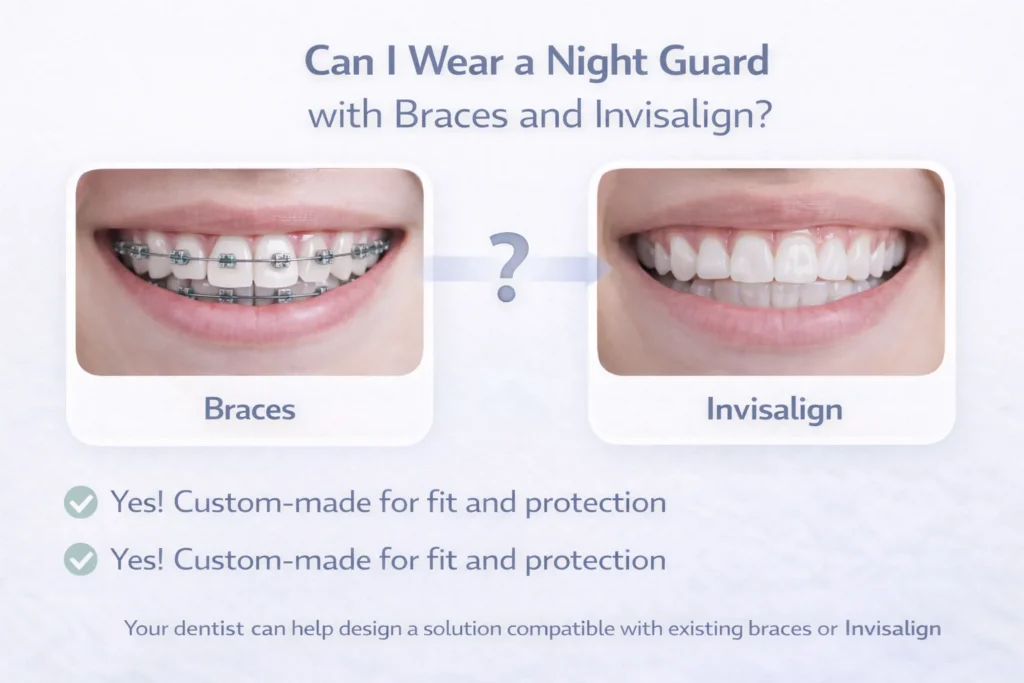
If you’re straightening your teeth and you’ve noticed clenching, grinding, or jaw tightness especially at night you’re already doing something innovative by looking for answers early. Orthodontic treatment is a big step toward a healthier, more confident smile, and the best part is that you can absolutely protect your teeth during treatment. The key is using the right solution for the type of appliance you’re wearing. Can I wear a Night Guard with Braces and Invisalign? Yes, in many cases. With Braces and Invisalign, the “how” is different: With braces, it’s often possible to use a Night Guard (or a mouth guard for grinding teeth) when it’s planned to fit around brackets and support ongoing tooth movement. With Invisalign, you typically don’t add a second standard night guard over aligners because aligners already cover your teeth and need to seat precisely. Even then, you still have excellent options to manage grinding and keep your treatment comfortable.
This guide is written for clarity and peace of mind. You’ll learn how orthodontists usually approach bruxism during treatment, how to think about a night guard for teeth without disrupting progress, and which teeth grinding treatment habits can make your nights calmer and your mornings easier. You’ll also see how a custom solution—such as OKI Guards—often fits best at the right phase (commonly after active movement, during retainers, or in orthodontist-approved stages). Throughout the article, you’ll notice a positive theme: most people don’t need a perfect plan on day one. They need a plan that’s safe, comfortable, and adjustable. That’s precisely what you’ll build by the end.
Why grinding protection matters during orthodontic treatment
Teeth grinding (bruxism) and nighttime clenching are common. Some people have done it for years; others notice it more once orthodontic treatment begins because their bite feels different, their teeth feel “new,” or their jaw muscles are adapting to change. None of that means treatment is going wrong. It usually means your body is responding to a new setup.
A Night Guard helps by creating a protective buffer between upper and lower teeth. In simple terms, it reduces direct tooth-on-tooth friction and helps distribute pressure more evenly. This is why many people appreciate the night guard benefits: they wake up with less tooth tenderness, feel less jaw fatigue, and protect enamel from wear. During orthodontics, the benefits of protection can feel even more valuable because you’re also protecting the investment you’re making in alignment and dental health. When you manage grinding well, you’re not only preserving enamel—you’re supporting comfort and consistency in treatment. Just as important, protection can be gentle. The goal isn’t to “fight” your orthodontics; it’s to support your smile while it changes.
The simplest way to think about your options
Before we go deeper, here’s the most helpful framework: If you wear braces, your protection has to be compatible with brackets and tooth movement. If you wear Invisalign (or another clear aligner), your protection has to preserve aligner seating and wear time. In both cases, you can still benefit from teeth grinding treatment habits that reduce clenching intensity and calm jaw muscles. Now let’s explore each path in detail.
Wearing a Night Guard with Braces
Can you wear a Night Guard with braces?
In many situations, yes. People with braces often use some form of protective appliance when grinding is affecting comfort or enamel. The difference is that braces make your tooth surfaces less “smooth,” and your teeth are moving. That means the ideal solution fits gently around brackets and remains comfortable as your bite changes. A standard store-bought guard may feel tempting because it’s quick, but braces add complexity. The best results usually come from an orthodontist-approved approach, because your orthodontist knows exactly how your teeth are expected to move and where pressure should be avoided.
The good news is that orthodontists see this combination often. A braces-compatible plan is very standard, and it can feel surprisingly comfortable once it’s fitted correctly.
Why do braces change the fit and feel of a mouth guard for grinding teeth?
Brackets and wires create contours and edges. A generic device may feel more noticeable at first, highlighting the value of finding an option that aligns comfortably with those natural contours. Teeth also shift month by month. Even when a device fits well today, it may feel different later as alignment improves. This is not a bad thing it’s actually a sign that treatment is progressing. It simply means your protection strategy should be flexible and monitored. Instead of aiming for a “forever guard” during braces, it’s usually more realistic and more comfortable to aim for a “right-for-right-now” solution, and then upgrade once braces come off.
What orthodontists commonly recommend during braces
Orthodontists generally like solutions that keep your bite stable and your teeth protected without interfering with movement. Depending on your case, they may recommend an orthodontic-friendly guard or a protective appliance designed to work with braces. When your orthodontist is involved, you gain three significant advantages. First, they can ensure the appliance doesn’t press in a way that could loosen brackets or create sore spots. Second, they can assess whether your bite contacts are balanced while wearing them, which often improves comfort quickly. Third, they can adjust the plan as your teeth move. That combination is a significant reason people feel better when they stop guessing and start using a guided approach.
Where a custom night guard for teeth can make sense with braces
A custom night guard for teeth can be helpful during braces in certain situations especially if your orthodontist agrees with the timing and design. The main thing to remember is that braces are dynamic: teeth shift. So a custom appliance may need to be updated as your smile changes. That’s why many people choose a staged approach that feels calm and practical. During active braces movement, they use an orthodontist-approved protective option that can adapt as needed.
After braces are removed when tooth positions are stable they choose a long-term custom Night Guard for consistent nightly comfort. This second stage is often where brands like OKI Guards fit naturally. OKI Guards focuses on custom-fit protection made from at-home impressions, and they offer different styles and thicknesses so the Night Guard matches your grinding intensity and comfort preference. When your bite is stable, a custom fit becomes especially valuable because it can feel smooth, secure, and easy to wear night after night.
How to know your braces protection is helping
When a braces friendly Night Guard or protective appliance is a good match, mornings improve gradually. You may notice that your jaw feels less tired, your teeth feel less tender, and the “tight” sensation fades faster after waking. You don’t have to expect perfection in a week. Bruxism is often tied to muscle patterns and stress, so that improvement can be gradual. But even small changes like reduced morning pressure are meaningful signs that your plan is working. If something feels off, the best move is simple: mention it at your next visit. Minor adjustments can create significant comfort improvements.
A positive checklist before you buy anything with braces
If you’re wearing braces and thinking about a mouth guard for grinding teeth, the most helpful step is asking your orthodontist one straightforward question: “What’s the safest way for me to protect my teeth at night while my teeth are moving?” That one question keeps you aligned with the plan and often saves time, money, and discomfort.
Wearing a Night Guard with Invisalign
Can you wear a Night Guard with Invisalign?
This is where things change. Most people do not wear a separate standard Night Guard at the same time as Invisalign aligners. The reason is simple: Invisalign already covers your teeth and needs to fit precisely. Adding a second appliance over it may require a bit of fine-tuning to ensure everything fits comfortably and works well together. Here’s the encouraging part: you’re not unprotected. In many mild cases, aligners themselves provide a thin barrier between upper and lower teeth. For some people, that barrier is enough to reduce enamel-to-enamel contact and provide basic protection during treatment. If your grinding is more vigorous, there are still supportive solutions, but they should be planned with your orthodontist.
Do Invisalign aligners act like a night guard for teeth?
In a practical sense, they can act like a light barrier. Aligners separate the teeth, and that separation can reduce direct grinding friction. Many people find that simply wearing aligners consistently reduces the “damage potential” of grinding because teeth aren’t rubbing directly. However, aligners are designed primarily for movement, not heavy-force absorption.If you grind intensely, you may notice early signs that help you identify wear sooner and take timely steps to protect your teeth. That doesn’t mean Invisalign can’t work it usually means your orthodontist should know about your grinding so they can tailor the plan. This is an excellent example of how early awareness leads to smoother treatment.
Why you usually don’t stack a Night Guard over aligners
A typical Night Guard is made to fit on teeth. Invisalign aligners are already a fitted layer on the teeth. When adding another guard over the aligners, the fit may simply need a bit of adjustment to stay comfortable and effective.That can affect comfort, and it can affect how well aligners stay seated. A better approach is to treat Invisalign as your “night barrier” when grinding is mild, and to use targeted teeth grinding treatment habits to reduce clenching intensity. If grinding is heavy, the best solution is still available—just in an orthodontist-directed form, tailored to your case.
What to do if you grind hard during Invisalign
If you’re noticing wear marks on trays, small cracks, or a “chewed” appearance, it’s a helpful signal not a failure. It simply means your bite forces are strong. The best next step is bringing it up at your next appointment. Orthodontists can adjust your treatment strategy so you remain protected and comfortable. Depending on your situation, they may recommend changes in the tray schedule, material considerations, or a different protective strategy in specific phases. Many people also find that when they take teeth grinding treatment seriously especially daytime clenching control and evening relaxation the intensity drops enough that aligners last better and mornings feel easier. And once aligner treatment is complete, you can move into a long-term custom Night Guard for maximum comfort.
Night guard benefits you can look forward to
People often ask, “Will a Night Guard stop my grinding?” Sometimes it helps reduce intensity, but the main goal is protection and comfort. That’s still powerful. The most common night guard benefits include protecting enamel from wear, supporting comfort for teeth and jaw, and helping you wake up feeling less tired. It can also protect dental work, such as fillings or crowns, from the extra stress that grinding can create. A custom night guard for teeth often adds another benefit: improved comfort. When a device fits smoothly and stays seated, you’re more likely to wear it consistently and consistent wear is the path to steady improvement. This is why many people who struggled with bulky, generic guards feel relieved when they switch to a custom fit.
Teeth grinding treatment that works alongside braces and Invisalign
A Night Guard is one part of the solution. When you also address the habits and triggers that increase clenching, results become smoother and more noticeable. The best part is that most of these approaches are simple and positive small changes that create significant relief over time.
The daytime habit that changes everything
Many people clench during the day without realising it. If your teeth touch all day lightly while working, driving, or scrolling your jaw muscles never fully rest. At night, those muscles may stay “on,” which can increase grinding. A gentle reset posture helps: keep your lips together, let your teeth stay slightly apart, and allow your tongue to rest softly on the roof of your mouth. This is not strict or stressful. It’s just a quiet reminder that your jaw deserves rest.
Evening calm for jaw muscles
Clenching often rises when your nervous system is still activated at bedtime. A short wind-down routine can reduce that activation. You can keep it very simple. Spend a few minutes breathing slowly through your nose. If your jaw feels tense, a warm compress can feel soothing. Gentle jaw movements not forceful stretching can signal relaxation. This kind of routine works because it’s consistent, not because it’s complicated.
Sleep support that feels doable
Sleep quality influences grinding intensity. You don’t need perfect sleep hygiene; you need a few realistic improvements. If you can, keep caffeine earlier in the day. Try to keep bedtime and wake time reasonably steady. Reduce bright screens late at night. These small shifts often reduce nighttime arousal and help jaw muscles settle.
When extra support is helpful
When a braces friendly Night Guard or protective appliance is a good match, mornings improve gradually. You may notice that your jaw feels less tired, your teeth feel less tender, and the “tight” sensation fades faster after waking. You don’t have to expect perfection in a week. Bruxism is often tied to muscle patterns and stress, so that improvement can be gradual. But even small changes like reduced morning pressure are meaningful signs that your plan is working. If something feels off, the best move is simple: mention it at your next visit. Minor adjustments can create significant comfort improvements.
Where OKI Guards fit best in your braces and Invisalign journey
OKI Guards is a custom Night Guard provider that focuses on at-home impressions and a custom-fit appliance designed for bruxism protection. For many people, the best moment to choose a long-term custom guard is when tooth positions are stable most commonly after braces are removed, after Invisalign is complete, or during the retainer phase. That timing helps because your guard can be made to match your current bite precisely, which supports comfort and consistency.
If you’re still in active movement, it’s still possible that your orthodontist may recommend a protective approach now and a custom OKI-style Night Guard later. That staged approach often feels smoother because each tool is used in the phase where it performs best. If you’re considering a custom Night Guard after treatment, you’ll also hear about thickness. Many custom providers including OKI Guards offer thickness options often discussed around 1 mm, 2 mm, and 3 mm. The general idea is comfort versus durability: thinner feels lighter for mild clenching, while thicker offers more robust protection for heavy grinding. You don’t have to guess perfectly. Start with what matches your symptoms and what you’ll comfortably wear.
Cleaning and comfort tips
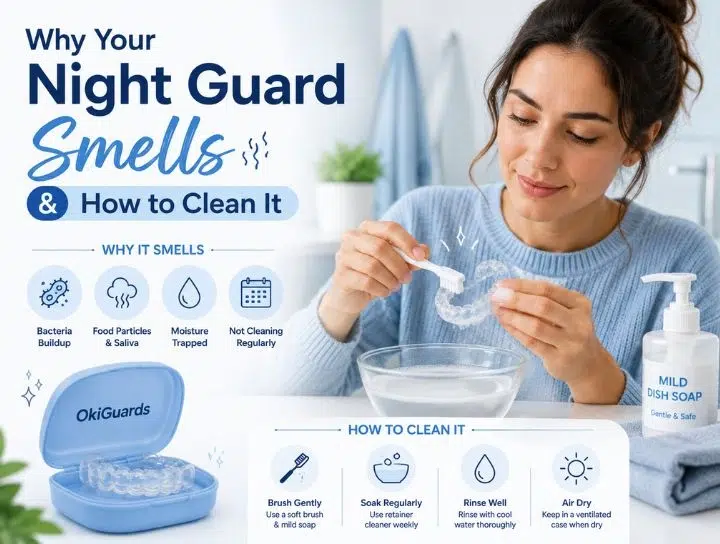
A Night Guard works best when it feels clean, fresh, and comfortable. Rinse it with cool water after use, brush gently with mild soap, and let it dry thoroughly before storing. Avoid hot water because heat can warp plastics. If you ever feel rough edges or new pressure points, check fit and reach out for guidance. Many comfort issues are easy to fix early. This isn’t about being strict; it’s about keeping the experience pleasant, so wearing your guard becomes automatic.
Frequently Asked Questions
Can I wear a mouth guard for grinding teeth with braces?
Yes, many people can, especially with an orthodontist-approved design that fits around brackets and supports tooth movement. With braces, guided fit usually leads to the best comfort.
Can I wear a night guard for teeth with Invisalign?
Most people should not wear a separate standard night guard on top of Invisalign aligners because aligners need to seat precisely. In mild cases, aligners can provide a barrier. If you grind heavily, your orthodontist can recommend a tailored strategy.
What are the best night guard benefits during orthodontic treatment?
Night guard benefits often include protecting enamel from wear, reducing tooth-on-tooth friction, supporting jaw comfort, and helping you wake up with less tightness. When the fit is right, consistent use becomes easier and results feel smoother.
What is the best teeth grinding treatment while wearing braces or Invisalign?
The best plan usually combines a safe protective approach with daily habits that reduce clenching intensity. Daytime “teeth apart” posture, evening relaxation, and sleep support often make a noticeable difference. If symptoms are intense, professional jaw support can be helpful.
When is the best time to get a custom Night Guard?
Many people find the best timing is after braces or after Invisalign, when tooth positions are stable, or during the retainer phase. That timing allows a custom night guard for teeth to fit precisely and feel comfortable.

Final note
Yes you can protect your smile while wearing Braces and Invisalign, and you can do it in a way that supports your orthodontic success. With braces, a Night Guard or braces-friendly protective appliance is often possible when it’s designed to accommodate brackets and movement. With Invisalign, you usually avoid stacking a standard Night Guard over aligners, but aligners can provide barrier protection for mild cases, and orthodontist-guided options exist for heavier grinding. Most importantly, you don’t have to push through discomfort. The combination of smart protection, positive teeth grinding treatment habits, and the right timing for a long term custom solution can make your orthodontic journey feel smoother and help you wake up feeling better.