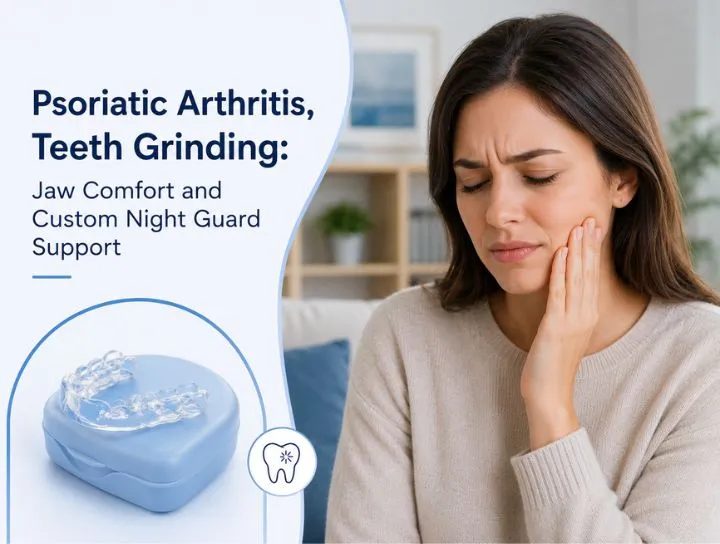
Psoriatic Arthritis, Teeth Grinding: Jaw Comfort and Custom Night Guard Support
A comfortable smile can play a meaningful role in daily wellness, especially for people managing psoriatic arthritis. This condition can affect the joints, muscles, and daily movement patterns, and the jaw can also become part of the care routine. Psoriatic arthritis is linked with psoriasis and commonly involves joint stiffness, swelling, and tenderness, while treatment plans can include medicines, movement support, and lifestyle care guided by healthcare professionals.For many people, jaw comfort becomes an important part of the bigger wellness picture. The jaw joint, also called the temporomandibular joint, helps with chewing, speaking, smiling, and everyday mouth movement. When psoriatic arthritis affects the jaw area, people may notice jaw tension, facial tightness, bite pressure, or teeth grinding.
Studies have also reported a connection between psoriatic arthritis and temporomandibular symptoms, including bruxism and jaw-joint sounds.A custom night guard can be a helpful addition to this care routine. It gives the teeth a protective layer during sleep and helps create a smoother surface for the bite. For someone who experiences teeth grinding with psoriatic arthritis, a custom-fit guard can support tooth protection, jaw comfort, and a more relaxed bedtime routine.
Understanding Psoriatic Arthritis
Psoriatic arthritis is an inflammatory joint condition that can appear in people with psoriasis. It can involve different joints in the body, including the hands, feet, spine, and sometimes the jaw. Many people first notice skin symptoms related to psoriasis, and joint symptoms may appear later. Mayo Clinic explains that the main psoriatic arthritis symptoms include joint pain, stiffness, and swelling.The goal of daily care is to support movement, comfort, and long-term joint health. Many people work with a rheumatologist, dentist, primary care provider, or physical therapist to build a plan that fits their body. A thoughtful plan can help support the joints, protect the teeth, and improve daily comfort.
Psoriatic Arthritis Symptoms That May Affect the Jaw
The jaw is a small but active joint system. It moves many times each day during meals, conversations, yawning, and facial expressions. When psoriatic arthritis affects the jaw area, it can bring extra awareness to these movements.
Some jaw-related signs may include:
- Jaw tightness in the morning
- Tenderness near the cheeks or temples
- A feeling of bite pressure
- Clicking or popping sounds
- Soreness while chewing
- Teeth grinding during sleep
- Tooth sensitivity is connected with clenching
- Facial muscle tension
These signs can guide a person toward helpful care. A dentist can check tooth wear and bite pressure, while a rheumatologist can guide overall psoriatic arthritis treatment. Together, these professionals can help create a supportive plan for the whole mouth and jaw.
Psoriatic Arthritis Causes and Jaw Pressure
The exact causes of psoriatic arthritis can involve the immune system, genetics, and environmental triggers. The NHS explains that psoriatic arthritis happens when the immune system attacks healthy tissue, and it can appear in some people who have psoriasis.When inflammation affects joints, the body may naturally adjust how it moves. In the jaw area, this may lead to muscle tension, altered chewing patterns, or a stronger habit of clenching. Teeth grinding can also be influenced by stress, sleep patterns, bite changes, and daily muscle activity.A positive way to look at this connection is simple: the body gives signals, and those signals can help shape a better routine. When jaw tightness or grinding appears, a custom night guard can help protect the teeth while healthcare guidance supports the joint system.
Teeth Grinding and Psoriatic Arthritis Jaw Pain
Psoriatic arthritis jaw pain can feel different from person to person. Some people feel tightness around the jaw joint, which can be a sign to give the area a little extra care and relaxation. Others may feel pressure around the teeth or tenderness in the facial muscles, reminding them to focus on comfort, relaxation, and gentle care. Teeth grinding can add to this awareness because the jaw muscles stay active while the body is resting.During sleep, grinding can press the upper and lower teeth together. This pressure can travel through the teeth, gums, jaw muscles, and joints. A custom night guard helps by creating a protective surface between the teeth. This surface supports the bite and helps reduce direct tooth-to-tooth contact.A night guard works best as part of a complete routine. That routine may include dental visits, medical care, gentle jaw habits, hydration, balanced meals, sleep support, and stress-relief practices.
How a Custom Night Guard Supports Comfort
A custom night guard is made from an impression of your teeth. This gives it a personalized shape that fits your mouth more naturally. A custom fit can feel secure, smooth, and easier to use consistently.
For people with psoriatic arthritis and teeth grinding, a custom night guard can support:
- Tooth protection during sleep
- A smoother bite surface
- Less direct grinding contact
- A more comfortable nighttime routine
- Better awareness of jaw habits
- Support for dental work and enamel
- A personalized fit based on your own teeth
OkiGuards offers custom night guards for different grinding levels, including soft, hard, and hybrid options. This gives users the ability to choose a guard style that matches comfort needs and grinding intensity.
Choosing the Right Night Guard Style
Every smile has a different grinding pattern. Some people grind lightly. Some clench with stronger pressure. Some prefer a soft feel, while others like a firmer appliance. Choosing the right guard style helps make the routine easy to follow.
Soft Night Guards
Soft night guards have a flexible, cushioned feel. They are often chosen by people with light grinding or people who enjoy a gentle appliance in the mouth.
A soft guard may suit someone who:
Most tooth cracks have no need for treatment. You may explore cosmetic options to improve the look of your teeth. Here are a few options:
- Prefers a cushioned feel
- Experiences light teeth grinding
- Wants a comfortable first guard
- Enjoys a flexible nighttime appliance
Hard Night Guards
Hard night guards provide a firm protective surface. They are often selected for stronger clenching or heavier grinding.
A hard guard may suit someone who:
- Experiences strong bite pressure
- Wants a durable surface
- Notices visible grinding marks
- Prefers firm nighttime protection
Hybrid Night Guards
Hybrid night guards combine a soft inner layer with a hard outer layer. The inside supports comfort, while the outside supports durability.
A hybrid guard may suit someone who:
- Wants comfort and strength together
- Experiences moderate grinding
- Likes a soft inner feel
- Wants a balanced guard for regular use
Psoriatic Arthritis Treatment and Dental Support
A healthcare professional usually guides psoriatic arthritis treatment. Medical care may focus on calming inflammation, supporting movement, protecting joints, and improving daily comfort. Dental care can support the mouth and jaw portion of that routine.A dentist can check for signs of grinding, tooth wear, bite pressure, gum sensitivity, and appliance fit. A rheumatologist can guide overall joint care. When both areas work together, the plan can feel complete and practical.
Helpful care steps may include:
- Regular dental exams
- A custom night guard for grinding
- Gentle brushing and flossing
- Jaw relaxation habits
- A provider recommends warm compresses
- Soft stretching guided by a professional
- Consistent medical follow-up
- A sleep routine that supports relaxation
This whole-body approach can help a person feel more supported from morning to night.
Daily Habits for Jaw Comfort
Small daily habits can make jaw care feel simple and natural. These habits work well with a custom night guard and support the jaw during the day.
Try these gentle ideas:
- Keep the teeth slightly apart when the mouth is resting.
- Let the tongue rest softly near the roof of the mouth.
- Take slow breaths during busy moments.
- Choose relaxed chewing patterns.
- Drink water throughout the day.
- Use a soft toothbrush for daily oral care.
- Clean the night guard every morning.
- Store the guard in its case after drying.
- Please share your jaw symptoms with your dentist and doctor.
These steps are easy to add to a daily schedule. They also help build awareness around clenching, grinding, and jaw tension.
Bedtime Routine for Teeth Grinding Support
A calm bedtime routine can help the body move into rest mode. For people with psoriatic arthritis, a steady routine can feel especially helpful because the body responds well to consistency.
A supportive routine may look like this:
- Brush gently with a soft toothbrush.
- Floss carefully between the teeth.
- Rinse the custom night guard.
- Place the guard securely over the teeth.
- Let the lips close softly.
- Breathe slowly and relax the jaw.
- Store the guard properly in the morning.
This routine supports oral hygiene, guard care, and jaw relaxation. Over time, the night guard can become a natural part of sleep preparation.
Cleaning and Caring for a Custom Night Guard
A clean guard feels fresh and supports a healthy mouth. Daily care also helps the appliance stay comfortable for regular use.
Simple cleaning steps include:
- Rinse the guard after wearing it.
- Brush it gently with a soft toothbrush.
- Let it air-dry fully.
- Store it in a ventilated case.
- Keep it away from heat.
- Bring it to dental visits for fit checks.
Good appliance care supports freshness, comfort, and confidence.
When to Talk With a Dentist
A dentist can help you understand how teeth grinding is affecting your smile. During a visit, the dentist may check the teeth, gums, bite, jaw movement, and signs of bruxism. This helps guide the right guard thickness and style.
It is helpful to mention:
- Morning jaw tightness
- Tooth sensitivity
- Facial muscle tension
- Grinding sounds noticed by a sleep partner
- Changes in bite comfort
- Psoriatic arthritis jaw symptoms
- Current medical treatment
This information helps your dental team recommend a custom night guard that fits your needs.
Frequently Asked Questions
Can psoriatic arthritis affect the jaw?
Yes, psoriatic arthritis can involve the jaw joint in some people. This may create jaw tightness, tenderness, clicking, or bite pressure, and a healthcare professional can guide the best care plan.
Can psoriatic arthritis cause teeth grinding?
Psoriatic arthritis may contribute to jaw discomfort and muscle tension, and some people may also experience teeth grinding. A dentist can check for grinding signs and recommend a custom night guard.
What psoriatic arthritis symptoms may relate to oral health?
Jaw tightness, facial muscle tension, tooth sensitivity from clenching, bite pressure, and chewing discomfort may connect oral health with psoriatic arthritis symptoms.
What type of custom night guard is helpful for grinding?
Soft guards can support light grinding, hard guards can support stronger grinding, and hybrid guards can offer comfort with durability. A dentist can help guide the best option.
How does a night guard support psoriatic arthritis jaw pain?
A custom night guard creates a smooth protective surface between the teeth during sleep. This helps manage grinding pressure and supports a more comfortable jaw routine.

Final note
Managing teeth grinding with psoriatic arthritis can feel more comfortable with the right support. A custom night guard protects the teeth, supports the bite, and adds comfort to the nighttime routine. Medical care, dental checkups, gentle jaw habits, and a well-fitted appliance can work together beautifully.OkiGuards custom night guards give people a practical at-home option for teeth grinding support. With the right guard style and professional guidance, your smile can feel protected, supported, and ready for a more comfortable daily routine.