Bruxism Nerve Damage: Can Teeth Grinding Affect Nerves?
Bruxism nerve damage commonly refers to increased tooth sensitivity or nerve-like sensations that can develop when grinding affects enamel, dentin, supporting tissues or jaw muscles. Most grinding-related sensations connect with manageable concerns such as enamel wear, exposed dentin, concentrated bite pressure or referred muscle sensitivity. Early dental guidance can identify the source and create a comfortable, personalized care plan.
A custom night guard adds a protective surface between the upper and lower teeth. This personalized barrier helps preserve enamel and compatible dental work while supporting consistent nighttime protection. OkiGuards offers custom Soft, Hybrid and Hard Night Guards for mild through stronger grinding patterns. Every current package includes two personalized guards, an at-home impression kit, free two-way shipping and a 60-night replacement or refund guarantee. Compare OkiGuards custom night guards and choose personalized protection for your smile.
Understanding Bruxism Nerve Damage
Bruxism includes grinding, clenching or pressing the teeth together during sleep or waking hours. Grinding usually involves sliding movement between opposing teeth, while clenching involves sustained tooth contact and active jaw muscles. Each tooth contains a central pulp chamber with nerves and blood vessels. Dentin surrounds this inner chamber, while enamel forms a strong protective covering over the visible part of the tooth.
Dentin contains microscopic channels that carry temperature and touch sensations toward the inner tooth. Healthy enamel provides dependable coverage for these channels and supports comfortable eating, drinking and speaking. Repeated grinding can gradually change the enamel surface. Greater dentin exposure can make a tooth feel more responsive to cold water, sweet foods, airflow, brushing or chewing. A dentist can assess the enamel, dentin, gums, dental restorations and tooth pulp. This complete examination provides clarity and connects every sensation with appropriate care.
How Bruxism Influences Tooth Sensitivity
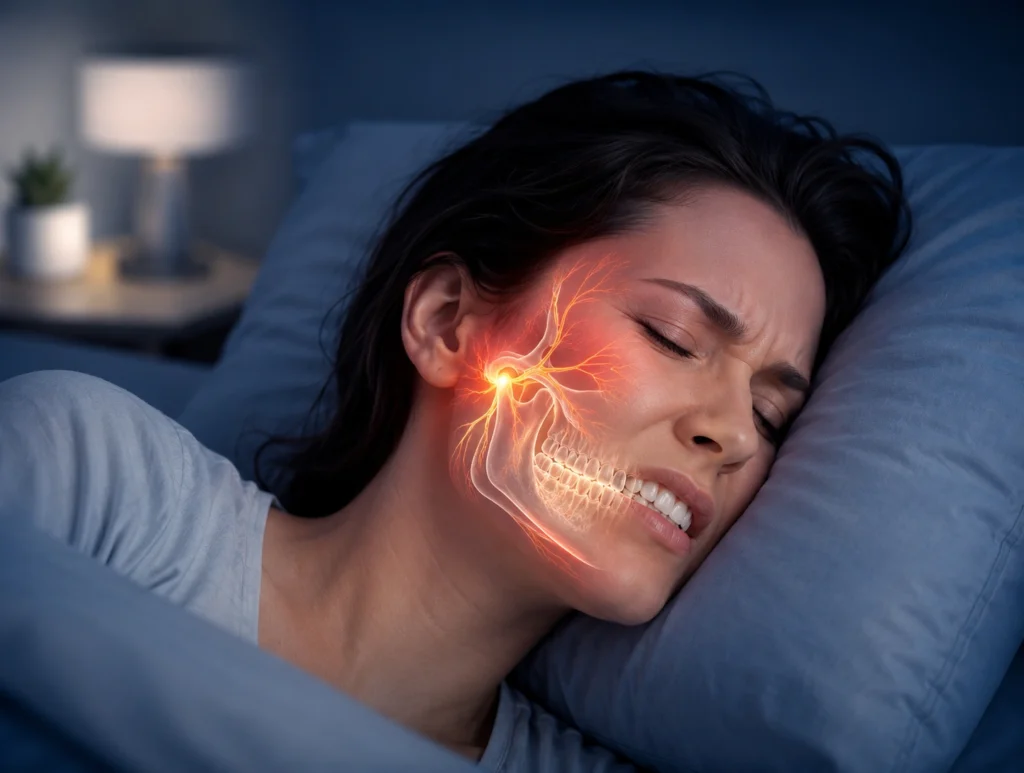
Bruxism can influence tooth comfort through several connected pathways. Each pathway offers an opportunity for early support, professional care and reliable nighttime protection.
Enamel Wear and Dentin Sensitivity
Enamel provides a durable surface for everyday chewing. Repeated grinding contact can gradually create polished areas, flatter biting edges or smoother chewing surfaces. Dentin may become more responsive when the enamel layer becomes thinner. Cold drinks or sweet foods may then create a quick, noticeable sensation. This response offers a useful signal for professional assessment. A dentist can evaluate the surface and recommend personalized sensitivity care, restorative support or grinding protection. A custom night guard creates a dedicated grinding surface over the teeth. This protective layer helps preserve the remaining enamel and supports compatible dental restorations.
Bite Pressure and Tooth Support
The periodontal ligament surrounds each tooth root and helps anchor the tooth within the jawbone. It also provides valuable sensory feedback during biting and chewing. Sustained clenching can place concentrated pressure around one tooth or a small group of teeth. This pressure may make a tooth feel more noticeable during chewing. A dental examination can review the bite, fillings, crowns, gum support and tooth position. Personalized care can then encourage comfortable contact and dependable protection. A custom guard supports this plan by creating a consistent surface between opposing dental arches during sleep.
Tooth Surfaces and Restorations
Fillings, crowns, veneers and bonding contribute to the function and appearance of a healthy smile. A custom night guard can create an additional protective layer over compatible dental work. Grinding patterns can produce helpful visual clues, including polished surfaces or changes along biting edges. Regular dental examinations allow a clinician to monitor these areas and recommend timely support. Customers with extensive dental work can bring their treatment history to the selection process. A dentist can guide the ideal guard material, thickness and upper or lower placement.
Gum and Root Sensitivity
Healthy gums support and protect the roots of the teeth. Root surfaces contain dentin, which naturally responds more readily to temperature and touch than enamel. Gentle brushing, suitable sensitivity products and professional gum care can support daily comfort. A custom night guard can complement this routine when grinding or clenching contributes to tooth contact. This combined approach supports the enamel, gums, roots and dental restorations as part of one complete oral-care plan.
What Does Nerve Pain in Teeth Feel Like?
Nerve pain in teeth can feel different according to the structure involved. Paying attention to timing, location and triggers can help a dentist understand the pattern.
Possible sensations include:
- A quick response to cold water
- Sensitivity during sweet foods
- Tenderness while chewing
- Pressure around a particular tooth
- Awareness across several teeth
- Sensitivity around a crown or filling
- Morning tooth tenderness
- Facial sensitivity near the cheeks
- Temple tightness
- Discomfort connected with jaw movement
A short temperature response can fit surface sensitivity. A dental appointment provides valuable clarity whenever sensations become stronger or continue. A dentist may use visual examination, temperature testing, pressure testing and dental imaging. These tools support an accurate assessment and a focused care plan. Recording the timing and triggers can make the appointment more productive. Notes about morning sensitivity, cold drinks, chewing pressure and daytime clenching give the dentist useful context.
Tooth Nerve Sensitivity and Bruxism
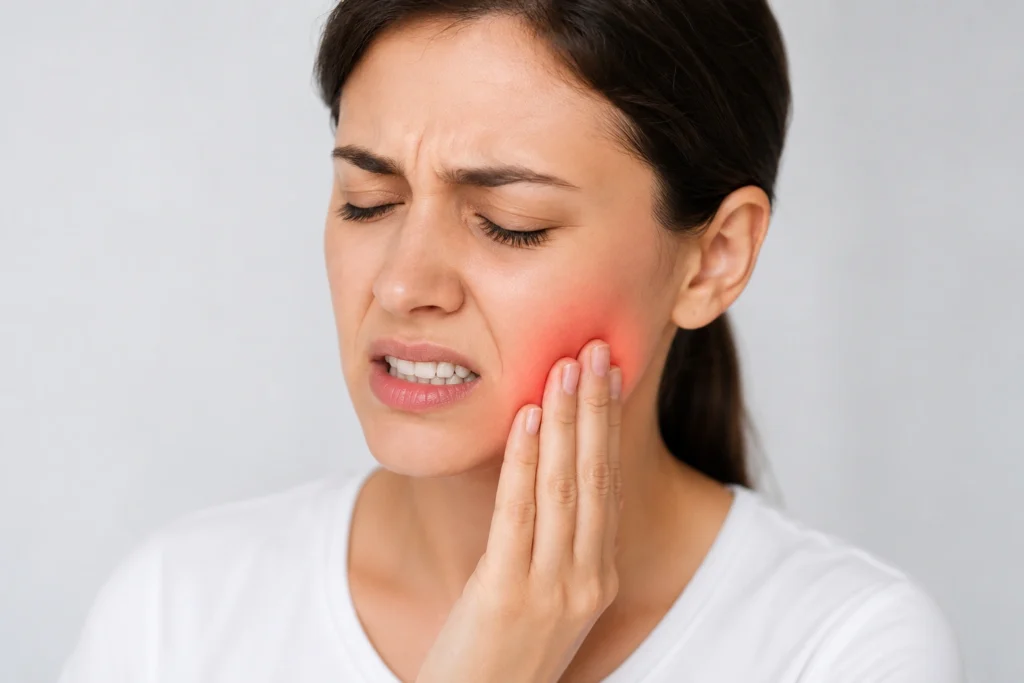
Tooth nerve sensitivity describes an increased response to temperature, sweetness, pressure, touch or airflow. Bruxism may contribute when repeated tooth contact changes enamel, exposes dentin or concentrates pressure around supporting tissues. The timing of the sensation can offer helpful information. Morning sensitivity alongside jaw-muscle tightness may suggest nighttime grinding activity. Tenderness during focused daytime work may accompany awake clenching.
A dentist can review enamel thickness, gum position, restoration condition and bite contact. This complete evaluation connects the sensitivity with the most suitable care. Professional treatment can support the affected tooth, while a custom night guard provides continued protection during sleep. This coordinated approach creates a strong foundation for comfort and enamel preservation.
TMJ Nerve Pain and Bruxism
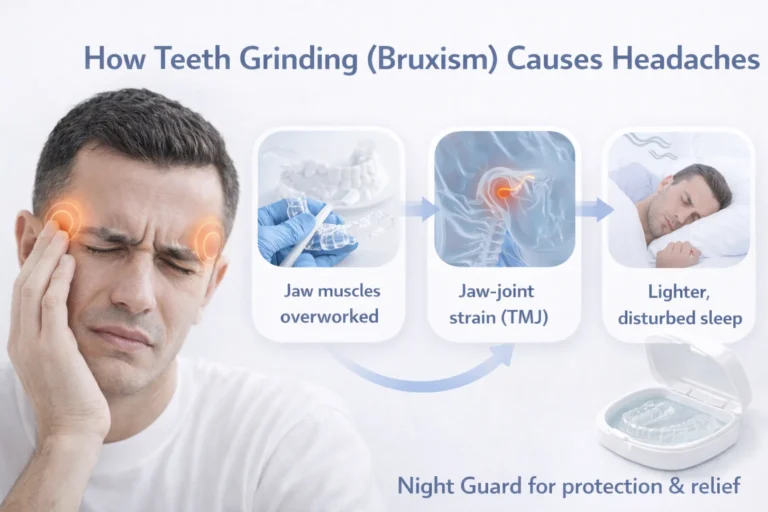
“TMJ nerve pain” is a commonly searched phrase used to describe sensitivity around the jaw joint, face, ears, temples or teeth. TMJ refers to the temporomandibular joint itself, while TMD describes conditions affecting the joint and surrounding muscles. The temporomandibular joints connect the lower jaw to the skull. These joints work with the chewing muscles to support speaking, eating, yawning and facial expression. Bruxism can occur alongside jaw-muscle or joint symptoms because grinding and clenching activate the muscles responsible for jaw movement. The teeth, jaw joints, chewing muscles and facial sensory pathways share a closely connected anatomical area.
People may notice:
- Tenderness near the jaw joints
- Ear-area pressure
- Cheek or temple tightness
- Facial sensitivity
- Jaw-muscle fatigue
- Awareness during chewing
- Sensations across several teeth
- Changes in comfortable jaw movement
These observations provide valuable information for a dentist or qualified TMD clinician. A professional assessment can review joint movement, muscle tenderness, tooth condition and bite contacts. A custom night guard supports tooth protection when grinding accompanies jaw symptoms. Personalized clinical care can address the joint and muscle components according to each person’s needs.
Common Bruxism Symptoms
Early recognition of bruxism symptoms supports timely tooth protection. Sleep bruxism may become noticeable through morning signs, while awake bruxism may appear during concentration or active daily routines.
Helpful signs include:
- Flattened biting edges
- Polished tooth surfaces
- Small changes along tooth edges
- Morning jaw-muscle tightness
- Tender cheeks or temples
- Tooth sensitivity
- Changes in fillings, crowns or veneers
- Ridges along the tongue or inner cheeks
- Grinding sounds noticed by a sleep partner
- Wear patterns on an existing guard
- Awareness of daytime tooth contact
These signs support an informed conversation with a dentist. A professional examination can compare symptoms with the condition of the teeth, gums, restorations and jaw muscles. This complete view supports a confident care decision and makes choosing a suitable night guard easier.
A Positive Dental Evaluation
A dental visit provides valuable clarity whenever tooth sensitivity, bite awareness or facial sensations become noticeable. Early assessment helps identify the structure involved and supports focused care.
A dentist may review:
- Enamel thickness
- Dentin exposure
- Gum position
- Dental restorations
- Bite contacts
- Tooth-pulp response
- Jaw movement
- Chewing-muscle tenderness
- Existing night guard wear
Temperature and pressure testing can add useful information. Dental imaging can also support a complete view of the tooth and surrounding structures. Timely professional guidance creates a clear path toward comfort. Coordinated healthcare support can also provide reassurance whenever facial sensations, sleep-related breathing signs or significant jaw changes form part of the experience.
How a Custom Night Guard Supports Protection
A custom night guard creates a fitted layer between the upper and lower dental arches. Its primary role is to protect enamel and compatible dental restorations from direct grinding contact.
A custom appliance offers:
- Closely fitted tooth coverage
- Secure retention during sleep
- A dedicated grinding surface
- Protection for natural enamel
- Support for compatible restorations
- Smooth, professionally finished edges
- Material matched to grinding intensity
- Comfortable upper or lower placement
- A consistent nighttime routine
A custom night guard complements professional dental care by protecting teeth from additional grinding contact. Dental treatment can support tooth-pulp, dentin, gum, restoration or TMD concerns according to the individual diagnosis.
Choosing the Right OkiGuards Night Guard
The ideal night guard matches your grinding intensity, preferred material feel, previous appliance experience and dental history.
| OkiGuards option | Thickness | Commonly suited for | Material feel | Current price |
| Custom Soft Night Guard | 2.0 mm | Mild grinding, mild clenching and first-time wear | Flexible and cushioned | $149 for two |
| Custom Hybrid Night Guard | 1.0, 2.0 or 3.0 mm | Mild to heavier grinding | Cushioned inside and firm outside | $149 for two |
| Custom Hard Night Guard | 1.5 or 3.0 mm | Heavy to severe grinding or clenching | Firm and rigid | $169 for two |
This comparison provides a practical starting point. Dental guidance can refine your selection when sensitive teeth, restorations or jaw symptoms form part of your dental history.
Custom Soft Night Guard
The OkiGuards Custom Soft Night Guard provides flexible 2.0 mm cushioning. It suits mild grinding, mild clenching and comfort-focused first-time wearers. Its cushioned material creates a welcoming introduction to custom nighttime protection. The personalized fit follows the contours of the selected dental arch and supports secure placement.
A Soft Night Guard can appeal to customers who value:
- Flexible material
- A cushioned mouthfeel
- Comfortable first-time adaptation
- Protection for mild grinding
- Personalized upper or lower coverage
- Simple nightly wear
Customers seeking additional wear resistance can explore the Hybrid or Hard options.
Custom Hybrid Night Guard
The OkiGuards Custom Hybrid Night Guard combines a softer inner layer with a firm external grinding surface. This dual-layer construction provides interior cushioning together with dependable durability.
OkiGuards offers three Hybrid thicknesses:
- 1.0 mm: A low-profile choice for milder grinding
- 2.0 mm: A balanced choice for moderate grinding
- 3.0 mm: Additional material for heavier grinding
The Hybrid range provides a versatile choice for customers who want to balance profile, comfort and durability. Its multiple thickness options make personalized selection simple.
Custom Hard Night Guard
The OkiGuards Custom Hard Night Guard uses rigid material designed for heavy to severe grinding or clenching. Its firm surface maintains a stable shape and provides strong wear resistance.
OkiGuards offers two Hard Guard thicknesses:
- 1.5 mm: A slimmer profile with rigid construction
- 3.0 mm: Additional material for heavier wear patterns
The Custom Hard Night Guard can provide an excellent choice for customers who value firmness, stability and lasting durability.
Why Custom Fit Matters
A custom night guard is created from an impression of the selected dental arch. The impression records the shape, position and contours of the teeth so the laboratory can produce a closely fitted appliance.
A personalized fit supports:
- Even seating over the teeth
- Secure retention
- Smooth edge finishing
- Controlled placement and removal
- Comfortable upper or lower coverage
- Consistent nighttime use
- A streamlined shape
- Individual tooth coverage
A suitable guard seats fully with gentle finger pressure and remains securely positioned. OkiGuards customer support and professional dental guidance can help refine the experience whenever fit assistance adds value.
Upper or Lower Night Guard
Both upper and lower custom night guards can provide dependable tooth protection. The preferred placement depends on tooth shape, tongue space, dental restorations, retention and personal comfort. An upper guard offers familiar coverage for many customers. A lower guard keeps the upper palate uncovered and can complement customers who prefer additional palate space.
OkiGuards offers three package choices:
- Two upper night guards
- Two lower night guards
- One upper and one lower guard
A dentist can recommend the most suitable arch when sensitive teeth, extensive restorations or complex bite relationships require personalized consideration.
What Comes With an OkiGuards Order?
Every current OkiGuards night guard package includes two personalized appliances. The complete service provides:
- Three impression-tray sizes
- Two sets of impression material
- Step-by-step instructions
- Access to an impression video
- A prepaid return mailer
- Free shipping in both directions
- FDA-cleared and BPA-free materials
- U.S. laboratory fabrication
- A 60-night replacement or refund guarantee
The additional impression material provides another opportunity to create a clear mold when helpful. Following the official instructions supports an accurate custom fit. Two completed guards provide convenience and added value. The second guard can serve as a ready spare within a consistent nighttime routine.
How the At-Home Process Works
Select Your Guard
Choose Soft, Hybrid or Hard construction according to your grinding intensity and preferred material. Select an available thickness and your preferred upper or lower placement.
Create Your Impression
Choose the tray that comfortably surrounds the selected dental arch. Mix and position the impression material according to the supplied instructions, center the tray and hold it steadily for the specified setting time.
Return Your Impression
Use the included prepaid return mailer to send the completed impression to the OkiGuards laboratory. Free return shipping keeps the process simple and convenient.
Receive Two Personalized Guards
The U.S. laboratory uses the impression to fabricate and finish two custom night guards. Smooth finishing and personalized contours support comfortable nightly wear.
Positive Habits for Tooth and Jaw Comfort
Supportive daily habits can complement professional care and custom nighttime protection.
Practice Daytime Jaw Awareness
Allow your teeth to remain slightly apart during relaxed moments. Gentle awareness can help you notice clenching while working, driving, studying or using screens.
Follow a Consistent Sleep Routine
A regular sleep schedule and peaceful evening environment support overall wellness. Consistent guard use can become a natural part of the same routine.
Choose Comfortable Foods
Soft, nourishing foods provide a gentle chewing experience during sensitive periods. Eggs, oatmeal, yogurt, rice, fish, soup and cooked vegetables offer enjoyable choices.
Use Gentle Oral Care
A soft toothbrush and light brushing pressure support sensitive teeth and gums. A dentist can recommend suitable sensitivity products according to your individual needs.
Maintain Regular Dental Visits
Routine examinations support early recognition of enamel changes, restoration needs and bite-pressure patterns. Bringing your night guard allows your dentist to review its fit and condition.
Caring for Your Custom Night Guard
Daily care supports freshness, shape and surface quality. Rinse the appliance with cool or lukewarm water after each use and clean it gently with a soft toothbrush. A nonabrasive cleaner designed for oral appliances can support additional freshness. Allow the guard to dry completely before storing it in a clean, ventilated case. A cool storage location supports the material and personalized fit. Regular inspection helps you identify the ideal time for a fresh replacement and continued nightly protection.
Frequently Asked Questions
Can teeth grinding affect dental nerves?
Teeth grinding can create nerve-like sensitivity through enamel wear, dentin exposure, concentrated bite pressure or referred jaw-muscle sensations. A dental examination can identify the source and connect it with comfortable care.
Can bruxism cause nerve pain in teeth?
Bruxism can contribute to nerve-like tooth sensations when grinding changes enamel or places repeated pressure around a tooth. A dentist can identify the structure involved and recommend focused support.
Can TMJ concerns make teeth feel sensitive?
TMD-related joint and muscle sensations can feel noticeable around the teeth, cheeks, temples and ears. A professional assessment can evaluate the teeth, jaw joints and muscles together.
Which bruxism symptoms connect with tooth sensitivity?
Morning jaw tightness, polished tooth surfaces, temperature sensitivity and restoration wear can appear together. Recording their timing and triggers supports a productive dental conversation.
How does a custom night guard support sensitive teeth?
A custom night guard creates a closely fitted protective surface between opposing teeth. This surface helps preserve enamel and compatible dental restorations from additional grinding contact.
Which night guard works best for bruxism?
A Soft Guard supports mild grinding and first-time wear, a Hybrid Guard balances cushioning and durability, and a Hard Guard provides firm protection for heavy to severe grinding. Personal comfort and professional guidance can refine the choice.
How quickly can tooth sensitivity feel more comfortable?
Progress reflects the source of the sensitivity and the selected care plan. Professional guidance, gentle oral care and consistent grinding protection create a strong foundation for comfort.

Final note
Bruxism nerve damage commonly describes manageable nerve-like sensations connected with enamel wear, exposed dentin, concentrated bite pressure or referred jaw-muscle sensitivity. Early professional guidance can identify the source and create a focused plan for tooth nerve sensitivity, nerve pain in teeth and TMJ nerve pain. A custom night guard adds a personalized protective surface between opposing teeth. OkiGuards offers Soft, Hybrid and Hard Night Guards with thickness choices matched to mild through stronger grinding patterns. Every current package includes two custom guards, an at-home impression kit, free two-way shipping, FDA-cleared and BPA-free materials, U.S. laboratory fabrication, and a 60-night replacement or refund guarantee. Shop OkiGuards custom night guards and select the material, thickness and placement that complement your grinding intensity and comfort preferences.