Iron Deficiency Symptoms: Can Low Iron Cause Jaw Clenching?
A healthy body and a comfortable jaw can work together to support better sleep, easier mornings, and a more relaxed daily routine. Many people search for iron deficiency symptoms and wonder whether low iron can be connected with jaw habits like clenching or nighttime grinding. This question makes sense because the body, muscles, sleep quality, and oral habits can all influence how the jaw feels.Jaw clenching can happen for many reasons, including sleep patterns, stress habits, bite pressure, focused work, and muscle tension. Some people also explore wellness factors such as energy levels, nutrition, and mineral balance when they notice changes in their bodies. When someone searches for iron deficiency, jaw clenching, or low iron teeth grinding, they are usually looking for a clear and practical way to understand the connection.
A custom night guard can help protect the teeth while a person works with a healthcare professional to understand overall wellness. OkiGuards offers custom night guards made for teeth grinding and clenching support, giving the smile a protective layer during sleep.
A Simple View of Low Iron and Jaw Habits
Iron helps support energy, oxygen transport, and overall body function. When people notice low iron symptoms, they may become more aware of sleep quality, muscle comfort, daily energy, and general wellness. These body signals can encourage a person to build a better health routine and speak with a healthcare professional for personalized guidance.Jaw clenching can also be influenced by how the body feels during the day and at night. A busy mind, active muscles, or changing sleep patterns can encourage the teeth to press together. This is why a complete approach can feel helpful.The goal is to support the whole routine. A healthcare professional can guide iron-related questions. A dentist can review tooth wear and jaw clenching. A custom night guard can support tooth protection during sleep.
Common Iron Deficiency Symptoms People Notice
People often search for iron deficiency symptoms because they want to understand their body better. Many common signs may include changes in energy, focus, stamina, sleep, or general comfort. These signals can help a person choose supportive steps and ask for proper testing when needed.
Commonly discussed low iron signs may include:
- Lower daily energy
- Tiredness during regular activities
- Lightheaded feelings
- Cold hands or feet
- Shortness of breath during exertion
- Faster heartbeat awareness
- Pale-looking skin tone
- Brittle nails
- Restless sleep patterns
- More awareness of muscle comfort
These low iron signs can be useful information to share during a healthcare visit. A professional can confirm iron status with proper testing and guide the best next steps.
Can Low Iron Directly Cause Jaw Clenching?
Low iron may influence overall body comfort and sleep quality, while jaw clenching usually has several possible influences. A helpful way to understand the topic is to see low iron as one wellness factor that may be discussed when a person notices changes in sleep, muscles, or energy. Jaw clenching itself is often connected with stress patterns, bite pressure, sleep habits, posture, or daytime concentration.
The phrase iron deficiency jaw clenching can be useful because it reminds people to look at both oral health and overall wellness. If jaw clenching appears with low energy, sleep changes, or other body signals, a healthcare professional can help review iron levels. A dentist can also check whether clenching is affecting the teeth.This balanced approach keeps the plan simple. Support the body with professional guidance, and support the teeth with a custom night guard if clenching happens at night.
Low Iron Teeth Grinding and Sleep Awareness
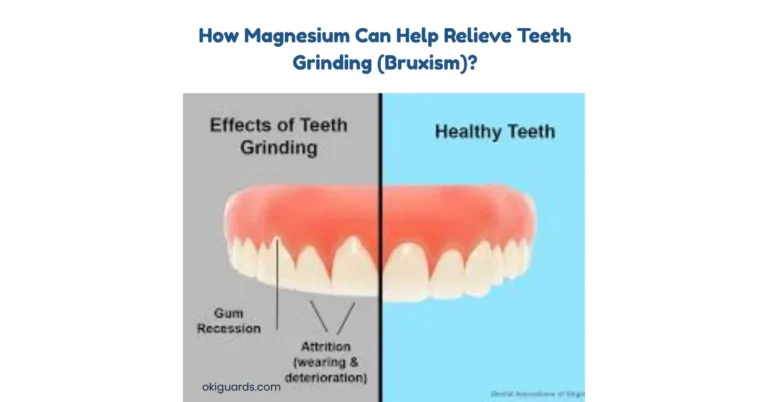
Many people search for low iron teeth grinding because nighttime grinding often feels connected with sleep quality. Teeth grinding can happen while the body is resting, and some people become aware of it through morning jaw tightness, tooth sensitivity, or comments from a sleep partner.A custom night guard can help protect the teeth during nighttime grinding. It creates a smooth barrier between the upper and lower teeth. This barrier supports enamel care, reduces direct tooth contact, and helps the bite feel more controlled during sleep.
OkiGuards custom night guards are designed from dental impressions, which helps create a personalized fit. A secure fit can make the guard feel more natural and easier to wear every night.
Jaw Clenching Causes to Consider
Understanding jaw clenching causes can help create a complete comfort plan. Jaw clenching often appears when the jaw muscles become active during focus, rest, or sleep. Many everyday factors can influence this pattern.
Common jaw clenching causes may include:
- Stress habits
- Focused work
- Sleep routine changes
- Bite pressure
- Jaw muscle tension
- Daytime teeth contact
- Posture habits
- Screen time
- Caffeine habits
- Nighttime grinding patterns
- Overall wellness changes
Each factor can be supported with awareness, dental guidance, and daily jaw relaxation habits. When low iron signs are also present, a healthcare professional can help review the body side of the picture.
Jaw Clenching at Night
Jaw clenching at night can happen without active awareness. The jaw muscles may press the teeth together during sleep, and the person may notice the pattern in the morning. A custom night guard can help protect the teeth while the person continues improving sleep habits and overall wellness.Nighttime clenching can benefit from a calm bedtime routine. Brush gently, floss carefully, place the guard securely, and take a few slow breaths before sleep. This routine can make the mouth feel clean, protected, and ready for rest.A night guard can also help a person feel more confident because the teeth have a protective surface during sleep. This can be especially helpful while exploring nutrition, stress habits, or sleep quality.
How a Custom Night Guard Supports the Smile
A custom night guard is made from impressions of your teeth. This helps the appliance fit closely and comfortably. A good fit can make nightly use easier and more consistent.
A custom night guard can support:
- Tooth protection during sleep
- Enamel care
- A smoother bite surface
- Better nighttime clenching support
- A more organized bedtime routine
- Jaw comfort awareness
- Confidence in smile protection
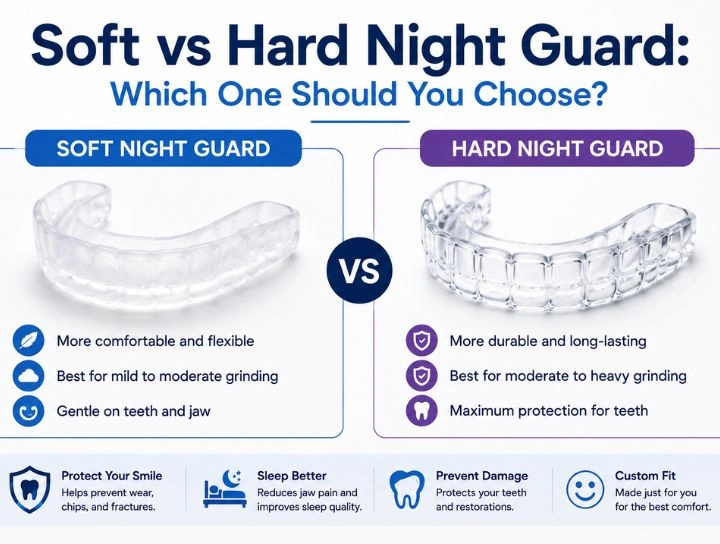
OkiGuards offers soft, hard, and hybrid night guards for different grinding and clenching needs. This makes it easier to choose a guard that matches your comfort preference and pressure level.
Choosing the Right OkiGuards Night Guard
Different clenching and grinding patterns can benefit from different guard styles. The best choice depends on comfort, pressure level, and dental guidance.
Soft Night Guard
A soft night guard has a cushioned feel. It can suit light clenching and people who prefer a flexible appliance.
Hard Night Guard
A hard night guard gives the teeth a firm protective surface. It can support stronger clenching and grinding.
Hybrid Night Guard
A hybrid night guard combines a soft inner layer with a firm outer layer. It gives comfort against the teeth and strength on the biting surface.
A custom-fit guard can help the bedtime routine feel smooth and consistent.
Daily Habits That Support Jaw Comfort
Jaw comfort can improve with simple awareness throughout the day. These habits can help the jaw feel lighter and more relaxed.
Try these supportive steps:
- Keep your lips softly closed and your teeth slightly apart.
- Rest your tongue gently near the roof of your mouth.
- Take slow breathing breaks during focused work.
- Keep your screen near eye level.
- Relax your shoulders during desk time.
- Drink water throughout the day.
- Notice when your jaw feels active.
- Wear your custom night guard during sleep.
These habits can support the teeth, jaw muscles, and overall routine.
A Wellness-Friendly Plan for Low Iron and Jaw Clenching
A clear plan can help you care for your body and smile at the same time. Start by tracking your symptoms and habits. Notice when clenching happens, how you feel in the morning, and whether you also notice low iron signs.
A helpful plan may include:
- Track energy, sleep, and jaw comfort.
- Ask a healthcare professional about iron testing.
- Schedule a dental visit for a bite and tooth review.
- Use a custom night guard for nighttime clenching.
- Practice relaxed jaw posture during the day.
- Build a calm bedtime routine.
- Keep your night guard clean and fresh.
This plan supports both whole-body wellness and smile protection.
Cleaning Your Night Guard
A fresh night guard can make nightly wear feel easy and pleasant. Daily cleaning also helps keep the appliance ready for regular use.
Use this simple care routine:
- Rinse the guard after wearing it.
- Brush it gently with a soft toothbrush.
- Let it air-dry fully.
- Store it in a ventilated case.
- Keep it away from heat.
- Check the fit regularly.
This routine supports a clean mouth and a comfortable appliance.
When to Seek Personal Guidance
Personal guidance can make the whole process feel clearer. A healthcare professional can review low iron symptoms and recommend testing when appropriate. A dentist can review tooth wear, jaw movement, bite pressure, and night guard needs.
Helpful details to share include:
- Morning jaw tightness
- Tooth sensitivity
- Sleep quality changes
- Daytime clenching habits
- Energy changes
- Muscle comfort changes
- Current night guard use
- Diet and wellness routines
These details can help create a plan that matches your body and your smile.
Frequently Asked Questions
Can low iron cause jaw clenching?
Low iron may be one wellness factor to discuss when jaw clenching appears with energy or sleep changes, while jaw clenching often connects with stress habits, bite pressure, sleep routines, and muscle tension.
What are common iron deficiency symptoms?
Common iron deficiency symptoms people discuss include low energy, tiredness, lightheaded feelings, cold hands or feet, brittle nails, and sleep changes.
Can low iron teeth grinding happen at night?
Low iron teeth grinding may be considered when nighttime grinding appears with other body signals, and a custom night guard can help protect the teeth during sleep.
What are common jaw clenching causes?
Common jaw clenching causes include stress habits, focused work, sleep routine changes, bite pressure, posture habits, and nighttime grinding patterns.
Can a night guard help with jaw clenching at night?
Yes, a custom night guard can help protect the teeth during jaw clenching at night by creating a smooth barrier between the upper and lower teeth.

Final note
Low iron and jaw clenching can be considered together when a person is paying attention to energy, sleep, muscle comfort, and oral habits. Jaw clenching often has several possible influences, including stress habits, sleep routines, bite pressure, daytime focus, and overall wellness patterns. A balanced plan can help you support the body while protecting the teeth.A custom night guard can help protect your smile during jaw clenching at night and nighttime grinding. OkiGuards custom night guards offer soft, hard, and hybrid options for different comfort needs and clenching levels. With professional guidance, daily awareness, and consistent tooth protection, your smile and wellness routine can feel more supported.