Chipped Front Tooth: Can a Night Guard Help Protect Your Incisors?
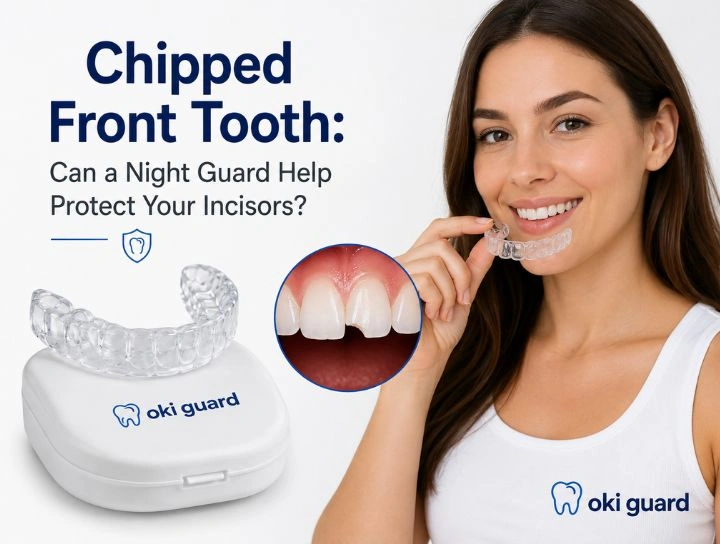
Yes, a custom night guard can help protect a chipped front tooth when repeated grinding or clenching places pressure on the incisors. The appliance covers one row of teeth and provides a separate surface for nighttime contact. Dental guidance recognizes custom night guards as a protective option for teeth affected by sleep bruxism. A night guard supports future protection, while professional dental care restores the shape and strength of the chipped area. This step supports lasting comfort and confidence. This combination creates a complete plan for appearance, comfort, and long-term tooth protection.
What Is a Chipped Front Tooth?
A chipped front tooth has a small change along its edge or surface where a tiny portion of enamel or tooth structure is no longer present. The front teeth are incisors, and their edges help cut food and guide jaw movement. A small chip in front tooth enamel may look like a tiny uneven corner, a smooth dip, or a rough edge. A larger chip may change the length or shape of the tooth. A dentist can match the repair to the tooth’s condition and your smile goals. Grinding is one recognized factor that can contribute to chipping because repeated tooth contact places pressure on enamel. Regular dental assessment provides the clearest view of the chip and its cause.
Why Can Grinding Chip an Incisor?
Teeth grinding, also called bruxism, includes repeated clenching, rubbing, or sliding of the teeth. This activity can happen during sleep or while awake. Over time, repeated contact can create polished edges, smoother surfaces, fine enamel lines, or subtle changes in the teeth. The incisors guide forward and side-to-side jaw movement. As the jaw slides during grinding, the front teeth come into repeated contact. Over time, this natural contact can shape the enamel and may contribute to subtle changes, including a chipped incisor, particularly when one edge experiences more pressure than the other. A chipped tooth from grinding often appears with other helpful clues, such as smooth wear areas, shorter tooth edges, morning sensitivity, grinding sounds during sleep, or wear marks on an existing guard. A dental professional can compare these signs and create a care plan.
What Does a Small Chip in a Front Tooth Look Like?
A small chip may appear as a slight change along the biting edge. The tooth may appear slightly more even on one side, and your tongue may notice a subtle textured area. Bright lighting can make the shape easier to see.
Common features include:
- A tiny uneven corner
- A smooth notch along the edge
- A newly polished area
- A subtle change in tooth length
- A fine line near the chipped area
- A gentle feeling during warm or cool drinks
- A matching contact point on the opposite teeth
These features support a focused dental visit. A dentist can smooth, shape, bond, or protect the area according to the depth and location of the chip.
Why Are Front Teeth Important to Protect?
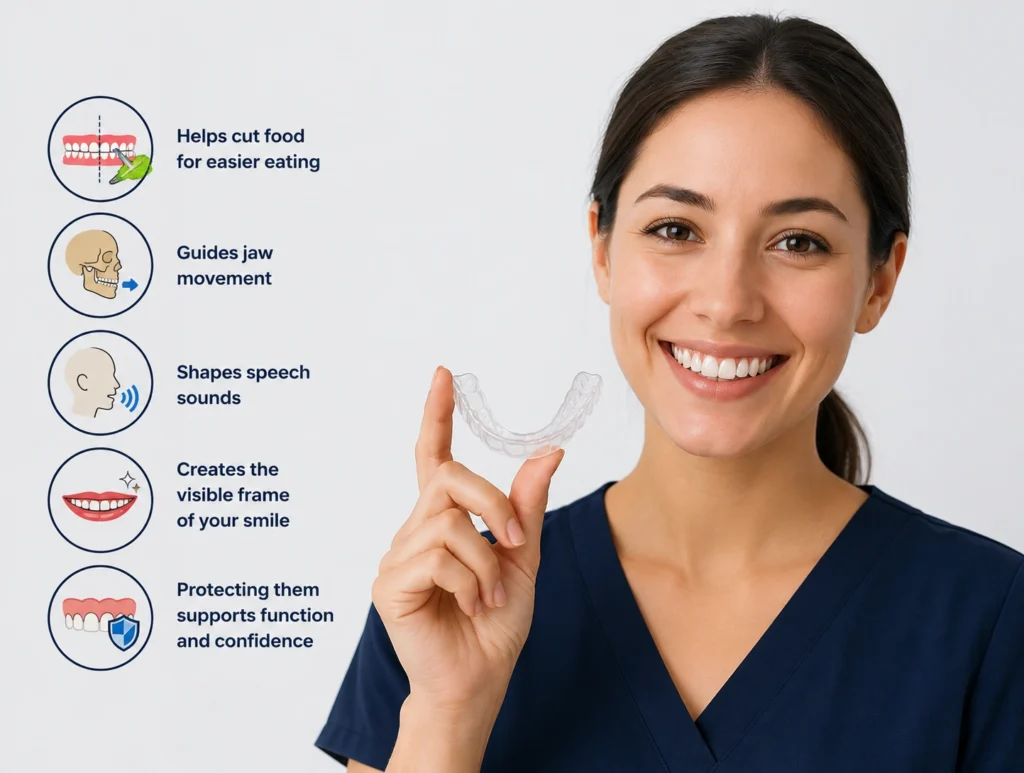
Front teeth support many daily functions. They help cut food into comfortable pieces, guide jaw movement, shape speech sounds, and create the visible frame of your smile. Protecting them supports function and confidence. Incisors also help guide the back teeth apart during certain jaw movements. A balanced front tooth shape can support smooth bite movement. Early care for a chipped incisor helps preserve this guidance and creates a stable base for long-term oral wellness.
How Does a Night Guard Protect Front Teeth?
A night guard fits over the upper or lower teeth and creates a protective contact surface. During clenching or grinding, the opposing teeth meet the guard instead of rubbing directly against natural enamel. This design supports the incisors, back teeth, and completed dental repairs.
It Reduces Direct Tooth Contact
The guard separates the upper and lower tooth surfaces. This barrier helps protect the biting edges of the incisors from repeated nighttime rubbing.
It Distributes Pressure
A custom fit can spread contact across a broader surface. Balanced pressure supports tooth protection and gives each tooth a more stable contact pattern.
It Supports a Repaired Chipped Tooth
Dental bonding or another restoration can rebuild the shape of a front tooth. A night guard then provides a protective layer during sleep and supports the restored edge.
It Creates a Consistent Care Routine
Wearing the guard after brushing connects tooth protection with a regular bedtime habit. Consistency supports dependable care each night.
Can a Night Guard Repair a Chipped Tooth?
A dentist provides the treatment that restores the chipped area, while a night guard supports protection after that care. Each part of the plan has a valuable role. A very small enamel chip may benefit from gentle smoothing or polishing. A visible edge change may suit tooth-colored bonding. A dentist may recommend another restorative option when the tooth would benefit from additional coverage or strength. After the tooth receives suitable care, a night guard can help reduce direct grinding contact and preserve the restored shape. This combined approach supports a natural appearance and confident function.
Who May Benefit From a Night Guard for Front Teeth?
A night guard for front teeth may offer value when dental findings point to clenching or grinding. The overall pattern guides the decision.
A dentist may consider nighttime protection when you have:
- A chipped tooth from grinding
- Matching flat areas on upper and lower incisors
- Front teeth that look shorter over time
- Repeated small edge changes
- Polished wear marks
- Morning tooth sensitivity
- Grinding sounds noticed during sleep
- A recent repair that deserves protection
- Wear patterns on earlier dental appliances
A professional review brings these details together and supports a choice that matches your teeth, bite, and sleep habits. Dentists can check tooth wear, jaw muscles, and other signs before recommending a custom protective appliance.
Which OkiGuards Product May Support Tooth Protection?
OkiGuards offers Soft Night Guards, Hybrid Night Guards, and Hard Night Guards for different comfort preferences and grinding levels.
Soft Night Guard
The Soft Night Guard provides a flexible and cushioned feel. It may suit lighter clenching and people who value gentle material around their teeth. Its comfortable design can support easy adjustment and regular wear.
Hybrid Night Guard
The Hybrid Night Guard combines a soft inner layer with a firmer outer surface. The inner layer supports comfort, while the outer layer provides a durable contact surface. This balanced design may suit moderate grinding and people who value both cushioning and stability.
Hard Night Guard
The Hard Night Guard provides a firm and stable surface. It may suit stronger clenching or grinding patterns and people who value durable nighttime tooth protection. Its smooth contact surface supports controlled jaw movement.
A custom impression helps the appliance follow your teeth. A secure fit supports comfort, clear breathing, and steady overnight use.
What Should You Do After Chipping a Front Tooth?
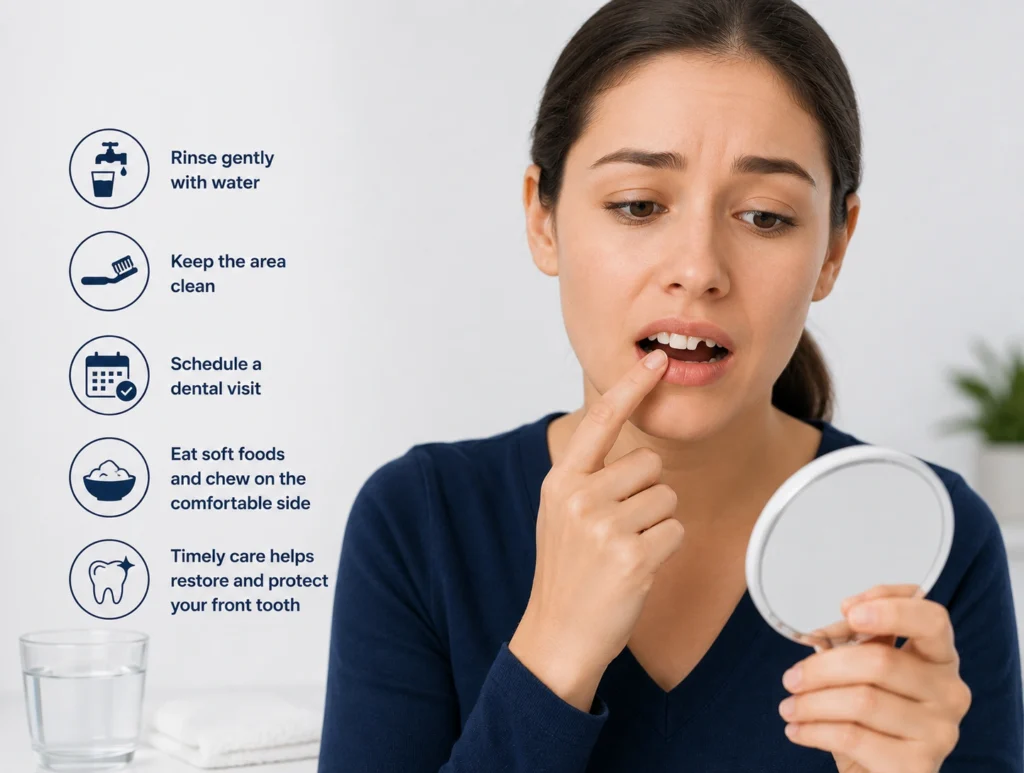
Calm, timely care supports the best result. Rinse your mouth gently with water, keep the area clean, and arrange a dental appointment. A dentist can inspect the enamel, bite, and surrounding tissue. Choose soft foods and chew with the comfortable side until the visit. Gentle brushing keeps the area fresh. A smooth dental repair can then restore the edge and support comfortable biting. Prompt dental care offers extra value when the tooth feels sensitive, the chip changes the bite, the edge feels sharp, or the tooth shows a color change. These signs help the dentist select supportive treatment.
How Can a Dentist Identify Grinding as the Cause?
A dentist can examine the shape of the chip and look for a wider wear pattern. Grinding-related changes often appear on several teeth and may create matching contact areas.
The assessment may include:
- Tooth-edge comparison
- Bite contact review
- Jaw movement observation
- Dental photographs
- Digital scans
- Muscle evaluation
- Questions about sleep sounds
- Review of morning tooth comfort
Dental professionals regularly check for tooth wear and other signs of bruxism and may recommend a custom guard for protection.
How Can You Protect a Repaired Incisor Every Day?
Daily habits work well with nighttime protection.
Practice a Relaxed Jaw Position
Let your lips rest gently together while your teeth remain slightly apart. Place your tongue comfortably near the roof of your mouth. This resting position supports relaxed jaw muscles during quiet activities.
Use Gentle Oral Care
Brush with a soft toothbrush and smooth movements. Clean between the teeth each day. Consistent care supports fresh gums, clean enamel, and a healthy environment around the repaired tooth.
Choose Comfortable Biting Habits
Cut firm foods into smaller pieces and use the back teeth for stronger chewing. This habit allows the incisors to guide lighter bites and supports the restored edge.
Build a Calm Bedtime Routine
A steady bedtime, slow breathing, and quiet activities support relaxation. Insert your clean guard at the same stage each evening so tooth protection becomes a natural habit.
Attend Regular Dental Reviews
Routine visits allow your dentist to check the repaired tooth, compare wear patterns, and review the guard’s fit. Early observations support simple adjustments and confident long-term care.
How Should You Care for a Night Guard?
Fresh care helps the guard feel pleasant and perform well. Rinse it with cool or lukewarm water after each use. Clean it gently according to its instructions and let it dry in a ventilated case.
Brush and clean between your teeth before wearing the guard. This routine supports a fresh fit throughout the night. Inspect the appliance regularly under good lighting: a smooth surface, secure fit, and clean case support dependable use. Bring the guard to dental visits so your dentist can review its fit and contact pattern.
Frequently Asked Questions
Can Teeth Grinding Cause a Chipped Front Tooth?
Yes. Repeated grinding or clenching can place pressure on enamel and contribute to chipped or worn tooth edges. A dental examination can confirm the pattern and guide suitable protection.
Will a Night Guard Cover My Front Teeth?
A custom night guard usually covers the complete upper or lower row of teeth, including the incisors. This full coverage creates a stable protective surface.
Is a Small Chip in a Front Tooth Easy to Treat?
Many small chips have straightforward cosmetic and protective options. A dentist can smooth the edge or restore its shape with a tooth-colored material according to the tooth’s needs.
Can I Wear a Night Guard After Dental Bonding?
A custom night guard can support bonding by reducing direct nighttime tooth contact. Your dentist can confirm the timing and fit after the repair.
Which Guard Is Best for a Chipped Incisor?
The suitable choice depends on grinding strength, bite design, comfort preference, and dental guidance. Soft, Hybrid, and Hard Night Guards offer different levels of flexibility, balance, and durability.
How Does Tooth Protection Support My Smile?
Tooth protection helps preserve enamel, restored edges, natural tooth shape, and comfortable bite movement. Consistent care supports a healthy and confident smile.

Final note
A chipped front tooth provides a valuable opportunity to strengthen your oral care plan. A dentist can restore the chipped area, review your bite, and identify signs of grinding or clenching. A custom night guard may help protect your incisors by creating a barrier between the upper and lower teeth. This protective surface supports natural enamel, front tooth edges, and completed dental work during sleep. OkiGuards provides Soft, Hybrid, and Hard Night Guard options for different comfort and grinding needs. A suitable fit, regular dental care, and positive daily habits can work together to support lasting tooth protection. Early attention creates a clear path toward a smooth tooth edge, a balanced bite, and a confident smile. With professional care and consistent nighttime protection, your incisors can receive strong support every day and every night.