How Bruxism effects Jaw Health and Bone Structure
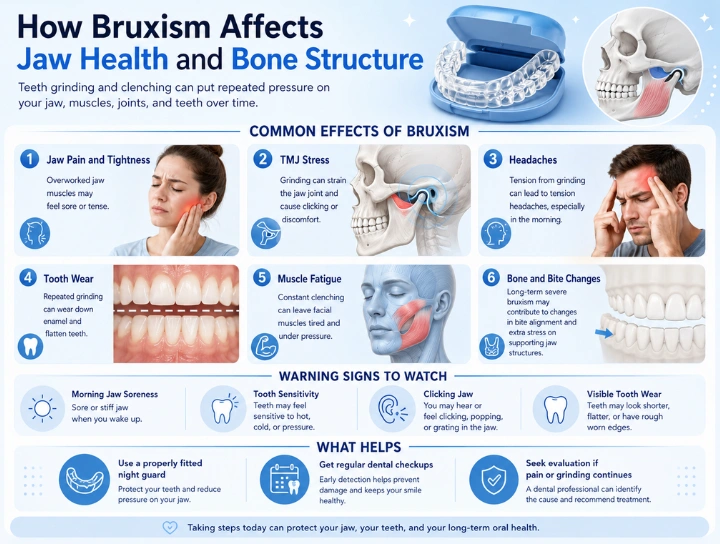
Bruxism is a common condition that involves grinding or clenching the teeth, often during sleep. Many people experience occasional grinding, while others may place repeated pressure on their teeth and jaw muscles every night. Over time, managing this pressure can improve overall oral comfort, support better jaw function, and help maintain the stability of surrounding structures for a healthier smile.Understanding the long-term effects of bruxism can help people take positive steps toward protecting their teeth and supporting healthier jaw function. With early attention, proper care, and the right protective solutions, many people successfully reduce discomfort and maintain strong oral health for years.
What Is Bruxism?
Bruxism refers to repetitive teeth grinding or jaw clenching. It may happen during sleep or throughout the day. Some people notice symptoms quickly, while others discover the condition during a dental examination.
Common signs of bruxism may include:
- Jaw tightness
- Morning facial fatigue
- Tooth sensitivity
- Flattened teeth
- Mild headaches
- Teeth grinding sounds during sleep
Because grinding often happens unconsciously, many people are unaware of the pressure being placed on their teeth and jaw each night.
How Bruxism Affects the Jaw
The jaw joint and surrounding muscles work together to support comfortable movement while chewing, speaking, and resting. Continuous grinding can place additional pressure on these structures over time.
Increased Muscle Strain
Repeated clenching may overwork the jaw muscles during sleep. This extra activity can contribute to muscle fatigue and tightness in the morning.
Many people with teeth grinding jaw pain notice:
- Soreness near the cheeks
- Jaw stiffness after waking
- Tension around the temples
- Difficulty fully relaxing the jaw
- Mild discomfort while chewing
Reducing grinding pressure can help support healthier muscle function and improve overall comfort.
Pressure on the Jaw Joint
The temporomandibular joint, commonly called the TMJ, helps the jaw open and close smoothly. Bruxism may increase pressure on this joint because of repeated clenching movements.
Over time, excessive force may contribute to:
- Jaw tension
- Clicking sounds
- Reduced jaw comfort
- Limited jaw flexibility
- Increased joint stress
Supporting the jaw with protective treatment options can help reduce unnecessary strain and encourage healthier movement patterns.
Teeth Grinding Effects on Tooth Structure
One of the most noticeable effects of teeth grinding involves the teeth themselves. Repeated friction between upper and lower teeth may gradually wear down enamel surfaces.
Positive early intervention can help reduce risks such as:
- Flattened teeth
- Small enamel chips
- Tooth sensitivity
- Increased pressure on fillings
- Uneven biting surfaces
Protecting the teeth early can help preserve natural enamel and support long-term oral stability.
Can Bruxism Affect Bone Structure?
Strong grinding forces may also affect the structures surrounding the teeth and jaw over time. The jawbone supports the teeth and helps maintain facial balance and bite alignment.Repeated clenching pressure can place additional stress on these supporting areas. While many people maintain healthy bone support with proper care, severe, untreated grinding may contribute to changes in bite pressure and jaw balance over time.Maintaining healthy oral habits and seeking early bruxism treatment can help support stronger long-term jaw health.
Understanding Bruxism Bone Loss
The term bruxism bone loss refers to possible stress-related changes that may occur in supporting bone structures when excessive grinding continues for long periods.
Heavy pressure may sometimes affect:
- Bone support around teeth
- Jaw alignment
- Bite stability
- Joint balance
- Overall oral comfort
Fortunately, early protection and professional care can help reduce these risks significantly. Many people successfully protect their oral structures by managing grinding pressure before major complications develop.
How Teeth Grinding Affects Jaw Alignment
The jaw depends on balanced pressure for comfortable movement and stability. Continuous clenching may gradually place uneven force on certain teeth and jaw areas.
This imbalance may contribute to:
- Uneven bite pressure
- Jaw fatigue
- Muscle imbalance
- Tooth wear patterns
- Increased jaw stress
Supporting a balanced bite can improve both comfort and long-term oral function.
Facial Muscle Tension and Bruxism
Bruxism often affects more than just the teeth. The facial muscles may remain active for long periods during sleep, which can lead to ongoing tightness and tension.
Many people notice:
- Tight cheeks
- Facial fatigue
- Pressure near the temples
- Morning stiffness
- Jaw soreness throughout the day
Reducing nighttime clenching can help facial muscles relax more naturally and comfortably.
How a Night Guard Helps Protect the Jaw
A night guard for teeth grinding creates a protective barrier between the upper and lower teeth. This cushioning effect helps reduce direct pressure during clenching and grinding.
Benefits of a properly fitted night guard may include:
- Reduced enamel wear
- Improved jaw comfort
- Less muscle strain
- Better pressure distribution
- Protection for dental restorations
A custom night guard is designed to fit securely and comfortably, helping provide more consistent protection throughout the night.
Why Custom Protection Matters
Custom night guards are shaped specifically for the individual bite. This personalized fit often provides greater comfort and stability compared to generic over-the-counter options.
A properly fitted appliance may help support:
- Better nighttime comfort
- Improved jaw balance
- Reduced shifting during sleep
- Consistent protection
- Long-term durability
Oki Guards offers custom night guard solutions designed to support different levels of grinding while helping maintain comfort and protection.
Bruxism Treatment Options
Several positive treatment approaches may help reduce grinding pressure and improve oral comfort.
Common Bruxism Treatment Methods
Custom Night Guards
Night guards remain one of the most effective ways to protect teeth and reduce jaw strain during sleep.
Stress Management
Relaxation techniques may help reduce unconscious jaw clenching for some individuals.
Improved Sleep Habits
Consistent sleep routines can support healthier nighttime muscle relaxation.
Regular Dental Monitoring
Routine dental visits help monitor tooth wear and jaw function over time.
Jaw Relaxation Exercises
Gentle jaw exercises may help support muscle flexibility and comfort.
Combining multiple supportive strategies often produces the best long-term results.
Signs That Bruxism May Be Affecting Jaw Health
Recognizing early signs can help people seek treatment sooner and protect their oral structures more effectively.
Common signs may include:
- Morning jaw tightness
- Frequent facial fatigue
- Tooth sensitivity
- Clicking jaw joints
- Flattened teeth
- Increased jaw tension
Early attention can help reduce long-term stress on the teeth and supporting structures.
Long-Term Benefits of Managing Bruxism
Positive treatment and consistent protection can support healthier teeth and jaw function for many years.
Long-term benefits may include:
- Better enamel preservation
- Reduced jaw strain
- Improved sleep comfort
- Protection for dental work
- Healthier bite support
- Greater oral comfort
These improvements can contribute to stronger overall dental wellness and quality of life.
Supporting Healthy Bone and Jaw Structure
Maintaining healthy jaw support involves protecting the teeth, muscles, and surrounding structures from excessive pressure. Small preventive steps can make a meaningful difference over time.
Helpful habits may include:
- Wearing a custom night guard regularly
- Avoiding unnecessary jaw tension
- Maintaining routine dental care
- Supporting healthy sleep habits
- Monitoring grinding symptoms early
Consistent protection can help preserve both comfort and long-term oral stability.
Frequently Asked Questions
Can bruxism cause jaw pain?
Yes, repeated grinding and clenching can place extra pressure on the jaw muscles and joints, which may contribute to jaw tension and discomfort.
What are the common effects of teeth grinding?
Common effects may include enamel wear, jaw tightness, tooth sensitivity, facial fatigue, and extra pressure on dental restorations making early care important for protecting your comfort and smile.
Can bruxism affect bone structure?
Long-term grinding may place stress on supporting jaw structures over time. Early treatment and protection can help support healthier jaw stability.
How does a night guard help with bruxism?
A night guard creates a protective barrier between the teeth, helping reduce grinding pressure and support better jaw comfort during sleep.
What is the best bruxism treatment?
A combination of custom night guards, healthy sleep habits, stress management, and routine dental care often provides effective long-term support.

Final note
Bruxism can affect more than just the teeth. Continuous grinding and clenching may place added stress on the jaw muscles, joints, and supporting bone structures over time. Understanding the potential teeth grinding effects allows people to take positive action before long-term discomfort develops.Fortunately, supportive care and early bruxism treatment can help reduce pressure, protect enamel, and support healthier jaw function. A properly fitted night guard for teeth grinding can provide valuable protection by cushioning the bite and helping reduce strain during sleep.With consistent care and the right protective approach, many people successfully maintain healthier teeth, improved comfort, and stronger jaw support for the future.