Can Nail Biting Teeth Damage?
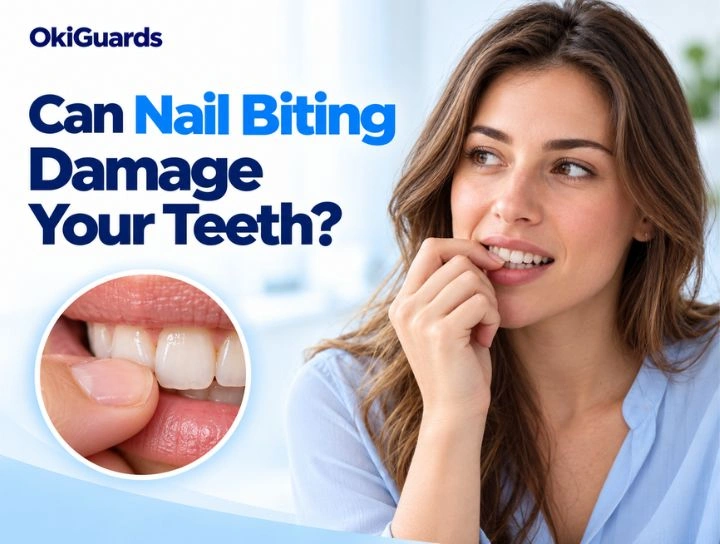
Nail biting teeth damage can include chipped tooth edges, uneven wear, and pressure on the jaw, and recognizing the habit early gives you an opportunity to protect your smile. Simple changes to your daily routine, combined with personalized dental guidance, can support healthier nails and more comfortable teeth. Nail biting often happens during everyday activities such as working, studying, watching television, or concentrating. Understanding when it happens makes it easier to introduce a replacement habit that feels natural and achievable.
For people who also grind or clench their teeth, a dentist can help build a plan that addresses both behaviors. OkiGuards offers custom night guards for grinding-related tooth protection, while habit-focused strategies address daytime nail biting. This guide explains common nail biting causes, how the habit can affect your teeth, and practical steps toward a healthier routine.
How Can Nail Biting Affect Your Teeth?
Your teeth work best when they handle food through normal biting and chewing. Repeatedly gripping fingernails introduces a different pattern of pressure, often concentrated on the front teeth. The effect varies according to biting frequency, force, tooth condition, and existing dental work. A dental examination can identify which areas deserve attention and help you choose an appropriate next step.
Front Tooth Edges
The front teeth often do most of the work during nail biting. Repeated contact with a firm nail can lead to small chips or changes along the biting edges. Keeping nails neatly trimmed and using a file for rough corners gives your teeth a break from this extra task. A dentist can assess an uneven edge and discuss smoothing or restoration when appropriate.
Existing Dental Work
Crowns, veneers, fillings, and bonding benefit from thoughtful daily care. Using nail tools to trim and shape your nails helps preserve the dental work you have invested in. If you have a restored front tooth, ask your dentist about habits that support its longevity. Advice tailored to the restoration material and your bite can make everyday care more effective.
Jaw Comfort
Nail biting may involve holding the lower jaw forward or repeatedly tightening the jaw muscles. Becoming aware of this position creates an opportunity to relax the muscles throughout the day. A comfortable resting posture generally allows the teeth to remain slightly apart. Gentle reminders during work or screen time can help you return to this relaxed position.
Gum and Mouth Care
Smooth nails and clean hands support a healthier daily routine. Redirecting your hands toward a fidget object also reduces contact between fingernails and the tissues inside your mouth. If you notice a tender area, your dentist can check it and recommend suitable care. Early attention supports comfort while you continue changing the habit.
Why Do I Bite My Nails?
If you often ask, “Why do I bite my nails?”, observing your routine is a useful starting point. Nail biting can become an automatic behavior associated with specific situations, feelings, or sensations. Some people notice it during deadlines, while others experience it during quiet moments. Your own pattern provides practical clues for choosing a replacement behavior.
Stress and Emotional Tension
Nail biting can function as a familiar response during stressful moments. Identifying those moments helps you prepare an alternative, such as slowly breathing out or gently squeezing a stress ball. For example, keeping a fidget object beside your keyboard gives your hands something to do during a demanding task. A small, convenient change is often easier to repeat consistently.
Boredom and Waiting
Waiting for a meeting, watching a long video, or sitting through a commute may leave your hands searching for activity. Planning a suitable hand activity can make these moments easier. A textured object, pen held away from the mouth, or simple craft may provide a practical replacement.
Concentration and Automatic Habits
Some people bite their nails while reading, solving problems, or working carefully. The behavior can happen before they consciously notice it. A discreet reminder near your screen can bring your attention back to your hands. Once you notice the movement, you can place your hands comfortably on the desk or pick up your chosen replacement.
Rough Nail Edges
A rough corner or uneven nail may encourage repeated checking and biting. Keeping a nail file nearby makes it easier to address the original sensation directly. Regular nail care supports smooth edges and gives you a clear alternative whenever a nail catches your attention.
Common Nail Biting Causes and Helpful Responses
Understanding nail biting causes helps you match the response to the situation.
| Common trigger | Practical response | Helpful purpose |
| A demanding work task | Keep a stress ball nearby | Gives your hands a replacement activity |
| A rough nail edge | Use a clean nail file | Smooths the area attracting attention |
| Watching television | Hold a comfortable fidget object | Occupies your hands during downtime |
| Waiting or boredom | Choose a simple hand activity | Adds a planned action to quiet moments |
| Automatic hand-to-mouth movement | Use a visible reminder | Helps you notice the habit earlier |
| Frequent urges throughout the day | Seek behavioral support | Builds a personalized habit-change plan |
Choose one or two responses that fit your routine. An approach that is easy to access and comfortable to use has a better chance of becoming part of everyday life.
Recognizing Nail Biting Effects Early
Being familiar with nail biting effects helps you notice changes and arrange useful care. During your regular oral hygiene routine, pay attention to the appearance of your front tooth edges and how comfortably your teeth meet. A dental check is useful for a newly rough edge, tooth sensitivity, jaw discomfort, or a change in your bite. Your dentist can assess whether nail biting, grinding, dental decay, or another factor may be contributing. Identifying the cause supports a more focused plan. A visible chip, a loose restoration, or persistent discomfort deserves prompt dental attention. Booking an appointment gives you access to treatment options and specific guidance for protecting the area. If your teeth look and feel comfortable, preventive care remains valuable. Discussing the habit during a routine visit can help you preserve that comfort.
How to Stop Biting Nails Naturally
Learning how to stop biting nails naturally begins with practical changes you can repeat. A supportive approach combines awareness, nail care, replacement activities, and realistic goals.
Keep Your Nails Neatly Trimmed
Short, comfortable nails give you fewer edges to catch or focus on. Use clean nail clippers and finish with a file wherever a corner feels rough. Choose a regular time to check your nails, such as after your evening shower. Connecting nail care to an established routine makes it easier to remember.
Identify Your Main Trigger
For several days, briefly record when you notice nail biting. Include the activity, location, and what you were feeling. You might discover that most episodes happen during computer work or while watching television. That information helps you place reminders and replacement objects where they will be most useful.
Choose a Comfortable Replacement
Give your hands a simple action when an urge appears. Holding a stress ball, using a fidget object, or resting your palms on your thighs can interrupt the familiar movement. Keep the replacement within reach. Convenience makes it easier to respond early and repeat the new behavior.
Create a Gentle Reminder
A small note on your desk, a phone reminder, or a smooth ring can prompt a quick check of your hands. Use encouraging wording such as “Hands relaxed” or “Time for a breath.” A friendly cue supports awareness and keeps the process approachable.
Support a Calmer Daily Rhythm
Short breaks, regular sleep, enjoyable movement, and slow breathing can support general well-being. These habits may be especially helpful when tension is one of your personal triggers. Choose activities that fit your schedule. A brief walk between tasks or a quiet minute before a meeting can become an easy routine.
Set Gradual Goals
Start with one manageable situation, such as keeping your hands occupied during your evening television program. You can also focus on protecting one nail before expanding your goal. Track successful moments and use each observation to refine your approach. Progress can develop at an individual pace.
Get Personalized Support
A therapist familiar with body-focused repetitive behaviors can help when nail biting feels frequent, persistent, or difficult to redirect. Habit-reversal training typically develops awareness and a competing response. Professional support can adapt these techniques to your triggers, preferences, and daily responsibilities.
A Practical One-Week Starting Plan
A short plan can help turn good intentions into repeatable actions.
| Day | Main action | What to notice |
| 1 | Observe when nail biting happens | Your most common setting |
| 2 | Trim and file your nails | Which edges attract attention |
| 3 | Place a fidget object in that setting | Whether it is easy to reach |
| 4 | Add an encouraging reminder | How early you notice the movement |
| 5 | Practice a brief relaxation break | Whether tension is a trigger |
| 6 | Repeat your most useful strategy | Which action feels sustainable |
| 7 | Review and adjust your plan | One achievable goal for next week |
Treat the week as a learning exercise. Your observations can guide a routine that becomes more useful with practice.
Can a Night Guard Help People Who Bite Their Nails?
A night guard has a specific role in protecting teeth from grinding and clenching. For someone who bites their nails and also experiences bruxism, a dentist may recommend a guard as part of their overall dental care. Daytime nail biting responds to awareness and behavior-focused strategies. A nighttime appliance addresses a separate source of tooth contact.
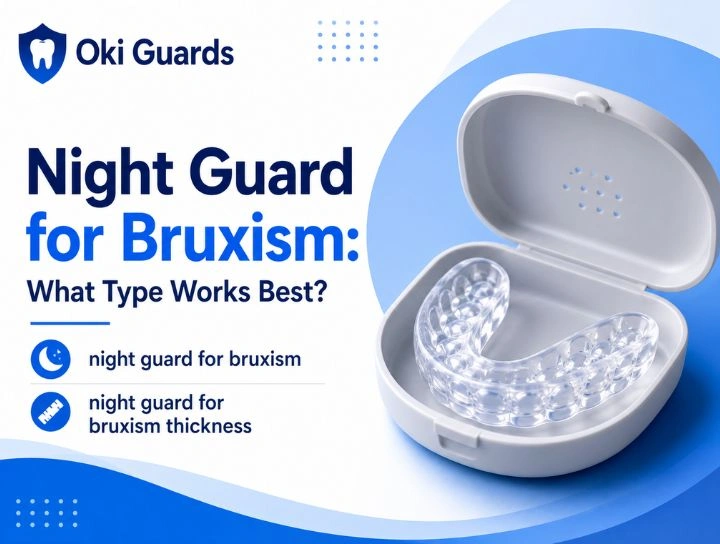
This distinction helps you make a useful purchase decision. A custom night guard becomes relevant when your dentist identifies grinding or clenching and recommends an appropriate appliance. Ask about the recommended material, thickness, placement, and wearing schedule. Matching the appliance to your needs supports a more informed choice. OkiGuards offers three custom night guard types, with each standard package containing two finished guards.
Choosing an OkiGuards Night Guard for Grinding Protection
If your dentist recommends a custom night guard, comparing the available options helps you understand their different features.
Soft Night Guard: Flexible Cushioning
The OkiGuards Custom Soft Night Guard provides a flexible, cushioned feel in a listed 2 mm thickness. The website positions this option for mild grinders and first-time users. The package includes two custom guards for $149. Discuss this option with your dentist if flexible material suits your grinding pattern and dental needs.
Hybrid Night Guard: Two-Layer Construction
The OkiGuards Custom Hybrid Night Guard combines a soft interior with a firmer exterior. Listed thickness options are 1 mm, 2 mm, and 3 mm. Two custom guards cost $149. This construction offers a choice for buyers seeking a cushioned fit with an outer layer designed for durability. Your dentist can help determine the appropriate thickness.
Hard Night Guard: Rigid Construction
The OkiGuards Custom Hard Night Guard uses rigid thermoplastic according to its product description. The product page lists 1.5 mm and 3 mm options, with two guards priced at $169. OkiGuards position this type for heavy to severe grinding. Professional guidance can help you choose between a slimmer profile and a thicker option.
| OkiGuards product | Listed thickness | Package price | Website positioning |
| Soft Night Guard | 2 mm | $149 for two | Mild grinding and flexible cushioning |
| Hybrid Night Guard | 1, 2, or 3 mm | $149 for two | Soft interior with durable exterior |
| Hard Night Guard | 1.5 or 3 mm | $169 for two | Heavy grinding and rigid protection |
What Comes With an OkiGuards Order?
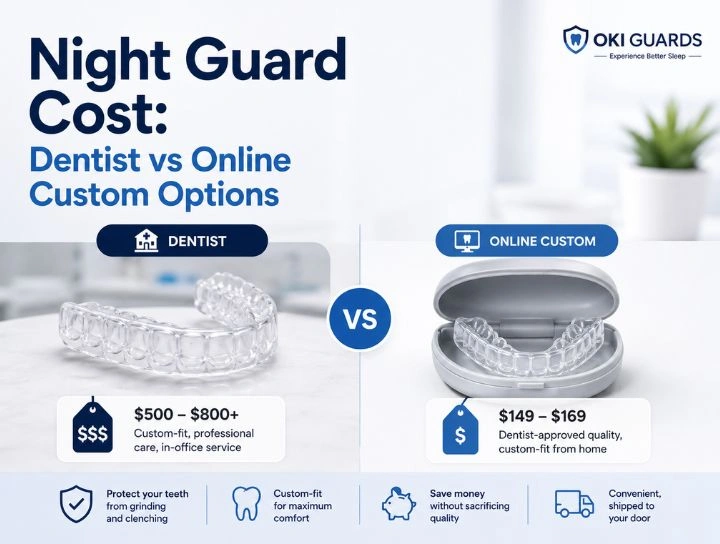
The standard night guard packages include impression supplies, instructions, a prepaid impression return mailer, and two finished custom guards. You can choose two upper guards, two lower guards, or one of each. Your dentist can guide the placement and explain how to use your selected configuration. The OkiGuards How It Works page explains the at-home impression process. Following the supplied instructions and requesting support when needed helps produce an impression suitable for fabrication. Free standard shipping is listed for the continental United States, covering the kit, impression return, and finished guards. Review the Shipping Policy and applicable guarantee terms before purchasing.
Frequently Asked Questions
Can nail biting damage teeth?
Yes, repeated nail biting can contribute to chips, wear, and jaw discomfort. Recognizing the habit and arranging dental advice supports early care and ongoing tooth protection.
Why do I bite my nails while concentrating?
Nail biting can become linked with focused activities and happen automatically. A nearby reminder and accessible hand activity can help you notice and redirect the movement.
Can teeth improve after stopping nail biting?
Changing the habit reduces repeated pressure and supports ongoing care. A dentist can assess existing changes and recommend treatment, such as smoothing or bonding, where appropriate.
What is a natural way to stop nail biting?
Start with trimmed nails, trigger awareness, and a comfortable replacement activity. Repeating these steps in your most common biting situations creates a practical foundation.
Should I buy a night guard for nail biting?
A night guard purchase is most relevant when your dentist recommends one for grinding or clenching. Nail biting itself benefits from a separate habit-change plan.

Final note
Understanding nail biting teeth damage gives you a clear starting point: care for your nails, notice your triggers, and practice a replacement behavior that fits your day. Dental guidance adds personalized support for tooth edges, restorations, jaw comfort, and any related grinding concerns. Small, consistent actions can help you develop a more comfortable routine. If a custom night guard is part of your dentist’s recommendation, explore the OkiGuards night guard collection to compare materials, thicknesses, and package options.