Night Guard Design: What to Look for in the Edges Before Purchasing
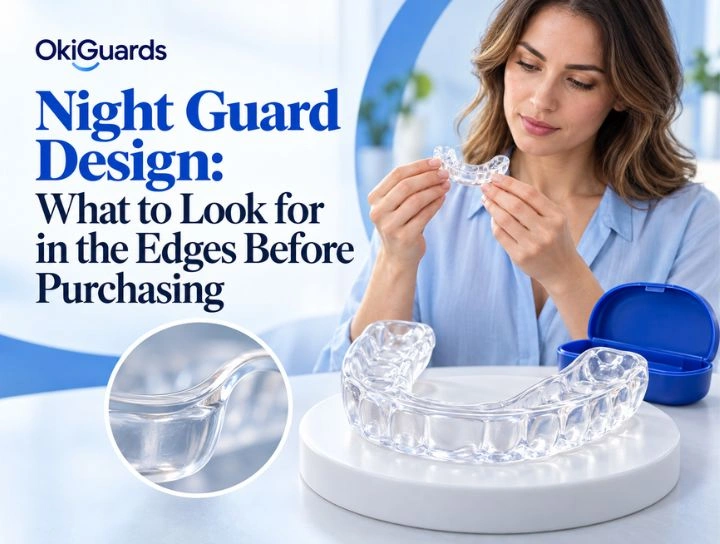
Look for smoothly finished edges, gently rounded contours, appropriate tooth coverage, and an edge position tailored to your mouth. These features work together with secure retention and suitable thickness to support a comfortable night guard. The edge is the border where the appliance meets your lips, cheeks, tongue, and nearby gum tissue. Giving that border attention helps you evaluate a product beyond its overall appearance. When exploring an OkiGuards custom night guard, consider the complete design: how it is personalized, which material suits your needs, and how the finished fit will be reviewed. This buying guide walks around the appliance from front to back, showing which details deserve a closer look and which questions help you choose confidently.
Start at the Border: Why Edges Deserve Attention
A product photograph often draws your eye to the clear material and overall shape. The border deserves equal attention because it sits beside tissues that move during speaking, swallowing, and ordinary jaw activity. An appropriate edge follows the intended design while providing comfortable clearance for surrounding tissues. Think of edge finishing as one part of a coordinated fit. Tooth coverage establishes the area protected, retention helps the appliance stay seated, and the border completes the transition to your mouth. Your dentist can assess these features together. Product descriptions and photographs provide a starting point for that conversation.
Take a Visual Tour of the Appliance
Imagine viewing the guard from above, then turning it slowly to examine each section. The front, cheek-facing sides, tongue-facing border, and rear ends each have a different relationship with your mouth.
The Front: A Smooth, Rounded Outline
At the front of the appliance, look for an orderly outline and a smoothly finished border. This section sits near the lips, so its shape contributes to the overall feel during placement and wear. Ask how the laboratory finishes the front edge and whether the design accounts for the soft-tissue attachments around the lips. A rounded appearance is a useful visual feature. The finished appliance’s comfort and clinical suitability are confirmed through an actual fit assessment.
The Sides: Contours That Follow the Dental Arch
The cheek-facing borders should be shaped according to the intended tooth coverage and your individual anatomy. Look at photographs showing the guard from the side. These can help you understand its profile and the way the border follows the arch. Your dentist can assess clearance around the cheeks and gum margins. The appropriate contour reflects your teeth, tissue position, and appliance design.
The Inside: Space for the Tongue
The tongue-facing border contributes to how the appliance feels inside the mouth. A smoothly finished inner edge and appropriate contour support a comfortable relationship with the tongue. Ask about the inner profile if tongue space is one of your priorities. Explain any relevant experience with previous appliances so your dentist understands your preferences.
The Back: Carefully Finished Ends
The rear ends deserve a close look because they complete the appliance’s outline around the back teeth. Ask which teeth the guard is intended to cover and how the ends are shaped. Appropriate coverage and comfortable rear contours should be considered together. Your dentist can confirm the coverage suitable for your bite and recommended appliance.
Five Design Details to Ask About
Use the following table as a conversation guide when reviewing a product.
| Design detail | What to explore | Useful question |
| Surface finishing | Smoothness along the complete border | How are the edges finished after fabrication? |
| Edge contour | Rounded transitions and anatomical shaping | How is the border adapted to the individual impression? |
| Gum relationship | Edge position near surrounding tissue | How will comfortable tissue clearance be assessed? |
| Rear coverage | Intended coverage of the back teeth | Which teeth should this design cover? |
| Review process | Support for checking the finished appliance | What is the process for reviewing an edge or fit question? |
These questions connect the product description with the experience you want from the finished appliance. Keep the replies with your order details so you have a useful reference when the guard arrives.
Smooth Finishing and Secure Retention Work Together
A comfortable edge belongs within a securely fitting appliance. Retention comes from the guard’s relationship with the teeth and its overall construction. Your dentist can assess whether the appliance seats fully and stays appropriately positioned with your jaw relaxed. This relationship matters when discussing the border. Edge adjustments should preserve the intended coverage, retention, and clinical design. For that reason, keep trimming and reshaping decisions with the appropriate professional. A coordinated adjustment considers the appliance as a whole. When shopping, ask how fit questions are reviewed and who evaluates any proposed changes.
Night Guard Thickness and Edge Shape Are Different Details
Night guard thickness describes the amount of material in the appliance, often presented as a nominal product specification. Edge shape describes the border’s contour and finishing. Both influence the overall profile, but each deserves its own question. Ask where the listed thickness is measured and how the finished contour is established. A 2.0 mm product specification provides information about the selected option. The exact feel also depends on material, anatomy, coverage, and fit. This distinction helps you move from choosing a number to understanding a complete design.
Why a Thin Night Guard Can Appeal
A thin night guard may appeal to someone who values a slimmer profile. Explain that preference to your dentist, along with your grinding history and any experience wearing an appliance. The right choice combines your preferred feel with the material and coverage appropriate for your needs. A useful question is: “Which thickness gives me a suitable balance of profile, protection, and durability?”
How Additional Thickness Fits the Decision
Additional material may form part of a recommendation for heavier grinding or particular wear patterns. Your dentist can review the available options in relation to your bite and previous appliance wear. The border can still receive careful contouring and finishing at different thicknesses. Ask about both details when comparing specifications.
Choose the Material Around Your Needs
Material affects how the guard feels against the teeth and how its structure behaves during use. OkiGuards offers three main constructions, giving you several options to discuss with your dentist.
Prefer Flexible Cushioning? Explore Soft
The OkiGuards Soft Night Guard provides flexible, cushioned construction in 2.0 mm thickness. Its listed package contains two guards for $149. OkiGuards positions this option for mild grinding and first-time users. For edge-related questions, ask about the contour, finishing, and intended tissue relationship. Discuss flexibility alongside retention and appropriate coverage.
Prefer Layered Construction? Explore Hybrid
The OkiGuards Hybrid Night Guard combines a soft interior with a rigid exterior. It is available in 1.0, 2.0, and 3.0 mm options, with two guards listed at $149. When reviewing this construction, ask how the finished border brings the layers together. Your dentist can consider the selected profile alongside your grinding pattern and comfort preferences.
Prefer a Firm Structure? Explore Hard
The OkiGuards Hard Night Guard offers rigid construction in 1.5 and 3.0 mm options. Its listed package contains two guards for $169, and the product is positioned for heavy grinding and clenching. A firm appliance also benefits from appropriate contours, smooth finishing, and professional fit assessment. Include those details in your selection conversation.
What Product Photos Can Help You Understand
Photographs are useful for examining the visible design. Look for several views: front, side, inner surface, and the complete appliance from above. A side view can illustrate the profile, while a close-up can show the appearance of the finished border. An inner view helps you understand the tooth-fitting surface. Use the images to prepare questions about construction and finishing. Your own appliance will be shaped from your individual records. The most helpful buying approach combines visual information with clear specifications and an understood fit-review process.
Customization Begins With Your Impression
A custom night guard is fabricated using information representing your teeth. Clear impressions give the laboratory useful detail for forming the appliance. Preparation, tray selection, steady placement, and the specified setting time all contribute to that record. Read the OkiGuards impression instructions before beginning. Prepare the supplies and follow the steps provided with your kit. OkiGuards also advises sending an impression photograph to support confirmation before mailing. Share relevant fit preferences through the requested process. For example, you can mention that you would like guidance about rear contours or tongue space. Support can explain production options, while your dentist assesses the appropriate clinical design.
Turn Your Preferences Into Clear Buying Questions
A useful question describes the experience you want and asks how the product will be assessed. Instead of simply requesting “extra comfort,” identify the feature that matters to you.
I Prefer a Slim Profile
Ask which material and thickness suit your dental recommendation. Then ask how the border is shaped and how the selected profile relates to the intended coverage. This gives the team a clearer picture of your priorities.
I Want Comfortable Tongue Space
Ask about the inner contour and whether your chosen arch suits the recommendation. Describe any previous appliance experience in simple, factual terms. Your dentist can assess tongue space as part of the finished fit.
I Have Recent Dental Work
Share relevant treatment before the impression stage. Ask your dentist whether the timing is appropriate and provide the laboratory with any requested information. Updated records help the finished appliance reflect your current teeth.
When Your Guard Arrives: A Gentle Design Review
An arrival check lets you compare the finished appliance with your order and prepare useful questions. Begin outside your mouth. Examine the complete border in good light and identify the front, sides, inner contour, and rear ends. Follow the supplied placement instructions and use gentle handling. A suitable fit should allow comfortable seating, retention, and removal. Your dentist can assess the bite contacts and relationship with surrounding tissues. If an edge causes discomfort or friction, set the appliance aside and arrange a professional review to support comfortable use. Keep its existing shape available for assessment.
Photograph a Specific Area
Take one complete photograph and one close-up of the area you want reviewed. State whether it is beside your upper or lower teeth and identify your own right or left. A short description such as “I would appreciate a review of the rear edge beside my upper right back teeth” gives support a clear starting point. Use the OkiGuards contact page for product questions and involve your dentist for clinical assessment.
Preserve the Finish Through Everyday Care
Suitable care helps maintain the appliance’s surfaces and intended shape. Follow the instructions for your particular guard, including the recommended cleaning method and water temperature. Use gentle handling during cleaning and removal. Allow the appliance to dry and use ventilated storage as directed. Keep the case in a consistent, cool location. Inspect the edges and surfaces regularly so you become familiar with their appearance. Bring the guard to dental appointments for review of fit, condition, and bite contacts. Ongoing assessment helps keep the original purchasing decision relevant as your dental needs evolve.
Frequently Asked Questions
What should night guard edges look like?
Look for a smoothly finished outline, rounded transitions, and contours appropriate to the intended design.
Does a thin night guard always feel more comfortable?
Comfort depends on material, retention, coverage, anatomy, and thickness together.
Should the border follow the gumline?
The appropriate border position depends on the appliance design and your individual tissues; ask your dentist to assess it.
Can a hard guard have comfortable edges?
Yes. A rigid appliance can have carefully contoured, smoothly finished borders and an appropriate fit.
What should I ask about a hybrid border?
Ask how the layers are finished together and how the complete contour will be reviewed.
Who should adjust an edge?
Keep adjustment decisions with the appropriate professional so the intended fit and coverage are preserved.
How can I explain a particular edge question?
Provide a complete photo, a close-up, and a short description identifying the arch and location.

Final note
Thoughtful night guard design brings smooth edges, appropriate contours, secure retention, and suitable thickness together. Use the border as a starting point for asking better questions. Explore the material, understand the customization process, and arrange a professional assessment of the finished fit. Explore OkiGuards Custom Night Guards and choose your specification with your dentist’s guidance. A clear understanding of the complete appliance supports a confident purchase and comfortable nighttime tooth protection.