Teeth Grinding Damage: Can Bruxism Cause Enamel Loss?
A strong smile feels comfortable, balanced, and protected. When teeth grinding becomes part of a nightly routine, the teeth and jaw may benefit from extra support. Bruxism is the habit of grinding or clenching the teeth, and many people notice it through morning jaw tightness, tooth sensitivity, or a polished feeling on the biting edges. Teeth Grinding Damage is a common topic because people want to understand how bruxism affects enamel and how they can keep their smile supported. Enamel is the outer layer of the teeth, and it helps protect the tooth surface during chewing, biting, and daily use. Managing bruxism can help protect enamel and support long-term tooth health. The encouraging part is that early care can help protect your teeth and support a healthier routine. A custom night guard, relaxed jaw habits, and regular dental guidance can help manage teeth grinding effects and support long-term smile comfort.
What Is Bruxism?
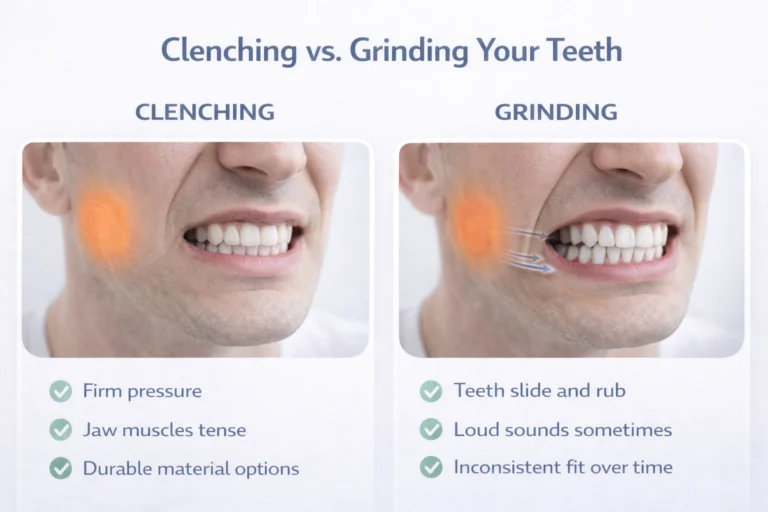
Bruxism means grinding or clenching the teeth. It can happen during sleep or during the day while focusing, working, studying, driving, or handling a busy routine. Many people learn about bruxism after noticing changes in how their jaw or teeth feel. Sleep bruxism often creates morning signs.Paying attention to changes such as jaw tightness, facial muscle activity, or increased tooth sensitivity can help you support your oral health and comfort. Daytime bruxism often appears as a clenching habit during concentration. Bruxism treatment focuses on protecting the teeth, calming the jaw muscles, and building awareness. A night guard for teeth grinding can help create a smooth protective layer between the upper and lower teeth during sleep.
Can Bruxism Cause Tooth Enamel Loss?
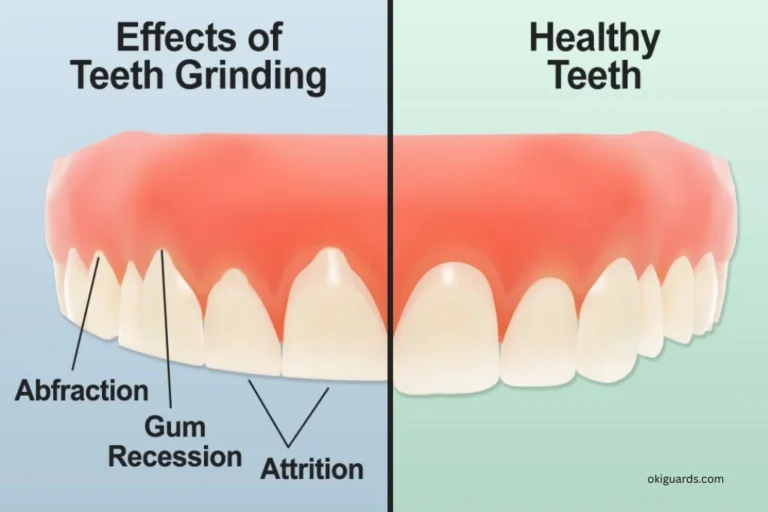
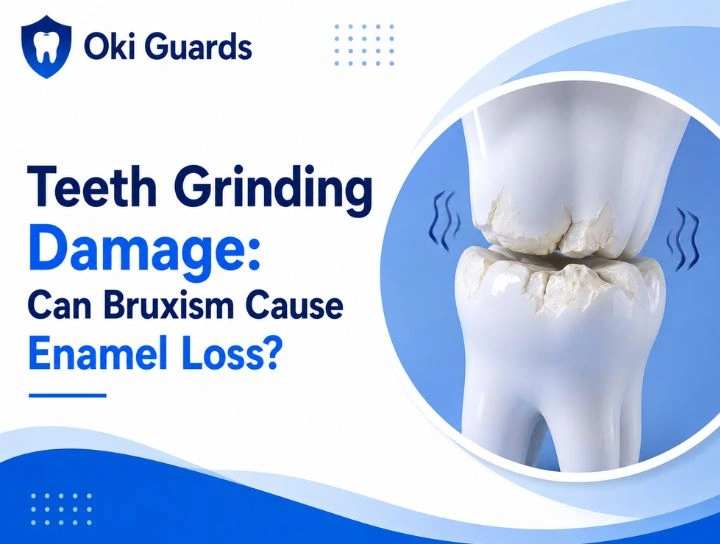
Bruxism can contribute to tooth enamel loss because grinding places repeated pressure on the tooth surface. Enamel is strong, and it works best with balanced daily care. Protecting your teeth from excessive force can help maintain strong, healthy enamel over time. This connection helps explain why bruxism tooth damage often appears on biting edges, chewing surfaces, and areas where teeth contact each other. The surface may look flatter, smoother, or more polished. Some people also notice sensitivity because enamel helps cover and protect the deeper tooth layers. Early protection can support enamel health and help your smile stay comfortable. A custom night guard adds a barrier between the teeth and helps reduce direct grinding contact during sleep.
Common Teeth Grinding Symptoms
Teeth grinding symptoms often appear as helpful signals from your mouth. These signs can guide you toward better support and a more comfortable routine.Morning jaw tightness is one common sign. The jaw muscles may feel active after sleep, and a gentle morning stretch may feel helpful. Tooth sensitivity can also appear when enamel surfaces receive extra pressure.
A tired feeling in the cheeks, temples, or jaw can also be connected with bruxism. Paying attention to changes in tooth sensitivity during chewing or after waking up can help you take steps to support your oral health. Others may see smoother biting edges or a more polished tooth surface.These signs make it easier to take action early. A night guard for teeth grinding can support tooth protection and help your jaw feel more rested.
Teeth Grinding Effects on Enamel
Teeth grinding effects can show up gradually. Enamel may become smoother in areas where teeth contact each other often. Biting edges may look more even, and chewing surfaces may feel more polished.Some people experience greater tooth sensitivity because enamel helps protect the inner part of the tooth. Sensitivity can appear with cold drinks, sweet foods, or chewing pressure. A supportive dental routine can help manage this feeling and protect the tooth surface. Bruxism can also influence dental restorations such as fillings, crowns, or veneers. A protective night guard can help support these restorations by creating a smoother surface for nighttime pressure.
Bruxism Tooth Damage and Early Protection
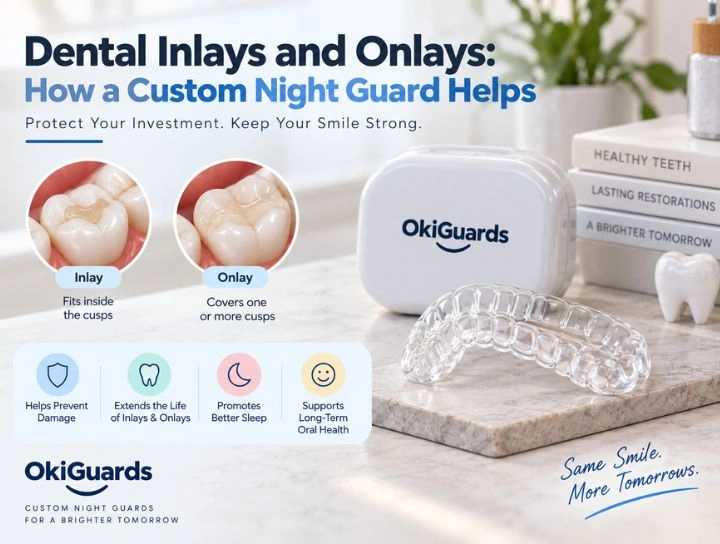
Bruxism tooth damage is best understood as a sign that your smile needs extra support. The teeth are strong, and they respond well to protective care. A night guard, regular dental visits, and relaxed jaw habits can help support enamel and overall comfort. A custom night guard is one of the most helpful tools for sleep bruxism. It sits over the teeth and creates a comfortable barrier. This barrier helps guide bite pressure and supports a more balanced feeling while sleeping. OkiGuards offers custom night guards designed for different grinding levels, including soft, hybrid, and hard options. This makes it easier to choose support that fits your comfort needs and grinding pattern.
How a Night Guard for Teeth Grinding Helps
A night guard for teeth grinding helps by creating a protective layer between the upper and lower teeth. This layer reduces direct tooth contact and helps the mouth feel more supported through the night. A custom guard is shaped from your dental impression, so it fits closely over your teeth. A close fit helps the guard feel stable and comfortable. When a guard feels comfortable, it becomes easier to wear every night. Soft night guards can suit lighter grinding. Hybrid night guards can offer a balance of comfort and strength. Hard night guards can support stronger clenching patterns. The best choice depends on your grinding level and personal comfort.
Bruxism Treatment Options
Bruxism treatment works best when it supports both nighttime protection and daytime awareness. A custom night guard can help protect enamel during sleep. Relaxed jaw habits can support comfort during the day.A helpful jaw posture includes relaxed lips, slightly separated teeth, and the tongue resting gently on the roof of the mouth. This position can help remind the jaw muscles to stay calm during focus time.A calming bedtime routine can also support bruxism care. Gentle stretching, slow breathing, and a consistent sleep schedule can help the body move into rest mode. Dental guidance can also help you choose the right guard type and care plan.
How to Support Tooth Enamel Every Day
Daily habits can support enamel and keep your smile feeling fresh. Brush with a soft toothbrush, clean between your teeth, drink water, and keep regular dental visits. These habits help your teeth stay clean and comfortable. Wearing a custom night guard during sleep adds extra protection for people who grind or clench. Cleaning the guard each morning also supports a fresh routine. Rinse it with cool water, brush it gently, let it dry, and store it in a clean case.
OkiGuards custom night guards can fit smoothly into your nightly routine and support ongoing smile protection.
When to Consider a Custom Night Guard
A custom night guard may be helpful when you notice morning jaw tightness, tooth sensitivity, smooth biting edges, facial tension, or a strong clenching habit. These signs can guide you toward early support. A dentist can also check your enamel, bite, and jaw comfort. Dental guidance helps match your needs with the right bruxism treatment option. Choosing a night guard early can help support enamel, protect your teeth, and make your sleep routine feel more comfortable.
Frequently Asked Questions
Can bruxism cause enamel loss?
Bruxism can contribute to tooth enamel loss through repeated grinding pressure, and early protection can help support enamel health.
What are common teeth grinding symptoms?
Common teeth grinding symptoms include morning jaw tightness, tooth sensitivity, facial tension, and smooth biting edges.
What are the effects of teeth grinding on the smile?
Teeth grinding effects may include enamel wear, sensitivity, polished tooth surfaces, and extra jaw activity.
How does a night guard help with teeth grinding?
A night guard creates a protective layer between the teeth and helps support comfort during sleep.
What is a helpful bruxism treatment?
A helpful bruxism treatment can include a custom night guard, relaxed jaw posture, bedtime relaxation, and dental guidance.

Final note
Bruxism can affect enamel through repeated grinding and clenching, and early care can help keep your smile supported. Teeth grinding symptoms such as jaw tightness, tooth sensitivity, facial tension, and smooth biting edges can guide you toward helpful protection. A night guard for teeth grinding can support enamel, reduce direct tooth contact, and create a more comfortable sleep routine. With a custom night guard, relaxed jaw habits, and regular dental guidance, your teeth can stay protected, your jaw can feel supported, and your smile can feel confident every day.