Teeth Grinding Damage: Can Enamel Wear Be Reversed?
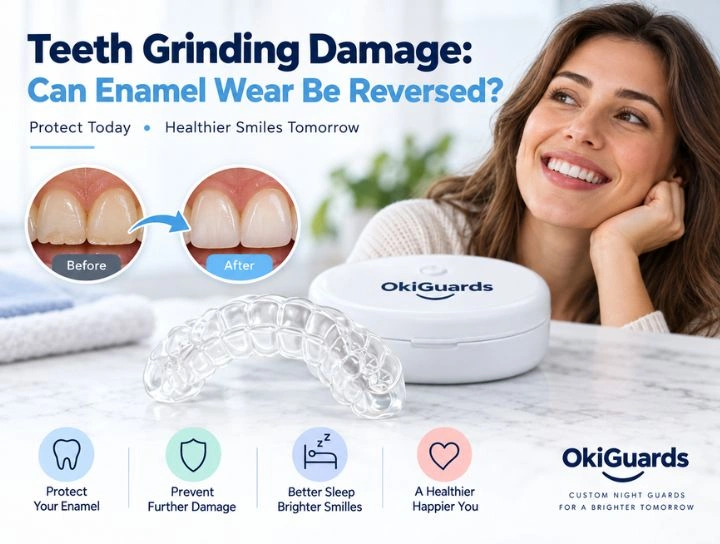
Teeth grinding damage can be successfully treated and protected, although enamel that has already worn away does not naturally grow back. A dentist can strengthen early weakened areas with fluoride, restore worn down teeth with bonding, veneers, or crowns, and recommend a custom night guard to help protect the renewed smile from continued grinding pressure. This encouraging combination of restoration and prevention can improve tooth appearance, support comfortable chewing, reduce sensitivity, and preserve healthy enamel. Early attention creates more opportunities to use conservative dental care and maintain the natural tooth structure.
A custom night guard for teeth grinding provides a comfortable barrier between the upper and lower teeth. It helps distribute grinding pressure across a broader surface while protecting natural teeth and completed dental restorations.
Teeth Grinding Damage at a Glance
| Concern | Positive next step |
| Early enamel wear | Dental examination, fluoride support, and daily protection |
| Flattened biting surfaces | Custom night guard and restorative consultation |
| Small chips or rough edges | Dental smoothing, bonding, and protective care |
| Tooth sensitivity | Sensitivity-focused dental care and enamel protection |
| Moderate structural wear | Bonding, veneers, onlays, or crowns when recommended |
| Continued nighttime grinding | A custom soft, hybrid, or hard night guard |
| Strong grinding pressure | A durable hybrid or hard custom night guard |
What Is Teeth Grinding Damage?
Teeth grinding damage describes the physical changes that repeated grinding or clenching can create in the teeth, restorations, gums, and jaw muscles. Dentists call grinding and clenching bruxism. Sleep bruxism happens while a person sleeps, so many people first notice its effects during their morning routine. Awake bruxism usually involves pressing the teeth together during concentration, stress, driving, work, or other daily activities.
Healthy enamel is exceptionally strong, yet repeated contact between opposing teeth can gradually polish, flatten, or reduce the biting surfaces. Grinding pressure can also contribute to small chips, fine surface lines, sensitivity, and additional wear around existing dental work. A timely dental examination can identify the pattern and help create a positive care plan. Many people preserve their natural teeth successfully through a combination of professional treatment, home care, and consistent night guard use.
Can Enamel Wear from Grinding Be Reversed?
Lost enamel does not regenerate naturally because mature enamel does not contain living cells that can rebuild the original layer. Dental care can still deliver highly effective results by strengthening the enamel that remains, restoring the missing shape, and protecting the repaired teeth.
The word “reversed” can therefore have two meanings.
Can the original enamel grow back?
The original enamel layer does not naturally grow back after physical wear has removed it. Toothpaste, fluoride, and mineral-rich saliva can strengthen areas of early demineralization, but they do not recreate a substantial portion of enamel that grinding has physically worn away. This distinction helps people choose realistic and effective care. Strengthening treatments support remaining enamel, while restorative dentistry rebuilds the shape and function of worn down teeth.
Can the appearance and function of worn teeth be restored?
Yes. Modern dentistry offers several options for restoring tooth shape, appearance, comfort, and chewing function. The most appropriate solution depends on the amount of enamel loss, tooth sensitivity, bite relationship, and condition of each tooth. Small areas may respond well to dental bonding. More visible or extensive wear may benefit from veneers, onlays, or crowns. A dentist can design the treatment around the patient’s natural smile and long-term oral health. Once the teeth have been restored, a properly fitted night guard can help preserve the results by separating the opposing tooth surfaces during sleep.
Common Teeth Grinding Symptoms
Recognizing teeth grinding symptoms early supports simpler and more conservative care. Symptoms can appear in the teeth, jaw muscles, head, or sleep routine.
Changes in tooth shape
Flattened edges are among the clearest signs of ongoing grinding. Front teeth may gradually look shorter or more even across their edges, while molars can develop flatter chewing surfaces. Some people notice that the small points and grooves on their teeth appear smoother. These changes may develop gradually, making regular dental examinations valuable for tracking wear over time.
Tooth sensitivity
Enamel protects the softer dentin beneath it. As enamel becomes thinner, teeth may respond more noticeably to cold drinks, warm foods, sweet items, or brushing. Sensitivity provides a useful signal that the teeth deserve professional attention. A dentist can identify its source and recommend fluoride, desensitizing products, restorative care, or protective support.
Small chips and surface lines
Grinding pressure can contribute to tiny chips around the edges of teeth. Fine vertical lines, often called craze lines, may also become visible under bright light. Many surface changes can be evaluated and managed successfully. Dental bonding can smooth and rebuild selected areas, while a custom night guard can provide ongoing separation between the teeth.
Morning jaw tightness
Jaw muscles may feel active, tired, or tight after repeated nighttime clenching. Some people also notice tension around the cheeks, temples, neck, or shoulders. A comfortable bedtime routine, professional evaluation, and a custom guard can support a calmer and more protective nighttime routine.
Morning headaches
Grinding and clenching can place sustained demand on the chewing muscles. This muscular activity may contribute to morning headaches, particularly around the temples. A healthcare professional can evaluate recurring headaches and identify the most suitable care. When grinding is part of the pattern, a night guard can protect the teeth while other supportive strategies address muscle activity and daily triggers.
Wear on dental restorations
Crowns, veneers, bridges, fillings, and bonding can benefit from thoughtful protection. A custom appliance made around the current tooth shape can help distribute pressure and support the lifespan of completed dental work. People with restorations can share their dental history before ordering and follow their dentist’s recommendations about the preferred guard material and arch.
Why Enamel Wear Deserves Early Attention
Early enamel wear often provides an excellent opportunity to preserve the natural teeth. A dentist can examine the wear pattern, check the bite, evaluate restorations, and record changes for future comparison.
Maintaining enamel supports several important goals:
- Comfortable chewing
- Smooth tooth surfaces
- Balanced tooth proportions
- Reduced sensitivity
- Support for existing restorations
- A confident, natural-looking smile
- Long-term preservation of tooth structure
A proactive plan can combine professional care with positive daily habits. Fluoride toothpaste, gentle brushing, regular dental visits, hydration, and grinding protection all contribute to a supportive oral-care routine.
Teeth Grinding Treatment for Worn Down Teeth
Teeth grinding treatment usually includes two connected goals: restoring existing damage and helping protect the teeth from continuing pressure.
Fluoride and remineralizing support
Fluoride can strengthen remaining enamel and improve its resistance to everyday challenges. A dentist may recommend professional fluoride applications or a suitable fluoride toothpaste based on the level of enamel wear and sensitivity. Saliva also supports natural remineralization of early weakened areas. Drinking water, maintaining a balanced oral environment, and following a consistent dental routine can help enamel stay strong. These approaches work best for strengthening the enamel that remains. A dentist can recommend restorative treatment when physical tooth structure has already been reduced.
Dental bonding
Dental bonding uses tooth-colored resin to rebuild small chips, worn edges, and selected areas of enamel loss. The material can be shaped and polished to blend naturally with the surrounding tooth. Bonding is often a conservative choice because it can restore form while preserving a high amount of healthy tooth structure. A custom night guard can then help protect the bonded areas from direct nighttime contact.
Dental veneers
Veneers are thin restorations placed over the front surfaces of selected teeth. They can improve the shape, length, proportion, and appearance of front teeth affected by visible wear. A dentist evaluates the remaining enamel, bite forces, and grinding pattern before recommending veneers. Nighttime protection can form an important part of maintaining the completed smile.
Dental crowns
A crown covers and supports a tooth that has experienced more extensive structural wear. Crowns can restore height, shape, strength, and chewing function. Modern crowns can closely match the natural color and appearance of surrounding teeth. A custom guard can help distribute nighttime pressure and support the renewed dental work.
Onlays and other restorations
Dental onlays rebuild selected areas of the chewing surface while preserving healthy parts of the tooth. They can provide a balanced option when a filling offers limited coverage and a complete crown provides more coverage than the tooth requires. The dentist selects the restoration according to the amount of wear, location of the tooth, bite pattern, and long-term treatment goals.
Bite evaluation
A bite evaluation helps the dentist understand how the upper and lower teeth contact each other. This information is valuable when several teeth have become shorter or when restorations will rebuild the original bite height. A carefully planned restoration can improve comfort, chewing balance, appearance, and long-term stability.
Can a Night Guard Reverse Teeth Grinding Damage?
A night guard protects teeth and restorations from direct grinding contact, while dental treatment restores structure that has already been worn away. Together, these approaches create a complete restoration-and-protection plan. A custom night guard acts as a protective surface between the upper and lower teeth. It receives the grinding contact, distributes forces, and helps preserve enamel, bonding, veneers, crowns, and other restorations. Consistent use is especially valuable after restorative treatment. The guard helps maintain the dentist’s work while supporting a comfortable and dependable bedtime routine.
Choosing an OkiGuards Night Guard for Enamel Protection
OkiGuards offers soft, hybrid, and hard custom night guards made from the customer’s impressions. Each order includes two finished guards, making it easy to keep one available as a spare.
| OkiGuards option | Price | Thickness | Best suited for |
| Soft Night Guard | $149 for two | 2 mm | Mild grinding, clenching, sensitive gums, and first-time users |
| Hybrid Night Guard | $149 for two | 1, 2, or 3 mm | Balanced comfort and durability for mild to heavy grinding |
| Hard Night Guard | $169 for two | 1.5 or 3 mm | Strong clenching and heavy or severe grinding |
Soft Night Guard
The OkiGuards Soft Night Guard provides a flexible and cushioned feel. Its 2 mm material can suit mild grinders, clenchers, first-time wearers, and customers who appreciate a gentle fit. Soft guards create a comfortable barrier and support a smooth introduction to nightly wear. Consistent inspection helps users follow the condition of the appliance and plan replacement at the appropriate time.
Hybrid Night Guard
The OkiGuards Hybrid Night Guard combines a soft inner layer with a firm outer surface. This design provides comfort around the teeth and durability where grinding contact occurs. The hybrid guard is available in 1, 2, and 3 mm thicknesses. The 1 mm option provides a low-profile feel, the 2 mm option offers a balanced middle choice, and the 3 mm option adds material for stronger grinding. This broad range makes the hybrid guard an excellent starting option for many people comparing comfort, strength, and customization.
Hard Night Guard
The OkiGuards Hard Night Guard uses a firm, high-density material suited to heavy grinders and strong clenchers. Its stable surface provides durable protection and can support customers who have previously worn through softer appliances. Customers can choose a slimmer 1.5 mm design or a more substantial 3 mm option. A dentist’s guidance can add confidence when selecting a guard following crowns, veneers, bonding, implants, or extensive restorative treatment.
What Is Included with OkiGuards?
Each OkiGuards night guard order includes:
- Two custom night guards
- Three impression-tray sizes
- Two sets of impression putty
- A backup opportunity for the impression
- Step-by-step instructions
- Access to an instructional video
- A prepaid return mailer
- Free standard shipping within the continental United States
- A 60-night replacement and refund policy
Customers can order two upper guards, two lower guards, or one upper and one lower. This flexibility helps each person choose an arrangement that supports comfort and consistent use. The OkiGuards ordering process follows three simple stages: receive the impression kit, return the completed impression, and receive the finished custom guards.
How to Protect Remaining Enamel Every Day
A strong daily routine can complement dental treatment and night guard use.
Wear the guard consistently
Regular nighttime wear provides dependable separation between the teeth. Keeping the guard beside the bed or near the toothbrush can make it a natural part of the evening routine.
Clean the guard gently
Rinse the appliance with cool water after each use and clean it gently with a soft brush and mild soap. Letting it dry completely before storage keeps the guard fresh and ready for the next night. A ventilated case supports airflow and convenient storage. Cool temperatures help the custom shape remain stable.
Use an enamel-friendly oral-care routine
A soft-bristled toothbrush and fluoride toothpaste support healthy daily cleaning. Gentle brushing cleans the teeth while respecting enamel and gum comfort. Waiting a suitable period after acidic foods or drinks before brushing gives saliva time to rebalance the mouth. A dentist can provide individualized advice for people experiencing erosion alongside grinding.
Support relaxed jaw habits
During the day, the lips can rest together while the teeth remain comfortably apart. Short reminders can help people notice clenching during work, concentration, exercise, or driving. Relaxation exercises, regular movement, balanced sleep habits, and supportive stress-management practices can also promote a calmer jaw routine.
Attend regular dental examinations
Dental visits help monitor wear, sensitivity, bite changes, and the condition of restorations. Bringing the night guard to appointments allows the dentist to review its fit and wear pattern.
When to See a Dentist
A dental appointment is valuable whenever a person notices shortening teeth, sensitivity, chips, cracks, rough edges, recurring jaw tension, or changes in the bite. Prompt evaluation creates a clear path forward. The dentist can determine how much enamel remains, identify the source of wear, and recommend strengthening, restorative, and protective options.
Professional guidance is especially helpful for people with crowns, veneers, implants, bridges, orthodontic appliances, significant tooth wear, or persistent facial discomfort. People who snore, gasp during sleep, or experience ongoing daytime sleepiness can also seek medical assessment for complete sleep support.
Frequently Asked Questions
Can enamel wear from teeth grinding be reversed?
Lost enamel does not naturally grow back, while fluoride can strengthen remaining enamel and dental bonding, veneers, onlays, or crowns can successfully restore tooth shape and function.
What do worn down teeth from grinding look like?
Worn down teeth may appear shorter, flatter, smoother, more translucent, or evenly shaped across the biting edges. A dentist can evaluate these changes and recommend suitable restoration and protection.
What is the best night guard for teeth grinding?
A soft guard suits mild grinding, a hybrid guard balances comfort and durability for moderate grinding, and a hard guard provides firm protection for heavy grinding. Professional guidance can make selection even more personalized.
Can a night guard rebuild worn enamel?
A night guard protects the remaining enamel and completed dental restorations by separating the teeth. A dentist can rebuild lost tooth structure with bonding, veneers, onlays, or crowns.
How can I prevent further teeth grinding damage?
Consistent custom night guard use, regular dental examinations, fluoride toothpaste, gentle brushing, relaxed daytime jaw posture, and supportive sleep habits can help preserve the remaining enamel and restorative work.

Final note
Teeth grinding damage can be managed with excellent restorative and preventive options. Natural enamel does not regrow after physical wear, yet dentists can strengthen remaining enamel, rebuild worn down teeth, restore an attractive shape, and support comfortable function. A custom night guard adds valuable protection by separating the upper and lower teeth and distributing grinding pressure. OkiGuards provides soft, hybrid, and hard options so customers can match their appliance with their grinding intensity and preferred feel. For balanced comfort and durability, the OkiGuards Hybrid Night Guard offers a versatile choice in 1, 2, or 3 mm thickness. Every order includes two custom guards, an at-home impression kit, free standard shipping within the continental United States, and a 60-night guarantee. Combining professional dental care with consistent night guard use creates a positive plan for protecting enamel, restorations, comfort, and confidence.